Qué es un antipoeta:
un comerciante en urnas y ataúdes?
un sacerdote que no cree en nada?
un general que duda de sí mismo?
un vagabundo que se ríe de todo
hasta de la vejez y de la muerte?
un interlocutor de mal carácter?
un bailarín al borde del abismo?
un narciso que ama a todo el mundo?
un bromista sangriento
deliberadamente miserable?
un poeta que duerme en una silla?
un alquimista de los tiempos modernos?
un revolucionario de bolsillo?
un pequeño burgués?
un charlatán?
un dios?
un inocente?
un aldeano de Santiago de Chile?
Subraye la frase que considere correcta.
Qué es la antipoesía:
un temporal en una taza de té?
una mancha de nieve en una roca?
un azafate lleno de excrementos humanos
como lo cree el padre Salvatierra?
un espejo que dice la verdad?
un bofetón al rostro
del Presidente de la Sociedad de Escritores?
(Dios lo tenga en su santo reino)
una advertencia a los poetas jóvenes?
un ataúd a chorro?
un ataúd a fuerza centrífuga?
un ataúd a gas de parafina?
una capilla ardiente sin difunto?
Marque con una cruz
la definición que considere correcta.
Saturday, December 3, 2011

Wednesday, November 30, 2011
POEMS BY Durs Grünbein
German Poetry in English Translation
POEMS BY Durs Grünbein
Quid magazine: Five poets
Durs Grünbein
from Variation auf kein Thema
translated by Keston Sutherland
case beneath a verge of glass, the door
was hardly shut, stiffened, an object
for pedestrians at the streetside
you stare at the touchtone panel, numbers
like the stellar enchanted forest
there at the night sky / decimal mandala
which with its reachable sum lures,
with sudden nearness, whispers, betrayal,
love even — everything coded
as long since planned ahead a life
on call and hardly dialed
a voice explodes in your head.
Monday, November 28, 2011
The unfathomable & ungraspable friend
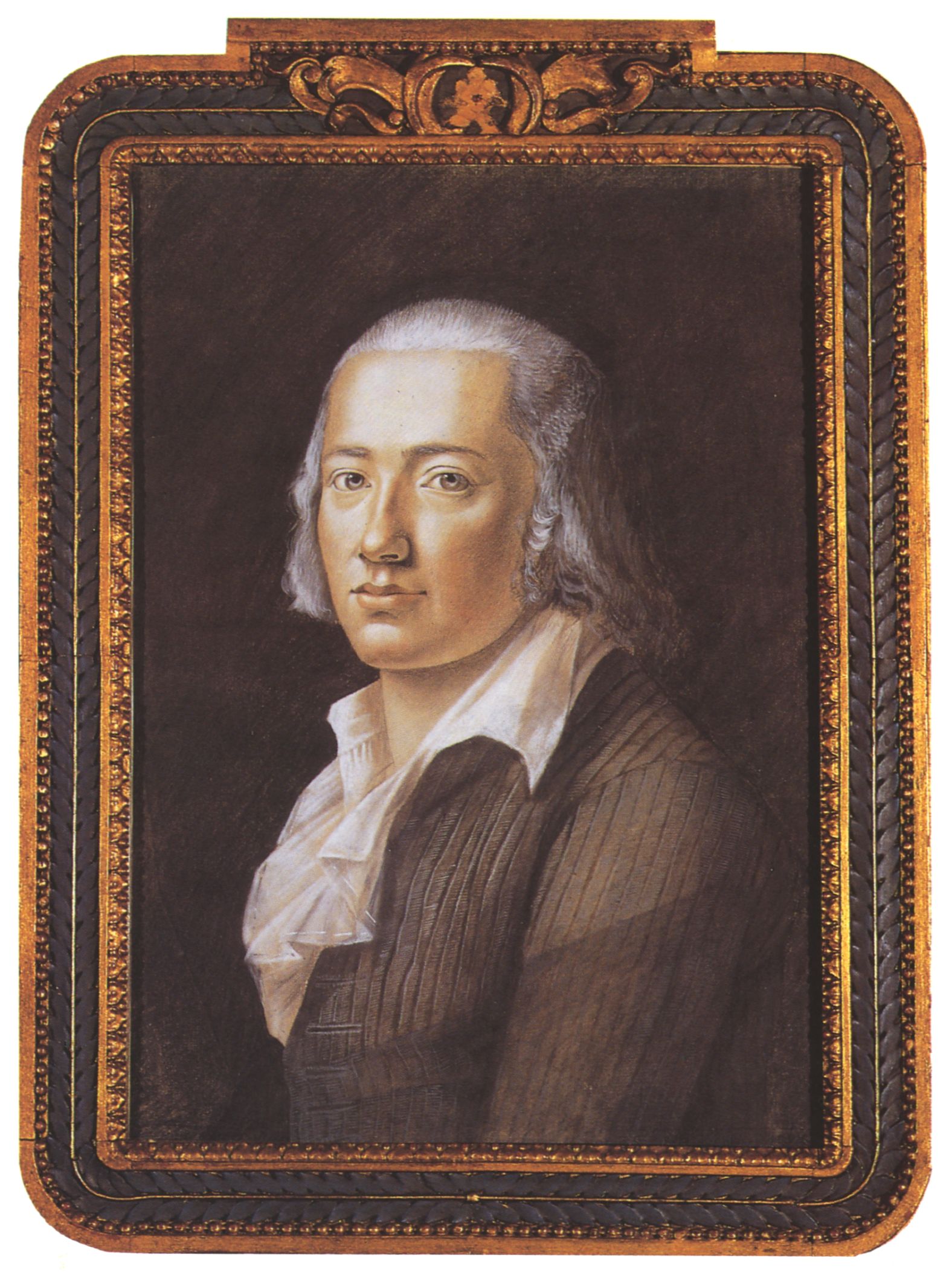
To Hölderlin
Near is salvation
unfathomable & ungraspable
but where there is a possibility
no matter that surrounded by danger
him, the poet, grows as well...
almost touchable as a fate.
El enigma imperecedero tomado de EFE
Heinrich von Kleist sigue siendo un enigma 200 años despues de su muerte: ALEMANIA LITERATURA
EFE News Service [Madrid] 20 Nov 2011.
Abstract (summary)
La obra y la vida de Heinrich von Kleist sigue siendo para muchos un enigma 200 años despues de su muerte, que se cumplen mañana tras un año lleno de conmemoraciones, homenajes y simposios que tratan de acercarse a una de las figuras más contradictorias y…
Full Text
Berlín, 20 nov (EFE).- La obra y la vida de Heinrich von Kleist sigue siendo para muchos un enigma 200 años despues de su muerte, que se cumplen mañana tras un año lleno de conmemoraciones, homenajes y simposios que tratan de acercarse a una de las figuras más contradictorias y complejas de la literatura alemana
Su figura ha sido reclamada por diversas corrientes esteticas y ha intentado, a lo largo de los años, ser instrumentalizada por las mas variadas ideologías políticas.
Un ejemplo es la historia de la recepción de su drama "Die Hermannschlacht", basado en la batalla de Varus, una rebelión germana contra el Imperio romano, considerada como uno de los mitos fundacionales alemanes y que Kleist vio como ejemplo a seguir, aunque el enemigo ya no era Roma sino las tropas napoleónicas.
Posteriormente, en 1914, tras una representación del drama, se leyeron partes de victoria de las tropas alemanas en los campos de la Primera Guerra Mundial, cuyas batallas quedaban así vinculadas simbólicamente con la batalla de Varus.
Su narración "Michael Kohlhaas", otra de sus obras más famosas, cuenta la historia de un hombre al que "el sentimiento de la justicia hizo asesino y bandolero".
Esa obra, para muchos la más representativa del autor, ha hecho que algunos relacionen a Kleist con la banda terrorista "Fracción del Ejercito Rojo" (RAF) y, por extensión, con el terrorismo de izquierdas en general.
En todo caso, las contradicciones que atraviesan la obra de Kleist y las percepciones que se puedan tener o se agotan en el terreno político sino que parece haber algo más esencial. Goethe y Thomas Mann, por ejemplo, parecían sentir una mezcla de atracción y repugnancia por la obra de Kleist.
Es posible que ello se deba a la radicalidad de sus narraciones y sus dramas, en donde suele haber descripciones y representaciones de la violencia que muchas veces resultan difíciles de digerir
Para muchos esa radicalidad, que impedía que Kleist hiciese compromisos y lo mantenía en litigio permanente con la gente que manejaba el mundo teatral del momento, fue lo que terminó llevándolo al suicidio.
Kleist se suicidó el 21 de noviembre de 1811, junto con su amiga Henriette Vogel, al lado de un lago entre Berlín y Potsdam. El escritor tenía 34 años, sus obras de teatro no tenían el exito esperado y sus esfuerzos por conseguir un empleo como director dramático habían fracasado.
Nacido en Fráncfort del Oder en 1777, Kleist era hijo de un oficial. En 1804, Kleist debutó como dramaturgo con el estreno en Graz (Austria) de "La familia Schroffenstein", drama con el que se inicia una producción dramática y narrativa abundante.
A esa actividad literaria, se agrega su producción periodística, en el "Berliner Abendblatt", periódico fundado y dirigido por Kleist, quien lo aprovechaba para hacer crónicas policiales y para insultar desde sus páginas a los empresarios de teatro que rechazaban sus obras.
Mientras que en vida le fue negado el reconocimiento, despues de su muerte ha habido olas de admiración por Kleist que han ido cambiando la percepción de su obra. La primera de ellas, en la segunda mitad del siglo XIX, asumió a Kleis como un símbolo del nacionalismo alemán.
A comienzos del siglo XX, los expresionistas lo reclamaban como su "hermano mayor" -la expresión es del poeta Georg Heym- lo que no impedía que oficialmente se le siguiera instrumentalizando por parte del imperio alemán.
Mientras que en 1911, en el primer centenario de la muerte, había quien definía a Kleist como culminación del clasicismo, cincuenta años despues otros lo definían como precursor de la vanguardia y ahora el poeta Durs Grünbein ha relacionado su teatro con el de Samuel Becket.
Del año Kleist, que se cierra mañana con una vista a la tumba restaurada del poeta, quedan nuevas ediciones de sus obras, dos nuevas biografías, de Peter Michelzik y Günter Blamberger, y muchas preguntas abiertas sobre la obra del que ha sido probablemente el escritor alemán más radical de todos los tiempos.EFE
© EFE 2011. Está expresamente prohibida la redistribución y la redifusión de todo o parte de los contenidos de los servicios de Efe, sin previo y expreso consentimiento de la Agencia EFE S.A.
Word count: 665
Saturday, November 26, 2011
Hoelderlin’s Hyperion
The “Real” Greece – Part II: Philosophy and Poetry in Hoelderlin’s Hyperion
Κυριακή, 28 Φεβρουαρίου, 2010
“But then she [Gaia] did couple with Ouranos
to bear deep-eddying Okeanos,
Koios and Kreios, Hyperion and Iapetos,
Theia and Rheia, Themis and Mnemosyne,
as well as gold-wreathed Phoebe and lovely Tethys.”
(Hesiod, Theogony, 132-136)
to bear deep-eddying Okeanos,
Koios and Kreios, Hyperion and Iapetos,
Theia and Rheia, Themis and Mnemosyne,
as well as gold-wreathed Phoebe and lovely Tethys.”
(Hesiod, Theogony, 132-136)
“Hölderlin is one of our greatest, that is, most impending thinkers,” wrote Heidegger, “because he is our greatest poet.
The poetic understanding of his poetry is possible only as a
philosophical confrontation with the manifestation of being in his
work.”

(η αποπειρα μου ειναι περισσοτερο να αναδειξω τον πλουτο που ενυπαρχει στην ελλαδα, στον ελληνισμο, και με βαση αυτην την αποπειρα να προσδιορισω και το τι ειναι η ελλαδα και ο ελληνισμος! ειναι μια κυκλοειδης διαδικασια, ειναι μια διαδικασια που για να μη γινει “φαυλος κυκλος” θα πρεπει να εισχωρησουμε στον κυκλο!)
I have chosen Hoelderlin’s Hyperion, as it is the perfect ground where poetry and philosophy cross each other, and because it opens the door to some very interesting considerations regarding the path of life. This topic in my view exemplifies what are some of the elements that constitute the “real” Greece. By necessity, I have used long quotes to get the basics of the story across, and then to convey some thinkers’ views and interpretations. The reader who endures the difficult read will be rewarded.
“The novel Hyperion presents different practical approaches to dealing with the bi-polarity of the “eccentric path.” This novel is a collection of letters, mostly written by the novel’s modern Greek hero, Hyperion, to his German friend, Bellarmin, in which he recounts his adventures, states of mind, and longings. The original unity which Hyperion was, from the outset, keen to recapture, is understood in different ways by Hyperion at different stages of his life. Ultimately, he will realize that none of these is satisfactory, but that they represented ways of approaching that which is the underlying unity, i.e. Being, throughout the course of his life.
These different representations of unity are of ancient Greece (also reflected in childhood), of modern Greece liberated from Turkish rule, and of aesthetic beauty. This trilogy is not random but corresponds to different temporal understandings of the idea of the fundamental unity of Being. It is first grasped as belonging to the past (Childhood/Ancient Greece), then the future (liberated Greece), and finally the present (immediacy of aesthetic beauty). Each way of life is exemplified by a character with whom Hyperion is connected, respectively through a master-pupil relationship (Adamas), friendship (Alabanda) and love (Diotima).

Symposium, Tomb of the Diver, Paestum

Hyperion’s departure for battle is followed by several letters addressed to Diotima and a couple of her replies. After initial success in the fight against the Turks, Hyperion’s men are delayed by the long siege of Mistra. Nonetheless, as they finally enter the town, they go on a]rampage, pillaging and killing indiscriminately. Rather than face the enemy, Hyperion’s army disperses once its lust for plunder is satisfied. This leads to the death of forty Russian soldiers who stood alone fighting the common foe. Hyperion takes his army’s dishonour to make him unworthy, in his eyes, for Diotima’s love: “I must advise you to give me up, my Diotima” (ibid., p.98) [“ich muβ dir raten, daβ du mich verlässest, meine Diotima” (ibid., p.597)]. In letters to Bellarmin, we discover more details of the battles fought by Hyperion and Alabanda. Their friendship flourished again, but Alabanda’s lust for battle eventually came to an end, thus pointing once more to the limits of his way of life.
In a letter from Diotima that arrives later, it emerges that she lost her will to live as her lover did not return, and she finally let herself die. In a development which reflects Hölderlin’s understanding of human life, the effortless harmony of Diotima’s world of beauty, once disturbed by the fire of Hyperion’s free aspiration to noble deeds, could not simply return to its original form. Rather, it became something to aim for, something Diotima thought Hyperion could achieve for her: “You drew my life away from the Earth, but you would also have had power to bind me to the Earth” (ibid., p.122) [“Du entzogst main Leben der Erde, du hättest auch Macht gehabt, mich an die Erde zu fesseln” (ibid., p.626)]. It is, thus, through its very destruction, that Diotima’s way of life ceases to represent that which Hyperion could have sought to take refuge in. Diotima’s words illustrate the whole problem of life as an “eccentric path,” but her death, apparently, only leaves Hyperion confused: “as I am now, I have no names for things and all before me is uncertainty” (ibid., p.126) [“wie ich jetzt bin, hab ich keinen Namen für die Dinge, und es ist mir alles ungewiβ” (ibid., p.632)]. At the end of the novel, however, the beauty of Nature once again fills Hyperion with joy, and this poetic sense of oneness reaches beyond separation and death to Alabanda and Diotima. Somehow, he has made some sense of his experiences. Thus, after all these tragedies, an overall feeling of unity prevails: “You springs of earth! you flowers! and you woods and you eagles and you brotherly light! how old and new is our love!- We are free, we are not narrowly alike in outward semblance; how should the Mode of life not vary? yet we love the ether, all of us, and in the inmost of our inmost selves we are alike” (ibid., p.133) [“Ihr Quellen der Erd! Ihr Blumen! Und ihr Wälder und ihr Adler und du brüderliches Licht! Wie alt und neu ist unsere Liebe! – Frei sind wir, gleichen uns nicht ängstig von auβen; wie sollte nicht wechseln die Weise des Lebens? Wir lieben den Äther doch all und innigst im Innersten gleichen wir uns” (ibid., p.639-640)]. However, the last words of the novel suggest an open ending: “So I thought. More soon” (ibid., p.133) [“So dacht’ ich. Nächstens mehr” (ibid., p.640)]. Thus, after all the ordeals that he has worked through in these letters, Hyperion’s life goes on. This seems to point to new experiences and the possibility of revisiting his interpretation of his life thus far.”
(Source: Internet Encyclopedia of Philosophy)
“…..The main work of this period is the novel
Hyperion oder Der Eremit in Griechenland (2
volumes, 1797-1799; translated as Hyperion; or, The
Hermit in Greece, 1965). Hölderlin had begun the
novel during his student days in Tübingen and
had revised it continually during his stays in
Waltershausen and Jena. In 1794 a preliminary
version was published under the title “Fragment
von Hyperion” (Fragment of Hyperion) in Friedrich
Schiller’s literary journal Neue Thalia. This version
of the novel is cast in the form of letters from
Hyperion, a young late-eighteenth-century Greek,
to his German friend Bellarmin. The letters depict
his constant struggle to attain the moment of
transcendent experience in which all conflict is
resolved and temporality is suspended: “Was mir
nicht Alles, und ewig Alles ist, ist mir Nichts”
(What for me is not All, and eternally All, is
nothing). In nature, in love, in a visit to Homeric
sites, Hyperion experiences momentary
intimations of his ideal, which constantly eludes
him, so that his aspirations remain unfulfilled.
The image of the “exzentrische Bahn” (eccentric
path), which constantly diverges from the center
of Being that it always seeks but can never
permanently attain, becomes a symbol of the
course of human existence.
Hyperion oder Der Eremit in Griechenland (2
volumes, 1797-1799; translated as Hyperion; or, The
Hermit in Greece, 1965). Hölderlin had begun the
novel during his student days in Tübingen and
had revised it continually during his stays in
Waltershausen and Jena. In 1794 a preliminary
version was published under the title “Fragment
von Hyperion” (Fragment of Hyperion) in Friedrich
Schiller’s literary journal Neue Thalia. This version
of the novel is cast in the form of letters from
Hyperion, a young late-eighteenth-century Greek,
to his German friend Bellarmin. The letters depict
his constant struggle to attain the moment of
transcendent experience in which all conflict is
resolved and temporality is suspended: “Was mir
nicht Alles, und ewig Alles ist, ist mir Nichts”
(What for me is not All, and eternally All, is
nothing). In nature, in love, in a visit to Homeric
sites, Hyperion experiences momentary
intimations of his ideal, which constantly eludes
him, so that his aspirations remain unfulfilled.
The image of the “exzentrische Bahn” (eccentric
path), which constantly diverges from the center
of Being that it always seeks but can never
permanently attain, becomes a symbol of the
course of human existence.

Fichte
In Jena Hölderlin had revised this version, partly
in order to take account of his attempt to come to
terms with the philosophy of Fichte. In a metrical
version and a fragment entitled “Hyperions
Jugend” (Hyperion’s Youth), he abandoned the
epistolary format in favor of a retrospective
technique in which the older Hyperion looks back
on his youth. The narrator, relating his story to a
young visitor, acknowledges that the process of
reflection has made him “tyrannisch gegen die
Natur” (tyrannical toward nature), in that he has
reduced nature to the material of selfconsciousness.
This theme echoes Hölderlin’s
criticism of Fichte’s philosophy and its
preoccupation with the autonomy of the “absolute
ego.” Hölderlin’s new orientation finds expression
in the Platonic view of love as the longing of the
imperfect for the ideal, and in a new conception of
beauty, which emerges as the only form in which
the unity of Being, unattainable precisely because
it is the object of striving, is incarnated: “jenes
Sein, im einzigen Sinne des Worts … ist
vorhanden–als Schönheit” (Being, in the unique
sense of the word … is present-as Beauty). With
this subordination of self-consciousness to the
realization of beauty, Hölderlin establishes the
conceptual framework that he follows in
completing the novel.
The final version of the novel, the greater part of
which was completed during the period he was in
Frankfurt am Main, shows Hölderlin’s increasing
stylistic and formal mastery. He returns to the
epistolary form of the first version, but now
endows it with a particularly sophisticated
structure. Hyperion presents a retrospective view
of his life, beginning at the stage at which, after
having lost his beloved and his friends, he returns
bitterly disappointed to his native land, intending
to take up the life of a hermit. The main focus is
not the sequence of events but the act of narration
itself. The seemingly disconnected fragments of
his experience are integrated through the process
of reflective recapitulation and gradually assume
a dialectical structure in which union and
separation, joy and suffering come to be seen as
inseparable parts of a complex unity.
in order to take account of his attempt to come to
terms with the philosophy of Fichte. In a metrical
version and a fragment entitled “Hyperions
Jugend” (Hyperion’s Youth), he abandoned the
epistolary format in favor of a retrospective
technique in which the older Hyperion looks back
on his youth. The narrator, relating his story to a
young visitor, acknowledges that the process of
reflection has made him “tyrannisch gegen die
Natur” (tyrannical toward nature), in that he has
reduced nature to the material of selfconsciousness.
This theme echoes Hölderlin’s
criticism of Fichte’s philosophy and its
preoccupation with the autonomy of the “absolute
ego.” Hölderlin’s new orientation finds expression
in the Platonic view of love as the longing of the
imperfect for the ideal, and in a new conception of
beauty, which emerges as the only form in which
the unity of Being, unattainable precisely because
it is the object of striving, is incarnated: “jenes
Sein, im einzigen Sinne des Worts … ist
vorhanden–als Schönheit” (Being, in the unique
sense of the word … is present-as Beauty). With
this subordination of self-consciousness to the
realization of beauty, Hölderlin establishes the
conceptual framework that he follows in
completing the novel.
The final version of the novel, the greater part of
which was completed during the period he was in
Frankfurt am Main, shows Hölderlin’s increasing
stylistic and formal mastery. He returns to the
epistolary form of the first version, but now
endows it with a particularly sophisticated
structure. Hyperion presents a retrospective view
of his life, beginning at the stage at which, after
having lost his beloved and his friends, he returns
bitterly disappointed to his native land, intending
to take up the life of a hermit. The main focus is
not the sequence of events but the act of narration
itself. The seemingly disconnected fragments of
his experience are integrated through the process
of reflective recapitulation and gradually assume
a dialectical structure in which union and
separation, joy and suffering come to be seen as
inseparable parts of a complex unity.

Heraclitus
The principle of “das Eine in sich
unterschiedne” (the one that is differentiated
within itself), which Hölderlin adapted from a
formulation of Heraclitus, defines at once the
essence of the Athenian and the nature of beauty–as opposed to the one-sidedness and
fragmentation characteristic of the Egyptians and
the Spartans, and, in Hölderlin’s view, also of
modern times.”
unterschiedne” (the one that is differentiated
within itself), which Hölderlin adapted from a
formulation of Heraclitus, defines at once the
essence of the Athenian and the nature of beauty–as opposed to the one-sidedness and
fragmentation characteristic of the Egyptians and
the Spartans, and, in Hölderlin’s view, also of
modern times.”
Source: Hoelderlin, Duke University

Gothe
Hyperion’s Song of Destiny
by Fr. Hölderlin
by Fr. Hölderlin
Holy spirits, you walk up there
in the light, on soft earth.
Shining god-like breezes
touch upon you gently,
as a woman’s fingers
play music on holy strings.
in the light, on soft earth.
Shining god-like breezes
touch upon you gently,
as a woman’s fingers
play music on holy strings.
Like sleeping infants the gods
breathe without any plan;
the spirit flourishes continually
in them, chastely kept,
as in a small bud,
and their holy eyes
look out in still
eternal clearness.
breathe without any plan;
the spirit flourishes continually
in them, chastely kept,
as in a small bud,
and their holy eyes
look out in still
eternal clearness.
A place to rest
isn’t given to us.
Suffering humans
decline and blindly fall
from one hour to the next,
like water thrown
from cliff to cliff,
year after year,
down into the Unknown
isn’t given to us.
Suffering humans
decline and blindly fall
from one hour to the next,
like water thrown
from cliff to cliff,
year after year,
down into the Unknown
We have no footing anywhere,
No rest, we topple,
Fall and suffer
Blindly from hour
To hour
No rest, we topple,
Fall and suffer
Blindly from hour
To hour
like water
Pitched from fall
To fall, year in,
Year out, headlong,
Downward for years to the vague abyss
“Philosophy then, is not born out of the nostalgia for an absent
unity, nor out of the exile from the All, but out of an accord with that
which is in the difference of its multiplicity. For what is thus
achieved is a concept of beauty different from that of Platonism and
from that of the classicism of Goethe and Winckelmann: no longer the
becoming-visible of the idea, but the harmony of opposites, no longer
the static concept of an atemporal beauty, but the dynamic one of a
living beauty that Plato himself, citing Heraclitus, has not perhaps
ignored, as Hoelderlin implies in the preface to Hyperion, when he
exclaims, after having alluded to the already realised presence of being
as beauty:Pitched from fall
To fall, year in,
Year out, headlong,
Downward for years to the vague abyss
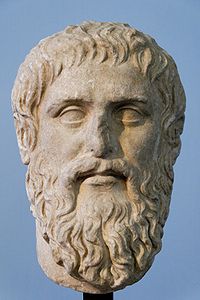
Plato
For it is on the basis of such a sensible presence of beauty and of the effective presence of the union of the infinite with the finite that Greece is defined in Hyperion as the homeland of philosophy, in opposition to Egypt and the North:
Do you see now why the Athenians in particular could not but be a philosophical people too? Not so the Egyptian. He who does not live loving Heaven and earth and loved by them in equal measure, he who does not live at one in this sense with the element in which he has his being, is by his very nature not so as one with himself as a Greek, at least he does not expewrience eternal Beauty as easily as a Greek does.
It is, in fact, only Greece that is capable of this harmony with the sensible and with exteriority which procures it the harmony with the intelligible and interiority: neither the Oriental (the Egyptian), subject to an exteriority which appears like a “terrible enigma”, nor the Nordic (the German), enclosed in an interiority without an outside, are capable of such a harmony and can be open to a beauty at the same time “human and divine”. Must Greece, then, be resurrected?” (Source: Francoise Dastur: Hoelderlin and the Orientalisation of Greece)
“Oh! were there a banner … a Thermopylae upon which I could spill my blood with honour, all that solitary love for which I can have no use.”
“Hölderlin’s glory is that he is the poet of Hellenism. Everyone who reads his work senses that his Hellenism is different, more sombre, more tortured by suffering than the radiant Utopia of antiquity envisaged during the Renaissance and Enlightenment. But his vision of Hellas has nothing in common either with the tedious, trivial, academic classicism of the nineteenth century or with the hysterical bestiality with which Nietzsche and the imperialist period envisaged Greece. The key to Hölderlin’s view lies then in the understanding of the specifics of this conception of Hellenism.”
Georg Lukacs, Goethe and His Age, 1934
In lieblicher Blaue – In lovely blue: A poem by Friedrich Holderlin
Δευτέρα, 25 Απριλίου, 2011

Louise Keller, Holderlin (1842) drawing
In Lovely Blue
by Friedrich Hölderlin
(Translated by Glenn Wallis)

Yves Klein, Blue Monochrome, MOMA, Ney York (See Note 1)
In lovely blue blooms the steeple with its metal
roof. Around the roof swirls the swallows’ cry,
surrounded by most touching blue. The sun rises high
above and tints the roof tin. But in the wind beyond, silently,
a weathercock crows. When someone comes forth from
the stairs of the belfry, it is a still life. And though the form
is so utterly strange, it becomes the figure of a
human being. The windows out of which the bells resound are as
gates to beauty. Because gates still take after nature
they resemble forest trees. Purity, too, is beauty. From within, out
of diverse things, a grave spirit emerges. So simple,
these images, so holy, that one often fears
to describe them. But the heavenly ones, always
good, possess, even more than the wealthy, virtue and
joy. Humans may follow suit. Might a person, when
life is full of trouble, look up and say: I, too,
want to be like this? Yes. As long as friendliness and purity
dwell in our hearts, we may measure ourselves not unfavorably
with the divine. Is God unknown? Is he manifest
as the sky?(a) This I tend to believe. It is the measure
of the human. Deserving, yet poetically, we dwell
on this earth (b). The shadow of night with its stars,
if I may say so, is no purer than we
who exist in the image of the divine (c).

Andre Butzer, Nasaheim (See Note 2)
the creator’s worlds can never contain the clap of thunder.
Because it blooms under the sun, a flower, too, is beautiful.
In life, the eye often finds creatures to call more beautiful
still than flowers. Oh! I know this well!
For to bleed in body and heart and cease to be whole—
does this please God? The soul, I believe, must remain
pure, or else the eagle will wing its way to the almighty
with songs of praise and the voice of so many
birds. It is substance and it is form. Beautiful little
brook, so touching you seem as you roll so clear,
like the eye of God, through the Milky Way. I know
you well. But tears stream from my eyes. A clear
life I see in the forms of creation that blooms around me
because I do not compare them unreasonably with the lonely pigeons
in the churchyard. People’s laughter seems
to grieve me—after all, I have a heart. Would I
like to be a comet? I believe so. For they have the quickness
of birds, they blossom in fire, and in their purity is as children’s.
To wish for more is beyond the measure of human nature.
The clarity of virtue also deserves praise from the grave
spirit that blows between the garden’s three pillars. A beautiful virgin must
garland her head with myrtle, for to do so is simply
her nature and her sensibility. But myrtle trees are found in Greece.

Samuel Francis, In lovely Blueness 2 (1955-56) (See Note 3)
his image, as if painted, that is like the Manes.
The human form has eyes, but the moon has light.
Perhaps King Oedipus (e) had an eye too many. This
man’s suffering seems indescribable, unspeakable,
inexpressible. When the drama presents it so, so it is. But how is it with me?
Am I thinking now of your suffering? Like brooks, the end of
Something as vast as Asia is carrying me toward it. Oedipus, of course, suffered like this, too;
and certainly for the same reason. Did Hercules suffer as well? Of course.
Did not the Dioscuri, too, in their friendship bear pain?
As Hercules fought with God—that is
suffering. And immortality in envy of this life—
to divide these two—that, too, is suffering. But it is also
suffering when a person is covered with freckles—
to be completely covered with freckles! The beautiful
sun does that, for it draws out everything. The path
seduces the young with the charm of its rays, like roses.
Oedipus’s suffering is like a poor man
wailing that he is deprived. Son Laios, poor
stranger in Greece. Life is death, and
death is also a life.

Emil Nolde, March Landscape in the evening (See Note 4)
(a) Note that in German, Sky is Himmel, which also stands for Heaven.
(b) This is the phrase that Heidegger used in his essay “…poetically man dwells…”.
(c) Book of Genesis, Chapter 1 verse 26: ‘And God said: Let us make man in our image’.
(d) Holderlin seems to imply that only in the heavenly skies one can find measure, therefore introducing a metaphysical element in the poem. Werner Marx, who was the professor who took Heidegger’s teaching post at the University of Freiburg, wrote a book with the same question in its title, and “Foundations for a nonmetaphysical ethics” as its subtitle.
(e) Holderlin translated Sophocles’ tragedies Oedipus and Antigone. These translations are significant interprpetations of the works.
Notes accompanying the pictures
(1) Note to Yves Klein’s painting: Monochrome abstraction—the use of one color over an entire canvas—has been a strategy adopted by many painters wishing to challenge expectations of what an image can and should represent. Klein likened monochrome painting to an “open window to freedom.” He worked with a chemist to develop his own particular brand of blue. Made from pure color pigment and a binding medium, it is called International Klein Blue. Klein adopted this hue as a means of evoking the immateriality and boundlessness of his own particular utopian vision of the world.(Source: MOMA)
(2) Question: On the other hand, perhaps it is Friedrich Holderlin who has organized you? Why is Friedrich Holderlin ‘Kommando’, rather than, e.g., ‘Muse’?
No.
Holderlin is just one of my main heroes and he is my favorite poet in
my private library. He is my choice and therefore I myself am Holderlin,
I can call myself N-Holderlin, which means NASAHEIM(*)-Holderlin, a
self-fullfilling prophecy of abstract art. There is no form of art
without a relation towards utopia and therefore abstraction. The show is
called Kommando because it was a very high or a very low order from
heaven that initiated the show. Within the world of art, which is a
completely useless world, a Kommando can be a group of people, or an
individual that tries to find a way out of this world.
(*) “Nasaheim” – the outerspace station of Anaheim/Disneyland.
(Source: An Interview With Andre Butzer, Artist And Curator Of ‘Kommando Friedrich Holderlin’ At Max Hetzler, Berlin, Saatchi Online Magazine)
(3)
This at once airy and expansive composition by Sam Francis
brilliantly demonstrates the artist’s unique combination of Abstract
Expressionist and late Impressionist influences. With its soft pastel
palette, the monumental abstract work creates the sensation of standing
before a vast and boundless space. Francis, who often found his
inspiration in literary sources, titled the painting after a poem by the
German Romantic writer Friedrich Hölderlin which begins with
the narrator looking to the sky: “In lovely blue the steeple blossoms/
With its metal roof. Around which/ Drift swallow cries, around which/
Lies most loving blue.” (Source: Art Institute of Chicago)
(4) Nolde’s landscape is a landscape dominated by the sky of North Germany, near the Danish borders, Nolde’s home.
Δημοσιεύθηκε από panathinaeos
Καταχωρήθηκε στο abstract expressionism, art, expressionism, germany, greece, ποιηση, τέχνη, ελλας, ζωγραφικη, literature, painting, poetry
Με ετικέτα: andre butzer, Art institute of chicago, Emil Nolde, heidegger, holderlin, MOMA, samuel francis, yves klein
Με ετικέτα: andre butzer, Art institute of chicago, Emil Nolde, heidegger, holderlin, MOMA, samuel francis, yves klein
Thursday, November 24, 2011
Kleist
The Tragedy of Fate and the Tragedy of Culture: Heinrich von Kleist’s The Schroffenstein Family
On 21st November 1811, on a lake’s edge near Potsdam, a 34 year old Kleist shot himself dead in a suicide pact with his terminally ill lover. He left behind him just under a decade of intense literary output which has established him as one of the most important writers of the German romantic period. On the bicentenary of his death, Kleist scholar Steven Howe explores the importance of his first dramatic work and how in it can be seen the themes of his later masterpieces.
Chalk-drawing
reproduction of a now lost miniature which Peter Friedel made in 1801
to be presented to Kleist's fiancée at the time Wilhelmine von Zenge
The action of the drama revolves around the conflict between the rival houses of Rossitz and Warwand, and the fate of two star-crossed lovers, Ottokar and Agnes. The imaginative debt to Romeo and Juliet is plain to see, and Kleist hews closely to the model of Shakespeare’s tragedy, though with one significant variation – the two feuding houses are here different branches of the same family. The origins of the conflict extend from a testamentary contract, according to which the property of either house should fall to the other branch if the line of descent is broken. This breeds an atmosphere of mistrust, as both houses suspect one another of pursuing its demise, and particularly that of its heirs. When the younger son of Count Rupert, head of the Rossitz branch of the family, dies in unexplained circumstances, his suspicions thus fall directly on his counterpart, Count Sylvester, and the drama opens with him compelling his immediate family to swear an oath of bloody and absolute vengeance against the entire house of Warwand.

The cast of characters of Die Familie Schroffenstein as featured in a 1922 collection of Kleist's works for the stage.
That the mechanisms of fate and chance do serve as an important motor for the action of the drama is very much an accepted commonplace in interpretive criticism. In his personal letters, Kleist reveals a fascination with the unknowable powers of contingency and coincidence that intrude upon and shape the life of the individual, and such concerns penetrate to the core of many of his literary works: time and again, he confronts his characters with situations over which they have no control and to which they must then react. In Schroffenstein, chance happenings are heaped upon one another in such a way as to both blunt much of the originality of the constellation, and to strain reader credulity after the fashion of the Gothic tale – it is not without reason that Matthew G. Lewis’s The Monk has been cited as a possible source of inspiration. The outcome is a demonstration of the operations of fate and contingency which, viewed in a narrow sense, seems at times laboured and contrived. The design of the inquiry is, however – in a further parallel to Romeo and Juliet – overlaid with a deeper disquisition on the limitations of human awareness. Ursula’s laconic words to Rupert and Sylvester, ‘If you kill one another, it is an error’, acquire, in this context, special relevance, pointing as they do towards the movement of error and the instances of misunderstanding that drive the action to its tragic close. Here one can detect the influence of Kleist’s encounter with Kantian philosophy, which appears to have shattered his faith in the possibilities of absolute truth and knowledge. The fallibility of perception emerges, as a consequence, as a dominant theme and subject of reflection in Kleist’s work, and remains so across his entire literary corpus. In Schroffenstein, this manifests itself through the frequent recurrence of error and confusion, bred by the characters’ inability to communicate and their attendant susceptibility to misreading reality. Typically, Kleist drives the issue towards aesthetic extremes, crafting an enveloping atmosphere of illusion, deceit and suspicion within the extended family which, in turn, calls forth gruesome acts of vengeance and retributive violence. In this regard, the drama can perhaps be seen as the most Jacobean and Sturm und Drang-like of Kleist’s works – as a grizzly, though at times darkly comedic, exploration of the workings of fate and the human capacity for misunderstanding, and of their effects in unleashing man’s violent potentialities.

Kleist's
grave alongside that of Henrietta Vogel, his terminally ill lover whom
he shot before shooting himself in a suicide pact on the banks of
Kleiner Wannsee near Potsdam. The inscription on Kleist's grave reads
'Now, oh immortality, you are all mine'.
(Photo by Jochen Jansen, published under a CC-BY-SA license).
(Photo by Jochen Jansen, published under a CC-BY-SA license).
These fundamental tensions between nature and culture, between individual and society, serve as a central axis for the greater part of Kleist’s literary oeuvre, and it is perhaps in this sense, above all, that Schroffenstein can be seen to point the way towards his later – and greater – dramatic achievements. On the one hand, his works dwell on the onslaught of fate that upsets the secure ideals of enlightenment rationalism; on the other, however, this aspect is only ever a corollary to a deeper sense of the cultural rift between subject and world, and the attendant instabilities of agency and identity. Behind this lies the experience of the French Revolution and the turmoil it left in its wake, as existing hierarchies of power and status collapsed, and Europe was plunged into a period of instability and conflict. Against this backdrop, Kleist, like so many of his Romantic contemporaries, critically explores the paradigms of eighteenth-century humanist discourse, taking up the tensions and paradoxes embedded therein and exhibiting them in the full light of his imagination. In particular, it is the complex relationship between nature and culture to which he time and again returns, with most of his texts turning upon an exploration of the psychological and moral conflicts between the individual and his or her environment. Frequently, such struggles escalate to a sudden unleashing of the self, to acts of violent rebellion or assimilation. It is this readiness to plumb the extreme depths of human psychology and conduct under conditions of stress that lends Kleist’s work its peculiar modernism, and which ensures that even now, some two hundred years on from his death, he retains the ability to excite, engage and trouble his readers.
Steven Howe is Associate Research Fellow in the College of Humanities at the University of Exeter. He is currently working, together with Ricarda Schmidt (Exeter) and Sean Allan (Warwick), on a large-scale, AHRC-funded project – timed to coincide with the bicentenary of the author’s death – exploring discourses of education and violence in the works of Heinrich von Kleist (Kleist, Education and Violence: The Transformation of Ethics and Aesthetics). He has previously written a full-length study on Kleist’s engagement with the thought of Jean-Jacques Rousseau, and published further articles regarding the representation of violence in Kleist’s texts, and on aspects of their popular and critical reception.
Links to Works
- Text version of Die Familie Schroffenstein (in German)
- Sämtliche Werke und Briefe – Vol. 1 (1908) by Heinrich von Kleist featuring Die Familie Schroffenstein.
- Tales from the German, comprising specimens from the most celebrated authors (1844) containing Kleist’s classic Michael Kolhaus translated into English by John Oxenford and C.A. Feiling.
Poems by Friedrich Hölderlin
In English translation by David Constantine
A sampling from the book Friedrich Hölderlin
Selected Poems
translated by
David ConstantineSecond, expanded edition 1996
Published by Bloodaxe Books, Newcastle upon Tyne
Ages of Life
Euphrates' cities and
Palmyra's streets and you
Forests of columns in the level desert
What are you now?
Your crowns, because
You crossed the boundary
Of breath,
Were taken off
In Heaven's smoke and flame;
But I sit under clouds (each one
Of which has peace) among
The ordered oaks, upon
The deer's heath, and strange
And dead the ghosts of the blessed ones
Appear to me.
'Another day'
Another day. I follow another path,
Enter the leafing woodland, visit the spring
Or the rocks where the roses bloom
Or search from a look-out, but nowhere
Love are you to be seen in the light of day
And down the wind go the words of our once so
Beneficent conversation...
Your beloved face has gone beyond my sight,
The music of your life is dying away
Beyond my hearing and all the songs
That worked a miracle of peace once on
My heart, where are they now? It was long ago,
So long and the youth I was has aged nor is
Even the earth that smiled at me then
The same. Farewell. Live with that word always.
For the soul goes from me to return to you
Day after day and my eyes shed tears that they
Cannot look over to where you are
And see you clearly ever again.
'Once there were gods'

Once there were gods, on earth, with people, the heavenly muses
And Apollo, the youth, healing, inspiring, like you.
And you are like them to me, as though one of the blessed
Sent me out into life where I go my comrade's
Image goes with me wherever I suffer and build, with love
Unto death; for I learned this and have this from her.
Let us live, oh you who are with me in sorrow, with me in faith
And heart and loyalty struggling for better times!
For such we are! And if ever in the coming years they knew
Of us two when the spirit matters again
They would say: lovers in those days, alone, they created
Their secret world that only the gods knew. For who
Cares only for things that will die the earth will have them, but
Nearer the light, into the clarities come
Those keeping faith with the heart's love and holy spirit who were
Hopeful, patient, still, and got the better of fate.
The Journey
Suevia, my mother, happy land!
You also are like your more shining sister
Lombardy over there
Flowed through by a hundred streams
And trees in plenty, white with blossom or reddish
And the darker, deep, full green, the wild trees
And the Alps of Switzerland overshadow you too,
Neighbourly; for near the hearth of the house
Is where you live and you can hear
Inside from silvery vessels
The spring rushing that issues
From pure hands when touched
By warm rays
Crystal ice and tipped over
By the lightly quickening light
The snowy summit drenches the earth
With purest water. For that reason
You are born loyal. Hard
Living near the source to quit the place.
And your children, the towns
On the long lake in the haze
On the willowy Neckar and on the Rhine
All think
Nowhere would be better to live.
'When I was a boy'
When I was a boy
A god often rescued me
From the shouts and the rods of men
And I played among trees and flowers
Secure in their kindness
And the breezes of heaven
Were playing there too.
And as you delight
The hearts of plants
When they stretch towards you
With little strength
So you delighted the heart in me
Father Helios, and like Endymion
I was your favourite,
Moon. 0 all
You friendly
And faithful gods
I wish you could know
How my soul has loved you.
Even though when I called to you then
It was not yet with names, and you
Never named me as people do
As though they knew one another
I knew you better
Than I have ever known them.
I understood the stillness above the sky
But never the words of men.
Trees were my teachers
Melodious trees
And I learned to love
Among flowers.
I grew up in the arms of the gods.
Titles of the original poems: Lebensalter, Wohl geh ich täglich..., Götter wandelten einst..., Die Wanderung, Da ich ein Knabe war...
From the back cover of Friedrich Hölderlin Selected Poems:
FRIEDRICH HÖLDERLIN (1770-1843) was one of Europe's greatest poets. The strange and beautiful language of his late poems is recreated by David Constantine in these remarkable verse translations. This is a new edition of Constantine's widely-praised HÖLDERLIN Selected Poems, containing several new translations, including one of the great elegy Bread and Wine. The odes and hymns are more fully represented and there are further extracts, in an equivalent English, from Hölderlin's extraordinary German versions of Sophocles. Notes on the poems have also been expanded. This new volume is a stimulating introduction to the work of a poet who, writing around 1800, addresses us ever more urgently as the millenium ends.
'Hölderlin is a poet we can read with our own atrocious times in mind. He is a deeply religious poet whose fundamental tenet is absence and the threat of meaninglessness. He confronted hopelessness as few writers have, he was what Rilke called "exposed"; but there is no poetry like his for the constant engendering of hope, for the expression, in the body and breath of poems, of the best and most passionate aspirations' - David Constantine
'Constantine goes for an "equivalence of spirit" in a more familiar idiom. This is at once a bold and humble undertaking, and has produced poetry of a remarkable luminosity and intensity, written in rhythms and cadences which recreate, both in their extremities of grief and their urgent hope, the immediacy of the original' - Karen Leeder, Oxford Poetry
David Constantine has published five books of poems, three translations and a novel with Bloodaxe. His latest poetry books are Selected Poems (1991), a Poetry Book Society Recommendation, and Caspar Hauser (1994), a poem in nine cantos. His co-translations include editions of Henri Michaux and Philippe Jaccottet in the Bloodaxe Contemporary French Poets series. His critical introduction to the poetry of Friedrich Hölderlin was published in 1988, and his translation of Goethe's novel Elective Affinities in 1994, both from OUP. He is Fellow in German at the Queen's College, Oxford.
Copyright © by David Constantine and Bloodaxe Books. Published here by permission of David Constantine.
Monday, November 21, 2011
A lot of Chicago's Bootlegs
CHICAGO - This is the beginning of what will become the Most Ultimate Megapost featuring Chicago
which will span basically their entire career. When i am done there
should be around 100+ shows in either an MP3 or M4A format in various
formats (FM, SDB, AUD, etc, etc,). I will be adding shows throughout
time to this thread ONLY until i am finished so please keep checking
back to see what more has been added.
I know that there are shows in here that have been added here onto Guitars 101 before by myself and many others and i am not trying to step on anyones toes and am very greatful for what has been added onto here in the past. I'm only trying to keep their music alive and to give people something that they might not have had before.
Unfortunately the eve infamous show of December 2, 1977 from Oakland, CA which was Terry Kath's last ever with the band still eludes me to this day.
I know that there are shows in here that have been added here onto Guitars 101 before by myself and many others and i am not trying to step on anyones toes and am very greatful for what has been added onto here in the past. I'm only trying to keep their music alive and to give people something that they might not have had before.
Unfortunately the eve infamous show of December 2, 1977 from Oakland, CA which was Terry Kath's last ever with the band still eludes me to this day.
[DVDfull] Chicago - 1970-07-21 - Tanglewood (pro-shot)
Chicago - 1970-07-21 - Tanglewood
(DVDfull pro-shot)
FULL CONCERT NO TIME CODE REMASTERED STEREO AUDIO
NTSC
PRO-SHOT
COLOR
STEREO
MENU
CHAPTER
ALL REGION
01 - Introduction
02 - In The Country
03 - Does Anybody Really Know What Time It Is
04 - 25 Or 6 To 4
05 - Poem For The People
06 - I Don't Want Your Money
07 - Mother
08 - It Better End Soon
09 - Beginnings
10 - Ballet For A Girl In Buchannon / Make Me Smile / So Much To Say
11 - Colour My World / Make Me Smile
12 - I'm A Man
Notes:
Great Chicago Show From 1970 I Know A Lot Of You Have This Show But This Is The Complete Show With Remastered Stereo Audio
Too Bad The Camera Man Was Too High To Get The Filming Right Still A Great Show Well Worth The Download
http://www.filesonic.com/file/176571....B.E.part1.rar
http://www.filesonic.com/file/176571....B.E.part2.rar
http://www.filesonic.com/file/176570....B.E.part3.rar
http://www.filesonic.com/file/176570....B.E.part4.rar
mirror:
http://www.fileserve.com/file/wYkt6T....B.E.part1.rar
http://www.fileserve.com/file/Be5PMe....B.E.part2.rar
http://www.fileserve.com/file/94yB5b....B.E.part3.rar
http://www.fileserve.com/file/aJ6tbT....B.E.part4.rar
mirror:
http://www.filefactory.com/file/cc76....B.E.part1.rar
http://www.filefactory.com/file/cc76....B.E.part2.rar
http://www.filefactory.com/file/cc76....B.E.part3.rar
http://www.filefactory.com/file/cc76....B.E.part4.rar
(DVDfull pro-shot)
FULL CONCERT NO TIME CODE REMASTERED STEREO AUDIO
NTSC
PRO-SHOT
COLOR
STEREO
MENU
CHAPTER
ALL REGION
01 - Introduction
02 - In The Country
03 - Does Anybody Really Know What Time It Is
04 - 25 Or 6 To 4
05 - Poem For The People
06 - I Don't Want Your Money
07 - Mother
08 - It Better End Soon
09 - Beginnings
10 - Ballet For A Girl In Buchannon / Make Me Smile / So Much To Say
11 - Colour My World / Make Me Smile
12 - I'm A Man
Notes:
Great Chicago Show From 1970 I Know A Lot Of You Have This Show But This Is The Complete Show With Remastered Stereo Audio
Too Bad The Camera Man Was Too High To Get The Filming Right Still A Great Show Well Worth The Download
http://www.filesonic.com/file/176571....B.E.part1.rar
http://www.filesonic.com/file/176571....B.E.part2.rar
http://www.filesonic.com/file/176570....B.E.part3.rar
http://www.filesonic.com/file/176570....B.E.part4.rar
mirror:
http://www.fileserve.com/file/wYkt6T....B.E.part1.rar
http://www.fileserve.com/file/Be5PMe....B.E.part2.rar
http://www.fileserve.com/file/94yB5b....B.E.part3.rar
http://www.fileserve.com/file/aJ6tbT....B.E.part4.rar
mirror:
http://www.filefactory.com/file/cc76....B.E.part1.rar
http://www.filefactory.com/file/cc76....B.E.part2.rar
http://www.filefactory.com/file/cc76....B.E.part3.rar
http://www.filefactory.com/file/cc76....B.E.part4.rar
An english translation
FRIEDRICH HÖLDERLIN (1770–1843), whose work has influenced such figures as Rilke, Celan, Heidegger, Adorno, and Benjamin, is considered by many to be one of the most important German lyric poets. NICK HOFF is a writer and translator who lives in San Francisco. His translations have been published in Telos, Left Curve, and other journals.
Endorsements:
"Hölderlin, the greatest of all German poets, explored the outer limits and the deepest depths of the German language, and has been considered untranslatable. We have waited so long for an English translation that does justice to the inexplicable mystery of his early mature work; with Hoff’s beautiful versions we have one at last."—Werner Herzog, director of Rescue Dawn
“The poems come out as English poems, but—as Dryden would have put it—poems Hölderlin might have written, had he been writing in English.”—Keith Waldrop, translator of Charles Baudelaire’s The Flowers of Evil
From the Book:
- Gladly the boatman turns home to the river’s calm
From his harvest on faraway isles;
If only I too were homeward bound;
Yet what harvest have I but sorrow?—
- O blessèd riverbanks that raised me,
Can you ease the sorrows of love? Ah, when I come
To you, woods of my youth, will you
Grant me peace once again?
—From “Home”
Tuesday, November 15, 2011
Hölderlin's “The Poet’s Vocation”
Hölderlin's “The Poet’s Vocation”:
But if he must, the man remains fearless.
Alone before god, simplicity keeps him safe.
He needs no weapons and no cunning,
As long as God’s absence comes to his aid.
Hölderlin's "The Poet's Vocation": Fearless yet, if he must, man stands, and lonely Before God, simplicity protects him, No weapon does he need nor subterfuge Until God's being "not there" helps him.
Hölderlin's Original German Text "Dichterberuf":
Furchtlos bleibt aber, so er es muß, der Mann
Einsam vor Gott, es schützet die Einfalt ihn,
Und keiner Waffen brauchts und keiner
Listen, so lange, bis Gottes Fehl hilft.
Mas permanece el hombre, como debe, sin miedo,
a solas ante Dios, su candor le protege
y no precisa armas ni argucias, en tanto
que la ausencia de Dios no acude en su socorro.
Pero el hombre puede quedarse, cuando es preciso,
solo frente a Dios. Su candor lo protege.
Y no necesita armas ni argucias, hasta el momento
en que la ausencia de Dios lo ayude.
Hölderlin's "The Poet's Vocation": Fearless yet, if he must, man stands, and lonely Before God, simplicity protects him, No weapon does he need nor subterfuge Until God's being "not there" helps him.
Hölderlin's Original German Text "Dichterberuf":
Furchtlos bleibt aber, so er es muß, der Mann
Einsam vor Gott, es schützet die Einfalt ihn,
Und keiner Waffen brauchts und keiner
Listen, so lange, bis Gottes Fehl hilft.
Texto en español, antología poética, Ed. Cátedra. {Versión completa}
Mas permanece el hombre, como debe, sin miedo,
a solas ante Dios, su candor le protege
y no precisa armas ni argucias, en tanto
que la ausencia de Dios no acude en su socorro.
Pero el hombre puede quedarse, cuando es preciso,
solo frente a Dios. Su candor lo protege.
Y no necesita armas ni argucias, hasta el momento
en que la ausencia de Dios lo ayude.
Saramago en el País.com
TRIBUNA: JOSÉ SARAMAGO / Dios como problema
No tengo ninguna duda de que este artículo, empezando por el título, obrará el prodigio de poner de acuerdo, al menos por una vez, a los dos irreductibles hermanos enemigos que se llaman Islamismo y Cristianismo, sobre todo en la vertiente universal (es decir, católica) a la que el primero aspira y en la que el segundo, ilusoriamente, todavía sigue imaginándose. En la más benévola de las reacciones posibles, clamarán los biempensantes que se trata de una provocación inadmisible, de una indisculpable ofensa al sentimiento religioso de los creyentes de ambos partidos, y, en la reacción peor (suponiendo que no haya peor), me acusarán de impiedad, de sacrilegio, de blasfemia, de profanación, de desacato, de tantos cuantos delitos más, de calibre idéntico, sean capaces de descubrir, y, por tanto, quién sabe, merecedor de una punición que me sirviera de escarmiento para el resto de mi vida. Si yo mismo perteneciera al gremio cristiano, el catolicismo vaticano tendría que interrumpir durante un momento los espectáculos estilo Cecil B. de Mille en que ahora se complace, para darse el enojoso trabajo de excomulgarme, aunque, cumplida esa obligación burocrática, se quedaría de brazos caídos. Ya le escasean las fuerzas para proezas más atrevidas, puesto que los ríos de lágrimas llorados por sus víctimas empaparon, esperemos que para siempre, la leña de los arsenales tecnológicos de la primera inquisición. En cuanto al islamismo, en su moderna versión fundamentalista y violenta (tan violenta y fundamentalista como fue el cristianismo en los tiempos de su apogeo imperial), la consigna por excelencia, todos los días insanamente proclamada, es "muerte a los infieles", o en traducción libre, si no crees en Alá no eres más que una inmunda cucaracha que, pese a ser también una criatura nacida del Fiat divino, cualquier musulmán cultivador de los métodos expeditivos tendrá el sagrado derecho y el sacrosanto deber de aplastarla bajo la babucha con la que entrará en el paraíso de Mahoma para ser recibido en el voluptuoso seno de las huríes. Permítaseme, por tanto, que vuelva a decir que Dios, habiendo sido siempre un problema, es ahora el problema.
Es el choque de civilizaciones, se dice. Será, pero a mí no me lo parece. Los más de siete mil millones de habitantes de este planeta, todos ellos, viven en lo que sería más exacto llamar civilización del petróleo, y hasta tal punto, que ni siquiera están fuera de ella (viviendo, claro está, su falta) quienes se encuentran privados del precioso oro negro. Esta civilización del petróleo crea y satisface (de manera desigual, ya lo sabemos) múltiples necesidades que no sólo reúnen alrededor del mismo pozo a los griegos y troyanos de la cita clásica, sino también a los árabes y no árabes, a los cristianos y a los musulmanes, sin hablar de los que, no siendo ni una cosa ni otra, tienen, donde quiera que se encuentren, un automóvil que conducir, una excavadora que poner en marcha, un mechero que encender. Evidentemente, esto no significa que bajo esta civilización del petróleo que es común a todos no sean discernibles los rasgos (más que simples rasgos en ciertos casos) de civilizaciones y culturas antiguas que ahora se encuentran inmersas en un proceso tecnológico de occidentalización a marchas forzadas, y que, sólo con mucha dificultad, ha logrado penetrar en el meollo sustancial de las mentalidades personales y colectivas correspondientes. Por alguna razón se dice que el hábito no hace al monje...
Una alianza de las civilizaciones, en feliz hora propuesta por el presidente del Gobierno español y cuya idea ha sido recientemente retomada por el secretario general de la Organización de Naciones Unidas, podrá representar, en el caso de que llegue a concretarse, un paso importante en el camino de una disminución de las tensiones mundiales de que cada vez parece que estamos más lejos, aunque sería insuficiente desde todos los puntos de vista si no incluyera, como ítem fundamental, un diálogo de religiones, ya que en este caso queda excluida cualquier remota posibilidad de una alianza... Como no hay motivos para temer que chinos, japoneses e indios, por ejemplo, estén preparando planes de conquista del mundo, difundiendo sus diversas creencias (confucionismo, budismo, taoísmo, sintoísmo, hinduismo) por vía pacífica o violenta, es más que obvio que cuando se habla de alianza de las civilizaciones se está pensando, especialmente, en cristianos y musulmanes, esos hermanos enemigos que vienen alternando, a lo largo de la historia, ora uno, ora otro, sus trágicos y por lo visto interminables papeles de verdugo y de víctima.
Por tanto, se quiera o no se quiera, Dios como problema, Dios como piedra en medio del camino, Dios como pretexto para el odio, Dios como agente de desunión. Pero de esta evidencia palmaria no se osa hablar en ninguno de los múltiples análisis de la cuestión, tanto si son de tipo político, económico, sociológico, psicológico o utilitariamente estratégico. Es como si una especie de temor reverencial o de resignación a lo "políticamente correcto y establecido" le impidiera al analista entender algo que está presente en las mallas de la red y las convierte en un entramado laberíntico del que no hemos tenido manera de salir, es decir, Dios. Si le dijera a un cristiano o a un musulmán que en el universo hay más de 400.000 millones de galaxias y que cada una de ellas contiene más de 400.000 millones de estrellas, y que Dios, sea Alá u otro, no podría haber hecho esto, mejor aún, no tendría ningún motivo para hacerlo, me responderían indignados que para Dios, sea Alá, sea otro, nada es imposible. Excepto, por lo visto, añadiría yo, establecer la paz entre el islam y el cristianismo, y de camino, conciliar a la más desgraciada de las especies animales que se dice que ha nacido de su voluntad (y a su semejanza), la especie humana, precisamente.
No hay amor ni justicia en el universo físico. Tampoco hay crueldad. Ningún poder preside los 400.000 millones de galaxias y los 400.000 millones de estrellas que existen en cada una. Nadie hace nacer el Sol cada día y la Luna cada noche, incluso cuando no es visible en el cielo. Puestos aquí sin saber por qué ni para qué, hemos tenido que inventarlo todo. También inventamos a Dios, pero Dios no salió de nuestras cabezas, permaneció dentro, como factor de vida algunas veces, como instrumento de muerte casi siempre. Podemos decir "aquí está el arado que inventamos", no podemos decir "aquí está el Dios que inventó el hombre que inventó el arado". A ese Dios no podemos arrancarlo de dentro de nuestras cabezas, ni siquiera los ateos pueden hacerlo. Pero por lo menos, discutámoslo. No adelanta nada decir que matar en nombre de Dios es hacer de Dios un asesino. Para los que matan en nombre de Dios, Dios no es sólo el juez que los absuelve, es el Padre poderoso que dentro de sus cabezas antes juntó la leña para el auto de fe y ahora prepara y coloca la bomba. Discutamos esa invención, resolvamos ese problema, reconozcamos al menos que existe. Antes de que nos volvamos todos locos. Aunque ¿quién sabe? Tal vez ésa sea la manera de que no sigamos matándonos los unos a los otros.
José Saramago es escritor portugués, premio Nobel de Literatura.
Traducción de Pilar del Río.
Subscribe to:
Posts (Atom)