El gran poeta romántico Novalis (Friedrich Von Hardenberg, 1772-1801) no sólo nos legó sus bellos Himnos a la Noche. Es autor también de este extraño texto conocido como el monólogo de Novalis, anticipo de las filosofías del lenguaje donde el habla se piensa a sí misma. Sorprende la modernidad de este breve texto (de incierta datación), sobre la autonomía del lenguaje. Analizado por Heidegger y Sollers, comparado con los lingüistas modernos, el monólogo de Novalis, dónde somos hablados.

Es
una cosa ciertamente extraña el hablar y el escribir; el verdadero
diálogo es un mero juego de palabras. Es de admirar el ridículo error de
que la gente crea que habla para decir las cosas. Precisamente lo
propio del lenguaje, que sólo se preocupa de sí mismo, no lo sabe nadie.
Por eso es un misterio tan maravilloso y fecundo que cuando uno habla
sólo por hablar, justamente entonces, exprese las verdades más
espléndidas y originales. Quiere, sin embargo, hablar de algo
determinado, y el caprichoso lenguaje consigue que diga las cosas más
ridículas y equivocadas. De ahí proviene también el odio que mucha gente
seria siente contra el lenguaje. Nota su petulancia, pero no nota que
aquel charlar que desprecian es la cara infinitamente seria del
lenguaje. Si se pudiera hacer comprender a la gente que el lenguaje es
como las fórmulas matemáticas – constituyen un mundo en sí – sólo juegan
consigo mismas, no expresan otra cosa que su maravillosa naturaleza, y
precisamente por eso son tan expresivas – y por eso se refleja en ellas
el singular juego de relaciones de las cosas. Sólo por su libertad son
miembros de la naturaleza y sólo en sus movimientos libres se manifiesta
el alma del mundo y las convierte en una delicada medida y compendio de
las cosas. Lo mismo sucede con el lenguaje – quien posea un fino
sentido de su digitación, su compás, su espíritu musical, quien perciba
el delicado efecto de su naturaleza interior, y mueva según éstos su
lengua o su mano, llegará a ser un profeta, por el contrario, quien lo
sepa, pero no tenga oído ni sentido suficiente, escribirá verdades como
ésta, pero el lenguaje mismo le engañará y los hombres se burlarán de él
como los troyanos hicieron con Casandra. Si con ello creo haber
indicado de la forma más clara la esencia y la función de la poesía, sé
que ningún hombre puede entenderlo y que he dicho una tontería, porque
he querido decirlo y de esta forma no surge poesía. Pero ¿y si tuviera
que hablar? ¿Y si este instinto del lenguaje que me hace hablar fuese la
marca de la inspiración y los efectos del lenguaje en mí? ¿Y si mi
voluntad sólo quisiera todo aquello que debe; así podría esto ser
finalmente, sin yo saberlo ni creerlo, poesía y hacer comprensible un
misterio del lenguaje? ¿Y así yo sería un escritor porque el destino me
ha llamado, pues un escritor no es otra cosa que alguien poseído por el
entusiasmo y el espíritu del lenguaje?
Novalis, Monólogo, Estudios sobre Fichte y otros escritos, R. Caner-Liese, Madrid, Ediciones Akal, 2007
Read in German
Read in German
Novalis: Monologue
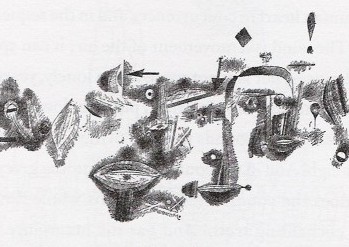
The excellent piece on Novalis in this week’s TLS quoted a bit of his brilliant Monolog, and it’s short enough I figured I’d just post the whole thing here:
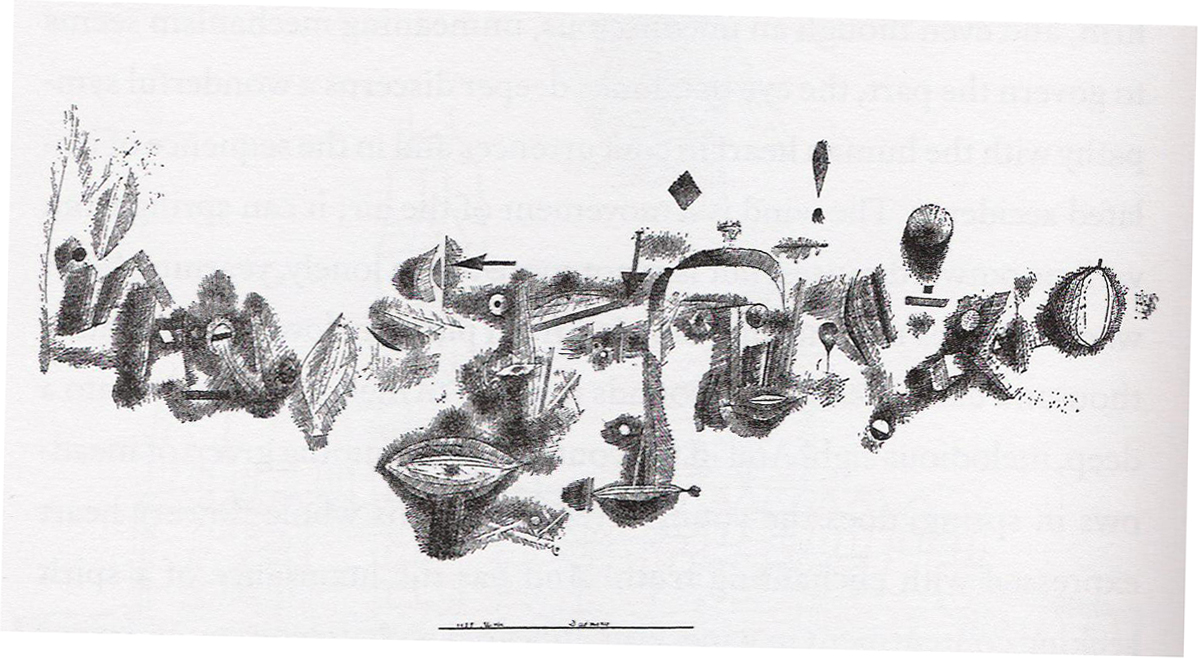
Speaking and writing is a crazy state of affairs really; true conversation is just a game with words. It is amazing, the absurd error people make of imagining they are speaking for the sake of things; no one knows the essential thing about language, that it is concerned only with itself. That is why it is such a marvellous and fruitful mystery – for if someone merely speaks for the sake of speaking, he utters the most splendid, original truths. But if he wants to talk about something definite, the whims of language make him say the most ridiculous false stuff. Hence the hatred that so many serious people have for language. They notice its waywardness, but they do not notice that the babbling they scorn is the infinitely serious side of language. If it were only possible to make people understand that it is the same with language as it is with mathematical formulae – they constitute a world in itself – their play is self-sufficient, they express nothing but their own marvellous nature, and this is the very reason why they are so expressive, why they are the mirror to the strange play of relationships among things. Only their freedom makes them members of nature, only in their free movements does the world-soul express itself and make of them a delicate measure and a ground-plan of things. And so it is with language – the man who has a fine feeling for its tempo, its fingering, its musical spirit, who can hear with his inward ear the fine effects of its inner nature and raises his voice or hand accordingly, he shall surely be a prophet; on the other hand the man who knows how to write truths like this, but lacks a feeling and an ear for language, will find language making a game of him, and will become a mockery to men, as Cassandra was to the Trojans. And though I believe that with these words I have delineated the nature and office of poetry as clearly as I can, all the same I know that no one can understand it, and what I have said is quite foolish because I wanted to say it, and that is no way for poetry to come about. But what if I were compelled to speak? What if this urge to speak were the mark of the inspiration of language, the working of language within me? And my will only wanted to do what I had to do? Could this in the end, without my knowing or believing, be poetry? Could it make a mystery comprehensible to language? If so, would I be a writer by vocation, for after all, a writer is only someone inspired by language?This, together with Kleist’s “On the Gradual Production of Thoughts Whilst Speaking”, make the deconstructionists seem rather late to their own game. The artistic complement to Novalis here is Paul Klee, whose drawings inspired by The Novices of Sais capture some of what Novalis is saying. This one is called “Demony”:
Novalis, “Monologue” (1798), tr. Joyce Crick
MONOLOGUE
Novalis,
Friedrich von Hardenberg.
From The Philosophical and Theoretical Works, pp. 438-439.
Read in German
Matters concerning speech and writing are genuinely strange; proper
conversation is a mere play of words. We can only marvel at the
laughable error people make--believing that they speak about things. No
one knows precisely what is peculiar to language, that it concerns
itself merely with itself. For that reason, it is a wonderful and
fertile mystery--that when someone speaks merely in order to speak, one
precisely then expresses the most splendid and most original truths.
Yet if one wishes to speak of something determinate, then temperamental
language has them say the most laughable and perverse things. That is
the reason too for the hatred that so many earnest people have toward
language. They recognize their own willfulness, but do not observe that
contemptible chatter is the infinitely earnest side of language. If
only one could make people grasp that the case of language is similar
to the case of mathematical formulae--they constitute a world for
themselves-- they play with themselves alone, express nothing other
than their wonderful nature, and precisely for that reason they are so
expressive--precisely for that reason they mirror in themselves the
curious play of relations in things. Only by way of freedom are they
members of nature and only in their free movements does the world soul
give utterance, making them a delicate standard of measure and
blueprint for things. Thus it is with language too--whoever has a
subtle
sense of its application, its cadence, its musical spirit, whoever
perceives in oneself the delicate effects of its inner nature, and
moves one’s tongue and hand in accordance with it will be a prophet; in
contrast, whoever knows it but does not have sufficient ear and
sensibility for language, writes truths such as these, will be held
hostage by language itself and will be mocked by human beings, as was
Cassandra among the Trojans. If I believe I have hereby declared most
precisely the essence and office of poesy, I know nonetheless that
no human being can understand it, and that I have said something quite
foolish, for the mere reason that I wanted to say it, so that no poesy
comes to be. Yet what would happen if I had to talk? and if this
linguistic drive to speak were the characteristic of inspiration of
language, and of the efficacy of language in me? and if my will only
willed
precisely everything that I had to will--then in the end this could be
without my knowledge or belief poesy and could make a mystery of
language comprehensible? and thus I would be a writer by vocation,
inasmuch as a writer is only an enthusiast of language?--Novalis,
Friedrich von Hardenberg.
From The Philosophical and Theoretical Works, pp. 438-439.
Read in German
Translation by Ferit Güven
MONOLOG
Novalis,
Friedrich von Hardenberg.
Das philosophisch-theoretische Werk, pp. 438-439.
Novalis,
Friedrich von Hardenberg.
Das philosophisch-theoretische Werk, pp. 438-439.

Hyacinth and Rosebud: Treading a Path to a Parable by Novalis via Thalmann’s Literary Sign Language of German Romanticism
August 22, 2013
Marianne Thalmann The Literary Sign Language of German Romanticism Figure 2 Novalis Hyazinth (1798).
This amazing little exposition of Marianne Thalmann’s Literary Sign Language of German Romanticism (1967) I found when trying to track down an image by Novalis which inspired Joyce’s diagram on page 293 of Finnegans Wake.
It could be that I’m completely mistaken about the existence of such an
image (‘something’ I vaguely remember reading about ‘somewhere’, years
ago), but the pathway it’s revealed looks very promising. Novalis is
very much neglected in Anglo-American intellectual culture, partly
because he doesn’t accord with its pragmatic, utilitarian outlook. This
is a bit of a journey into the unknown for me, the parable of Hyacinth
and Rosebud (Hyazinth und Rosenblütchen) seems like a good place to
start.
Long
ago, there lived far to the west a very young man, good, but extremely
odd. He tormented himself continually about this nothing and that
nothing, always walked in silence and straight before him, sat down
alone when the others were at their sports and merry-makings, and
brooded over strange things. Caves and woods were his dearest haunts;
and there he talked on and on with beasts and birds, with trees and
rocks–of course not one rational word, but mere idiotic stuff, to make
one laugh to death. He continued, however, always moody and serious, in
spite of the utmost pains that the squirrel, the monkey, the parrot, and
the bullfinch could take to divert him, and set him in the right way.
The goose told stories, the brook jingled a ballad between, a great
thick stone cut ridiculous capers, the rose stole lovingly about him
from behind and crept through his locks, while the ivy stroked his
troubled brow. But his melancholy and gravity were stubborn. His parents
were much troubled, and did not know what to do. He was in good health,
and ate well enough; they had never caused him any offence; and, until a
few years ago, he had been the liveliest and merriest of them all,
foremost in all their games, and a favourite with all the maidens. He
was very handsome, looked like a picture, and danced like an angel.
Amongst the maidens was one, a charming and beautiful creature, who
looked like wax, had hair like golden silk, and cherry-red lips, was a
doll for size, and had coal-black, yes, raven-black eyes. Whoever saw
her was ready to swoon, she was so lovely. Now Rosebud, for that was her
name, was heartily fond of the handsome Hyacinth, for that was his
name, and he loved her fit to die. The other children knew nothing of
it. A violet told them of it first. The little house-cats had been quite
aware of it, for the houses of their parents lay near each other. So
when Hyacinth stood at night by his window, and Rosebud at hers, and the
cats ran past mouse-hunting, they saw the two standing there, and often
laughed and tittered so loud that they heard it and were offended. The
violet told it in confidence to the strawberry, and she told it to her
friend, the raspberry, who never ceased rasping when Hyacinth came
along; so that by and by the whole garden and wood were in the secret,
and when Hyacinth went out, he heard on all sides the cry: “Little Rosy
is my posy!” This vexed him; but the next moment he could not help
laughing from the bottom of his heart, when the little lizard came
slipping along, sat down on a warm stone, waggled his tail, and sang–
“Little Rosebud, good and wise,
All at once has lost her eyes:
Taking Hyacinth for her mother,
Round his neck her arms she flings;
Then perceiving ’tis another–
Starts with terror?–no, but clings–
Think of that!–fast as before,
Only kissing all the more!”
All at once has lost her eyes:
Taking Hyacinth for her mother,
Round his neck her arms she flings;
Then perceiving ’tis another–
Starts with terror?–no, but clings–
Think of that!–fast as before,
Only kissing all the more!”
Alas, how
soon was the grand time over! There came a man out of strange lands, who
had travelled wondrous far and wide, had a long beard, deep eyes,
frightful eyebrows, and a strange garment with many folds, and inwoven
with curious figures. He seated himself before the house of Hyacinth’s
parents. Hyacinth at once became very inquisitive, and sat down beside
him, and brought him bread and wine. Then parted he his white beard, and
told stories deep into the night; and Hyacinth never stirred or tired
of listening. This much they learned afterward, that he talked a great
deal about strange lands, unknown countries, and amazingly wonderful
things; stopped there three days, and crept with Hyacinth down into deep
shafts. Little Rosebud execrated the old sorcerer pretty thoroughly,
for Hyacinth was altogether absorbed in his conversation, and paid no
heed to anything else, hardly even to the swallowing of a mouthful of
food. At length the man took his departure, but left with Hyacinth a
little book which no man could read. Hyacinth gave him fruit, and bread,
and wine to take with him, and accompanied him a long way. Then he came
back sunk in thought, and thereafter took up a quite new mode of life.
Rosebud was in a very sad way about him, for from that time forward he
made little of her, and kept himself always to himself. But it came to
pass that one day he came home, and was like one born again. He fell on
his parents’ neck and wept. “I must away to a foreign land!” he said:
“the strange old woman in the wood has told me what I must do to get
well; she has thrown the book into the fire, and has made me come to you
to ask your blessing. Perhaps I shall be back soon, perhaps never more.
Say good-bye to Rosebud for me. I should have been glad to have a talk
with her; I do not know what has come to me: I must go! When I would
think to recall old times, immediately come thoughts more potent in
between; my rest is gone, and my heart and love with it; and I must go
find them! I would gladly tell you whither, but do not myself know; it
is where dwells the mother of things, the virgin with the veil; for her
my spirit is on fire. Farewell!” He tore himself from them, and went
out. His parents lamented and shed tears. Rosebud kept her chamber, and
wept bitterly.
Hyacinth now
ran, as fast as he could, through valleys and wildernesses, over
mountains and streams, toward the land of mystery. Everywhere he
inquired–of men and beasts, of rocks and trees,–after the sacred goddess
Isis. Many laughed, many held their peace; nowhere did he get an
answer. At first he passed through a rugged wild country; mists and
clouds threw themselves in his way, but he rushed on impetuously. Then
he came to boundless deserts of sand–mere glowing dust; and as he went
his mood changed also; the time became tedious to him, and his inward
unrest abated; he grew gentler, and the stormy impulse in him passed by
degrees into a mild yet powerful attraction, wherein his whole spirit
was dissolved. It seemed as if many years lay behind him.
And now the
country became again richer and more varied, the air soft and blue, the
way smoother. Green bushes enticed him with their pleasant shadows, but
he did not understand their speech; they seemed indeed not to speak, and
yet they filled his heart with their green hues, and their cool, still
presence. Ever higher in him waxed that same sweet longing, and ever
broader and juicier grew the leaves, ever louder and more jocund the
birds and beasts, balmier the fruits, darker the heavenly blue, warmer
the air, and more ardent his love. The time went ever faster, as if it
knew itself near the goal.
One day he
met a crystal rivulet, and a multitude of flowers, coming down into a
valley between dark, columnar cliffs. They greeted him friendlily, with
familiar words. “Dear country-folk,” said he, “where shall I find the
sacred dwelling of Isis? Hereabouts it must be, and here, I guess, you
are more at home than I.” “We also are but passing through,” replied the
flowers; “a spirit-family is on its travels, and we are preparing for
them their road and quarters. A little way back, however, we passed
through a country where we heard her name mentioned. Only go up, where
we came down, and thou wilt soon learn more.” The flowers and the brook
smiled as they said it, offered him a cool draught, and went on their
way. Hyacinth followed their counsel, kept asking, and came at last to
that dwelling he had sought so long, which lay hid among palms and other
rare plants. His heart beat with an infinite longing, and the sweetest
apprehension thrilled him in this abode of the eternal seasons. Amid
heavenly odours he fell asleep, for Dream alone could lead him into the
holy of holies. In marvellous mode Dream conducted him through endless
rooms full of strange things, by means of witching sounds and changeful
harmonies. All seemed to him so familiar, and yet strange with an
unknown splendour; then vanished the last film of the perishable as if
melted into air, and he stood before the celestial virgin. Then he
lifted the thin glistening veil, and–Rosebud sank into his arms. A
far-off music surrounded the mysteries of love’s reunion and the
outpouring of their longings, and shut out from the scene of their
rapture everything alien to it.
Hyacinth
lived a long time after with Rosebud and his happy parents and old
playmates; and numberless grandchildren thanked the wonderful old wise
woman for her counsel and her uprousing; for in those days people had as
many children as they pleased. (Translated by George MacDonald. Found here).

The veiled figure of Isis depicted by Lady Frieda Harris in Aleister Crowley’s Thoth Tarot (1944)
As Robert Lee Wolff points out in The Golden Key (1961 New Haven: University of Yale Press, p.86), Hyacinth lifts the veil of Isis (Wisdom) and discovers Rosebud (Erotic love).

NOTE TO READERS OF THIS BLOG: I
disassociate myself from, and repudiate, any adverts you may see with my
blog posts. I don’t see why I should pay $99 a year for the privilege
of having the ‘ad-free upgrade’, so please ignore the corporate rubbish…
