The Dissection
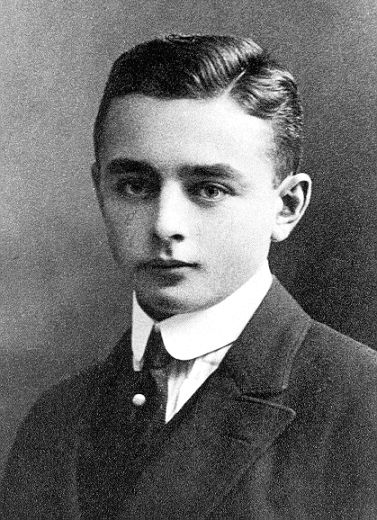
Georg Heym (1887– 1912) was a German poet and
playwright who also wrote one novel. Heym believed in the idea of the
“demon city,” which symbolized his repudiation of romanticism in the
midst of the rise of industrialism and repressive systems. Still, he
lived a wild and passionate life, accompanied by depression and
restlessness. In 1910 he dreamed of a death by drowning and two years
later fell through the ice while skating. “The Dissection” (1913) is
more prose-poem than story in its luminous reverie.
We are pleased to present this new translation by Gio Clairval from
The Weird
compendium, our 750,000-word anthology published in North America this
week by Tor Books. The translation corrects errors in prior versions,
including the use of “The Autopsy” as the title. It also keeps the
intended repetition of certain words like “white.” Master of the weird
Thomas Ligotti has called it one of his favorite tales. – Ann
& Jeff VanderMeer
***
The dead man lay alone and naked on a white cloth, surrounded by
depressing white walls, in the cruel sobriety of a wide dissection room
that seemed to shiver with the screams of an endless torture.
The light of noon bathed him and awakened the dead spots on his
forehead; conjured up a bright green from his naked belly, bloating his
body as if it were a sack of water.
His body resembled the iridescent cup of some gigantic flower,
a mysterious plant from Indian primeval forests that someone had shyly
laid at the altar of death.
Splendid reds and blues sprouted down his limbs, and in the heat the
large wound under his navel slowly split open like a red furrow,
releasing a foul stench.
The doctors entered. Friendly men in frayed white coats and
gold-rimmed pince-nez. They stepped up to the dead man and observed him
with interest, as if at a scientific meeting.
From their white cabinets they took out dissecting instruments, white
crates full of hammers, saws with sharp teeth, files, hideous sets of
tweezers, knives with large saw teeth as crooked as vultures’ beaks
forever screaming for flesh.
They began their revolting work. They resembled hideous torturers,
blood flowing on their hands as they dug ever more deeply into the
frigid corpse and pulled out its innards, like white cooks gutting
a goose. Around their arms coiled the intestines, green-yellow snakes,
and faeces dripped on their coats, a warm, putrid fluid. They punctured
the bladder, the cold urine in it glistening like yellow wine. They
poured it into large bowls, and it reeked of pungent, acrid ammonia. But
the dead man slept. He patiently let them tug at him and pull his hair.
He slept.
And while the thumping of hammers resounded on his skull, a dream,
a remnant of love awoke in him, like a torch shining in his personal
night.
Outside the tall window stretched a wide sky filled with small white
clouds that swam like small, white gods in the light of that silent
afternoon. And swallows darted high across the blue, feathers quivering
in the warm sun of July.
The dead man’s black blood streamed across the blue putrefaction on
his forehead. In the heat, it evaporated into an awful cloud, and the
decay of death crept over him with its dappled claws. His skin began to
flake apart; his belly turned white like that of an eel under the greedy
fingers of the doctors, who plunged their arms up to the elbows in the
wet flesh.
The decay pulled apart the mouth of the dead man. He seemed to smile.
He dreamed of beatific stars, of a fragrant summer evening. His rotting
lips trembled as though under a brief kiss.
“How I love you. I have loved you so much.
Should I say how I love you? As you strolled across poppy fields,
a flower of flames yourself, you swallowed the entire evening. And the
dress that billowed around your ankles was a wave of fire in the setting
sun. But you bowed your head in the light, hair still burning, inflamed
by my kisses.
“So you went down there, turning to look
back at me as you walked away. And the lantern swayed in your hand like
the glow of a rose lasting in the twilight long after you were gone.
“I’ll see you again tomorrow. Here, under
the window of the chapel, here, where the light of the candles falls
about you, making your hair a golden forest, and daffodils nestle around
your ankles, tenderly, like tender kisses.
I will see you again every evening in the hour of dusk. We will never part. How I love you! Should I tell you how I love you?”
And the dead man quivered in happiness on his white death table,
while the iron chisels in the hands of the doctors broke open the bones
of his temple.
 |
| Preparation For The Funeral Aka The Autopsy By Paul Cezanne French, 1839-1906 |
|
|
|
|
Posted: August 18, 2012 | Author: nzumel | Filed under: Books, Musings | Tags: Georg Heym, reading, translation, weird tales |
 De Re Anatomica
 (1559). Image: Wikipedia
They began their revolting work. They resembled hideous
torturers, blood flowing on their hands as they dug ever more deeply
into the frigid corpse and pulled out its innards, like white cooks
gutting a goose. Around their arms coiled the intestines, green-yellow
snakes, and faeces dripped on their coats, a warm, putrid fluid. They
punctured the bladder, the cold urine in it glistening like yellow wine.
They poured it into large bowls, and it reeked of pungent, acrid
ammonia. But the dead man slept. He patiently let them tug at him and
pull his hair. He slept.
This is not the sort of thing I would usually read. It’s not the kind of imagery I particularly enjoy. But Georg Heym’s
The Dissection is one of the most beautiful pieces I’ve ever read.
And to be fair, the subject matter is a benign kind of gruesome,
if that makes sense: only an autopsy, not a murder, not cannibal
revenants, not
The Texas Chainsaw Massacre. I read this piece in the anthology
The Weird, edited by Ann and Jeff VanderMeer. The VanderMeers have generously put
the entirety of The Dissection online, on their website
Weird Fiction Review.
It sucked me in with the very first sentence: the dead man under a
white cloth, in a room with white walls, a room that “seemed to shiver
with the screams of an endless torture.” How did Heym make something so
banal (well, as banal as a morgue can be) seem so sinister? And so
beautiful at the same time? Images of decadent tropical jungles, of warm
summer skies — and of love.
Then I wondered — how much of what I’m responding to is Heym, and how
much of it is the translator, Gio Clairval? The introduction to the
piece tells us that the translation is new (commissioned for
The Weird anthology, I assume), to correct “prior errors”, including the English translation of the title (
Die Sektion,
in German) as “The Autopsy”. So something was lacking in previous
English versions, and that matters more with this piece, perhaps, than
with other stories of this genre.
The Dissection doesn’t have a
plot; it’s a vignette (a “prose-poem”, the VanderMeers call it, and
Heym was a poet). There isn’t anything to it, beyond its imagery and its
idea — namely, that memories can be awakened by the jarrings of the
brain of a dead man. The idea is interesting, sure — but you can find
other authors who have written actual stories about it, in English,
even. Ambrose Bierce’s “Occurrence at Owl Creek Bridge” is one example;
Tobias Wolff’s “Bullet in the Brain” (which is an awesome short story,
by the way) is another. One can argue that Jorge Luis Borges’ “The
Secret Miracle” is an example, in Spanish, as well — though I prefer to
think of it as the story of an actual miracle, myself.
And as for the imagery — well, I prefer old-fashioned, understated,
M. R. James-style ghost stories to more explicit splattery gory things.
So, for me at least, this imagery itself is not enough to draw me in.
It’s how the imagery is presented. I’m not in the business of literary
translation, but even I can figure out that preserving the imagery — the
feeling — in the way the author intended must be the hardest aspect of
the job.
I don’t read German, so I can’t definitively answer my own question. If you read German, you can answer it for yourself:
the original is available courtesy of Gutenberg.de. However, I did track down
a previous translation, from about 1960, entitled The Autopsy. I don’t know who that translator was.
Comparing the two, I can see that the “plot”, such as it is, has been preserved;
The Autopsy‘s rhythm doesn’t dance as beautifully, to my ear. I don’t think that I would have been so blown away by
The Autopsy as I was by
The Dissection.
From what clues I can glean, I would say the
The Autopsy is more transliteral. There’s a sentence in the German that goes:
Vor dem großen Fenster tat sich ein großer weiter Himmel
auf, gefüllt von kleinen weißen Wölkchen, die in dem Lichte schwammen,
in der Nachmittagsstille, wie kleine, weiße Götter.
The Autopsy renders this as:
In front of the large window a great wide sky opened,
full of small white clouds that floated in the light, in the afternoon
quiet, like small white gods.
Ms. Clairval chose to translate it as:
Outside the tall window stretched a wide sky filled with
small white clouds that swam like small, white gods in the light of that
silent afternoon.
I think the first translation preserves more of the original word
ordering, but the second translation sounds much better in English.
The biggest difference between the two translations is in the description of the doctors who perform the dissection.
The Dissection describes them as “Friendly men in frayed white coats and gold-rimmed pince-nez.”
The Autopsy
describes them as “kindly men in white coats, with duelling scars and
gold pince-nez.” Duelling scars? Where did those come from?
Ms. Clairval, in
her appreciation of Heym at Weird Fiction Review, admits that the duelling scars (
Schmissen)
are in the original text. Apparently, duelling (with its resulting
scars) was a common, fraternity-type activity among male university
students of the time. Hence, the duelling scars might be a kind of
credential that the doctors went to the right schools. However, Ms.
Clairval decided (based on other aspects of the wording) that
schmissen, in the context used, might refer to “rents” — that is, of fabric: well-worn, well-washed,
frayed lab coats.
But then again, the author may have wanted to imply both
meanings: the down-to-earth frayed coats, and the remainders of ancient
duels on the faces of the doctors, now older and wiser (because they
wear glasses for near vision).
It’s a small detail, and doesn’t make much difference to the overall
effect; still I’m glad that I read Ms. Clairval’s commentary, because
it’s interesting to think about that level of meaning, which — if it is
really there — doesn’t survive the translation.
And maybe that does answer my question, after all.
UPDATE (Sept 13, 2012): Thanks to lietmotivation for suggesting also the story “Der Irre.” I found a 1979 translation of Heym’s
Der Dieb: Ein Novellenbuch as part of
Arlene Elizabeth Sture’s 1979 Master’s thesis
from McMasters University. Her thesis includes translation and
commentary of five short stories, including “Die Sektion” (as “The
Post-Mortem”) and “Der Irre” (as “The Madman”). Looking forward to
reading this!
Die Sektion - Georg Heym
Der Tote lag allein und nackt auf einem weißen Tisch in dem großen Saal,
in dem bedrückenden Weiß, der grausamen Nüchternheit des
Operationssaales, in dem noch die Schreie unendlicher Qualen zu zittern
schienen.
Die Mittagssonne bedeckte ihn und ließ auf seiner Stirn
die Totenflecken aufwachen; sie zauberte aus seinem nackten Bauch ein
helles Grün und blähte ihn auf wie einen großen Wassersack.
Sein
Leib glich einem riesigen schillernden Blumenkelch, einer
geheimnisvollen Pflanze aus indischen Urwäldern, die jemand schüchtern
vor den Altar des Todes gelegt hatte.
Prächtige rote und blaue
Farben wuchsen an seinen Lenden entlang, und in der Hitze barst langsam
wie eine rote Ackerfurche die große Wunde unter seinem Nabel, die einen
furchtbaren Duft ausströmte.
Die Ärzte traten ein. Ein paar freundliche Männer in weißen Kitteln mit Schmissen und goldenen Zwickern.
Sie traten an den Toten heran und sahen ihn sich an, mit Interesse, unter wissenschaftlichen Gesprächen.
Sie
nahmen aus den weißen Schränken ihr Sezierzeug heraus, weiße Kästen
voll von Hämmern, Knochensägen mit starken Zähnen, Feilen, gräßliche
Batterien voll von Pinzetten, kleine Bestecke voll riesiger Nadeln, die
wie krumme Geierschnäbel ewig nach Fleisch zu schreien schienen.
Sie
begannen ihr gräßliches Handwerk. Sie glichen furchtbaren
Folterknechten, über ihre Hände strömte das Blut, und sie tauchten sie
immer tiefer in den kalten Leichnam ein und holten seinen Inhalt heraus,
weißen Köchen gleich, die eine Gans ausnehmen.
Um ihre Arme
wanden sich die Därme, grüngelbe Schlangen, und der Kot troff über ihre
Kittel, eine warme, faulige Flüssigkeit. Sie stachen die Blase auf, der
kalte Harn schimmerte darin wie ein gelber Wein. Sie schütteten ihn in
große Schalen; er stank scharf und beizend wie Salmiak.
Aber der Tote schlief. Er ließ sich geduldig hin-und herzerren, an seinen Haaren hin- und herraufen, er schlief.
Und
während die Schläge der Hämmer auf seinem Kopfe dröhnten, wachte ein
Traum, ein Rest von Liebe in ihm auf, wie eine Fackel, die hinein in
seine Nacht leuchtete.
Vor dem großen Fenster tat sich ein großer
weiter Himmel auf, gefüllt von kleinen weißen Wölkchen, die in dem
Lichte schwammen, in der Nachmittagsstille, wie kleine, weiße Götter.
Und die Schwalben kreisten hoch oben im Blauen, zitternd in der warmen
Julisonne.
Das schwarze Blut des Todes rann über die blaue
Fäulnis seiner Stirn. Es verdunstete in der Hitze zu einer schrecklichen
Wolke, und die Verwesung des Todes kroch mit ihren bunten Krallen über
ihn hin. Seine Haut begann auseinander zu fließen, sein Bauch wurde weiß
wie der eines Aales unter den gierigen Fingern der Ärzte, die in dem
feuchten Fleisch ihre Arme bis an die Ellenbogen badeten.
Die
Verwesung zog den Mund des Toten auseinander, er schien zu lächeln, er
träumte von einem seligen Gestirn, von einem duftenden Sommerabend.
Seine verfließenden Lippen zitterten wie unter einem flüchtigen Kusse.
»Wie
ich dich liebe. Ich habe dich so geliebt. Soll ich dir sagen, wie ich
dich liebe? Wie du durch die Mohnfelder gingest, selber eine duftende
Mohnflamme, hattest du den ganzen Abend in dich getrunken. Und dein
Kleid, das um deine Knöchel bauschte, war wie eine Welle von Feuer in
der untergehenden Sonne. Aber dein Kopf neigte sich in dem Lichte, und
dein Haar brannte noch und flammte von allen meinen Küssen.
So
gingest du dahin und sahst dich immer nach mir um. Und die Laterne in
deiner Hand schwankte wie eine glühende Rose lange noch fort in der
Dämmerung.
Ich werde dich morgen wiedersehen. Hier unter dem
Fenster der Kapelle, hier, wo das Licht der Kerzen herausfällt und dein
Haar in einen goldenen Wald verwandelt, hier, wo sich die Narzissen an
deine Knöchel schmiegen, zärtlich, wie zarte Küsse.
Ich werde
dich wiedersehen alle Abende um die Stunde der Dämmerung. Wir werden uns
nie verlassen. Wie ich dich liebe! Soll ich dir sagen, wie ich dich
liebe?«
Und der Tote zitterte leise vor Seligkeit auf seinem
weißen Totentische, während die eisernen Meißel in den Händen der Ärzte
die Knochen seiner Schläfe aufbrachen.