Sunday, November 14, 2010

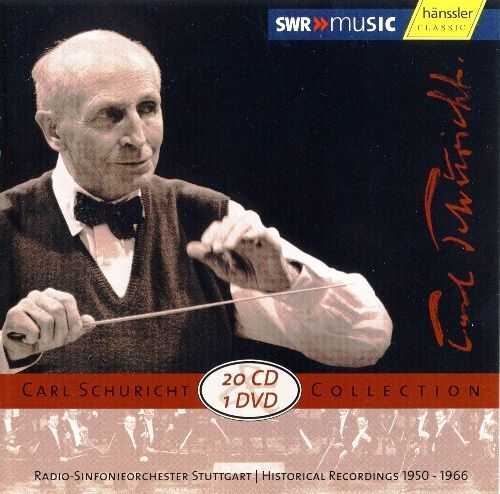
Carl Schuricht Collection (20 CD box set, FLAC)

BOXSET.RU lossless classics

Carl Schuricht Collection (20 CD box set, FLAC)
# Performer: Hermann Prey, Barry McDaniel
# Conductor: Carl Schuricht
# Composer: Ludwig van Beethoven, Robert Schumann, Johannes Brahms, Anton Bruckner, Richard Wagner, et al.
# Audio CD (March 13, 2007)
# SPARS Code: DDD
# Number of Discs: 20
# Format: FLAC (image+cue)
# Label: Hanssler Classics
# ASIN: B000MR9EFS
# Size: 5.61 Gb
# Recovery: +3%
# Scan: yes
# Server: hotfile


CD01
Ludwig van Beethoven – Symphony No. 7 in A major, Op. 92

01. I. Poco sostenuto – Vivace 11:44
02. II. Allegretto 7:35
03. III. Presto 7:07
04. IV. Allegro con brio 7:07
Robert Schumann – Symphony No. 2 in C major, Op. 61
05. I. Sostenuto assai – Allegro ma non troppo 10:54
06. II. Scherzo, Allegro vivace 7:41
07. III. Adagio espressivo 9:36
08. IV. Allegro molto vivace 8:08
CD02
Ludwig van Beethoven – Symphony No. 9 in D minor (“Choral”), Op. 125

01. I. Allegro ma non troppo, un poco maestoso Maria Stader 15:17
02. II. Molto vivace Maria Stader 11:34
03. III. Adagio molto e cantabile – Andante moderato Maria Stader 15:20
04. IV. Finale: Presto – Allegro assai Maria Stader 22:23
Stuttgarter Lehrergesangsverein, Bach-Chor Stuttgart
with Murray Dickie (tenor), Marga Höffgen (alto),
Maria Stader (soprano), Otto Wiener (bass)

Coriolan Overture, Op. 62
05. Overture to Collin’s Coriolan, Op. 62, “Coriolan Overture” 8:07
CD03
Johannes Brahms – Symphony No. 2 in D major, Op. 73

01. I. Allegro non troppo 16:21
02. II. Adagio non troppo 9:22
03. III. Allegretto grazioso 5:35
04. IV. Allegro con spirito 10:22
05. Schicksalslied (Song of Destiny) for chorus and orchestra, Op. 54
06. Nänie (“Auch das Schöne muss sterben”), for chorus, orchestra & harp ad lib, Op. 82 1954 13:22
SWR Vokalensemble Stuttgart
CD04
Johannes Brahms – Ein deutsches Requiem (A German Requiem), Op. 45

01. I. Selig sind, die da Leid tragen 10:54
02. II. Denn alles Fleisch, es ist wie Gras 13:18
03. III. Herr, lehre doch mich 8:37
04. IV. Wie lieblich sind deine Wohnungen 6:05
05. V. Ihr habt nun Traurigkeit 7:11
06. VI. Denn wir haben hie keine bleibende Statt 11:27
07. VII. Selig sind die Toten 10:37
SWR Vokalensemble Stuttgart, Chor des Hessischen Rundfunks Frankfurt
with Hermann Prey (baritone), Maria Stader (soprano)

CD05
Anton Bruckner – Symphony No. 4 in E flat (“Romantic”)

01. I. Bewegt, nicht zu schnell 17:40
02. II. Andante quasi allegretto 16:34
03. III. Scherzo: Bewegt 11:17
04. IV. Finale: Bewegt, doch nicht zu schnell 23:30
CD06
Anton Bruckner – Symphony No. 5 in B flat

01. I. Introduction: Adagio – Allegro 20:54
02. II. Adagio: Sehr langsam 16:06
03. III. Scherzo: Molto vivace (Schnell) – Trio: Im gleichen Tempo 9:08
04. IV. Finale: Adagio – Allegro moderato 26:44
CD07
Anton Bruckner – Symphony No. 7 in E major

01. I. Allegro moderato 20:15
02. II. Adagio: Sehr feierlich und sehr langsam 18:59
03. III. Scherzo: Sehr schnell 8:21
04. IV. Finale: Bewegt, doch nicht schnell 12:37
Richard Wagner
05. Tristan und Isolde, opera, WWV 90: 1. Act 1. Vorspiel
06. Tristan und Isolde, opera, WWV 90: 2. Act 3. Isoldes Liebestod
CD08
Anton Bruckner – Symphony No. 8 in C minor

01. I. Allegro moderato 16:07
02. II. Scherzo: Allegro moderato – Langsam 25:42
03. III. Adagio: Feierlich langsam, doch nicht schleppend 23:37
04. IV. Finale: Feierlich, nicht schnell 10:07
CD09
Anton Bruckner – Symphony No. 9 in D minor

01. I. Feierlich: Misterioso 22:14
02. II. Scherzo: Bewegt, lebhaft – Trio: Schnell 14:25
03. III. Adagio: Langsam feierlich 23:29
CD10
01. Edvard Grieg – I høst (In Autumn), concert overture for orchestra, Op. 11
Max Bruch – Violin Concerto No. 1 in G minor, Op. 26
02. I. Prelude: Allegro moderato Hansheinz Schneeberger 8:34
03. II. Adagio Hansheinz Schneeberger 9:16
04. III. Finale: Allegro energico Hansheinz Schneeberger 7:28
with Hansheinz (violin)
05. Hermann Goetz – Concerto for violin and orchestra in G Major, Op 22
with Roman Schimmer (violin)
06. Robert Volkmann – Overture “Richard III, ” Op 68
CD11
Franz Joseph Haydn
Symphony No. 100 in G major (“Military”) H. 1/100

1958 22:34
01. I. Adagio – Allegro 6:07
02. II. Allegretto 5:34
03. III. Menuet: Moderato – Trio 4:58
04. IV. Finale: Presto 5:55
Cello Concerto No. 2 in D major, H. 7b/2 (Op. 101)
05. I. Allegro moderato Enrico Mainardi 14:00
06. II. Adagio Enrico Mainardi 6:53
07. III. Rondo: Allegro Enrico Mainardi 6:24
with Enrico Mainardi (cello)
Symphony No. 95 in C minor, H. 1/95
08. I. Allegro 6:46
09. II. Andante 4:50
10. III. Menuetto 4:39
11. IV. Finale: Vivace 3:36
CD12
Gustav Mahler
Symphony No. 3 in D minor

01. I. Kraftig: Entschieden 30:38
02. II. Tempo di menuetto: Sehr massig 8:04
03. III. Comodo. Scherzando. Ohne Hast 15:08
04. IV. Sehr langsam: Misterioso 8:27
05. V. Lustig im Tempo und keck im Ausdruck 4:21
CD13
01. VI. Langsam. Ruhevoll. Empfunden 21:12
Frauenstimmen des SWR Vokalensemble Stuttgart,
Knabenchor des Eberhard-Ludwig-Gimnasiums Stuttgart,
Rut Siewert (mezzosoprano)

Richard Strauss
Eine Alpensinfonie (An Alpine Symphony), Op. 64 (TrV 233)

02. I. Nacht: Lento 2:41
03. II. Sonnenaufgang: Festes Zeitmass, massig langsam 1:26
04. III. Der Anstieg: Sehr lebhaft und ernergisch 2:09
05. IV. Eintritt in den Wald 4:41
06. V. Wanderung neben dem Bache 0:39
07. VI. Am Wasserfall: Sehr lebhaft 0:16
08. VII. Erscheinung 0:48
09. VIII. Auf Blumige Wiesen: Sehr Lebhaft 0:50
10. IX. Auf der Alm: Massig schnell 2:08
11. X. Durch Dickicht und Gestrupp auf Irrwegen 1:30
12. XI. Auf Dem Gletscher: Festes, sehr lebhaftes Zeitmass – un poco maestoso 0:59
13. XII. Gefahrvolle Augenblicke: A tempo, lebhafter als vorher 1:41
14. XIII. Auf Dem Gipfel 4:10
15. XIV. Vision: Fest und gehalten 3:22
16. XV. nebel steigen auf: Etwas weniger breit 0:19
17. XVI. Die Sonne verdustert sich allmahlich 1:01
18. XVII. Elegie: Moderato Espressivo 2:07
19. XVIII. Stille Vor Dem Stum 2:37
20. XIX. Gewitter und Sturm. Abstieg. Schnell und heftig 3:58
21. XX. Sonnenuntergang 1:33
22. XXI. Ausklang: Etwas breit und getragen 4:53
23. Xxii. Nacht: Breit – Sehr Langsam 1:34
CD14
Wolfgang Amadeus Mozart
Symphony No. 35 in D major (“Haffner”), K. 385

1956 16:59
01. I. Allegro con spirito 5:33
02. II. Andante 4:43
03. III. Menuetto – Trio 2:53
04. IV. Finale: Presto 3:50
Symphony No. 38 in D major (“Prague”), K. 504
05. I. Adagio – Allegro 9:15
06. II. Andante 9:00
07. III. Finale: Presto 4:59
Symphony No. 40 in G minor, K. 550
08. I. Molto allegro 6:01
09. II. Andante 8:09
10. III. Menuetto: Allegro 4:08
11. IV. Allegro assai 5:12
12. No no, che non sei capace, aria for soprano & orchestra, K. 419
with Ruth-Margret Putz (soprano)
13. Le nozze di Figaro (The Marriage of Figaro), opera, K. 492: Porgi, amor Aria
with Elisabeth Schwarzkopf (soprano)
14. Die Zauberflöte (The Magic Flute), opera, K. 620: Dies Bildnis ist bezaubernd schön
with Fritz Wunderlich (tenor)
CD15
Wolfgang Amadeus Mozart
Piano Concerto No. 9 in E flat major (“Jeunehomme,” “Jenamy”), K. 271

01. I. Allegro 10:09
02. II. Andantino 10:43
03. III. Rondeau: Presto 9:33
with Clara Haskil
Piano Concerto No. 19 in F major, K. 459
04. I. Allegro vivace 12:05
05. II. Allegretto 8:02
06. III. Allegro assai 7:09
with Clara Haskil
CD16
Emil Nikolaus von Reznicek

01. Theme and Variations for large orchestra & baritone solo, after the poem “Tragic Story” by Adelbert von Chamisso
with Barry McDaniel (baritone)
Richard Strauss
02. Guntram, opera, Op. 25 (TrV 168): Act 1, Overture
Hans Pfitzner
03. Das Käthchen von Heilbronn, incidental music, Op 17: Overture
Max Reger
Variations and Fugue on a Theme of Mozart for orchestra, Op. 132

04. Theme: Andante grazioso 1:59
05. Variation 1: L’istesso tempo 2:23
06. Variation 2: Poco agitato 1:58
07. Variation 3: Con moto 1:11
08. Variation 4: Vivace 0:52
09. Variation 5: Quasi presto 1:39
10. Variation 6: Sostenuto (quasi adagietto) 2:24
11. Variation 7: Andante grazioso 2:26
12. Variation 8: Molto sostenuto 7:26
13. Fuge: Allegretto grazioso 9:23
CD17
01. Robert Schumann
Manfred, overture & incidental music, Op. 115: Overture

02. Felix Mendelssohn
Calm Sea and Prosperous Voyage, overture in D major, Op. 27

Robert Schumann
Overture, Scherzo & Finale for orchestra in E minor / E major, Op. 52

03. I. Overture: Andante con moto – Allegro 6:23
04. II. Scherzo: Vivo 3:59
05. III. Finale: Allegro molto vivace 5:53
Felix Mendelssohn
06. The Hebrides, overture for orchestra in B minor (“Fingal’s Cave”), Op. 26
07. A Midsummer Night’s Dream, overture, Op. 21
08. A Midsummer Night’s Dream, incidental music, Op. 61: No. 7 Noturno. Con molto tranquillo
09. A Midsummer Night’s Dream, incidental music, Op. 61: No. 1 Scherzo. Allegro vivace
CD18
01. Richard Wagner
Parsifal, opera, WWV 111: Act 1. Vorspiel

02. Tristan und Isolde, opera, WWV 90: Act 1. Vorspiel
03. Die Götterdämmerung (Twilight of the Gods), opera, WWV 86d: Morgendämmerung und Siegfrieds Rheinfahrt
04. Die Götterdämmerung (Twilight of the Gods), opera, WWV 86d: Trauermarsch beim Tode Siegfrieds
05. Siegfried Idyll, for small orchestra in E major, WWV 103
06. Parsifal, opera, WWV 111: Act 3. Karfreitagszauber
07. Parsifal, opera, WWV 111: Act 3. Schluss
CD19
Gustav Mahler
Symphony No. 2 in C minor (“Resurrection”)

01. I. Allegro maestoso Hertha Topper 19:38
02. II. Andante moderato Hertha Topper 10:11
03. III. Scherzo: In ruhig fliessender Bewegung Hertha Topper 10:46
04. IV. Sehr feierlich, aber schlicht, “Ulricht” Hertha Topper 4:57
CD20
01. V. Im Tempo des Scherzo Hertha Topper 33:57
SWR Vokalensemble Stuttgart, Bachchor Stuttgart,
with Hanni Mack Cosack (soprano), Hertha Topper (alto)

Franz Joseph Haydn
Symphony No. 86 in D major, H. 1/86

02. I. Adagio – Allegro spiritoso 8:00
03. II. Capriccio: Largo 7:08
04. III. Menuetto: Allegretto 5:22
05. IV. Finale: Allegro con spirito 3:55
Hide «

Films

Films by Director Stanley Kubrick

Many Directors

Friday, November 12, 2010

ORFF 's De temporum fine comoedia by Karajan

Karajan did not leave any records of Orff (apart from this one) so for some people it will come as a surprise to be informed that he was the one who gave the world premiere of Trionfi (the trilogy Carmina Burana/Catulli Carmina/Trionofo d'Afrodite) at La Scala with Schwarzkopf and Gedda among the cast. Two decades later, he gave this Orff premiere (the composer's last major work), in Salzburg.


(Original LP coverart)

CARL ORFF (1895-1982)

De temporum fine comoedia
VIGILIA
Play for the End of Time

Cast of the Salzburg Festival première 1973

Production: August Everding
Sets: Günther Schneider-Siemssen
Musical preparation: Gerhard Lenssen

I. THE SIBYLS
»Heis theós estin anarchos, hypermegéthaes, agénaetos«
A god is, without beginning, immense, unformed

»Opse theú g'aleúsi myloi«
The mills of God are late to grind

»Pasin homú nyx estin isae tois plúton echusin kai ptochois«
The same night awaits all, rich and poor

»Choneusó gar hapanta kai eis katharón dialéxo«
I will melt everything down and purify it

»Vae! Ibunt impii in gehennam ignis eterni«
Woe! The impious shall enter the hell of the eternal fire

II. THE ANCHORITES
»Úpote, maepote, maepu, maedépote ... ignis eterni immensatormenta«
Never, never, in no place, at no time the measureless torment of the eternal fire

»Unus solus Deus ab aeterno in aeternum«
God is One alone from eternity to eternity

»Nicht Satanas ... nicht Lucifer... damnatus nunquam condemnatus in aeternum«
Not Satan ... not Lucifer... the damned are not condemned for eternity

»Mundus terrenus volvitur«
The terrestrial world revolves

»Wann endet die Zeit?«
When will time end?

»Gott, schenk uns Wahrsagung, Weissagung, Hellsicht im Traum. Gott, schenk uns den Traum«
God, grant us the gifts of prophecy, sagacity, clairvoyance in dreaming. God, grant us the dream

III. »DIES ILLA«
»Wo irren wir hin, verloren, verlassen«
Whither do we stray, lost, abandoned

»Kyrie!" "Serva nos, salva nos, eripe nos!«
Help us, save us, take us away!

»Angor, timor, horror, terror ac pavor invadit omnes«
Dread, fear, horror, terror and dismay seize us all

»Omne genus daemoniorum caecorum, claudorum sive confusorum, attendite iussum meorum et vocationem verborum«
Every type of demon, blind, lame or mad, mark the command and the call of my words

»Vae, Portae Inferi oculus aspicit nos tenebrarius tenebris«
Woe, the eye, the dark eye looks upon us, with darkness, at the gates of the underworld

»Pater peccavi«

Con sublima spiritualité


Nine Sibyls:
Colette Lorand • Jane Marsh • Kay Griffel
Sylvia Anderson • Gwendolyn Killebrew • Kari Lövaas
Anna Tomowa-Sintow • Heljä Angervo • Glenys Loulis

Nine Anchorites:
Erik Geisen • Hans Wegmann • Hans Helm
Wolfgang Anheisser • Siegfried Rudolf Frese • Hermann Patzalt
Hannes Jokel • Anton Diakow • Boris Carmeli

The last beings:
Josef Greindl (The Chorus leader)
Kölner Rundfunkchor (Chorus master: Herbert Schernus)
RIAS-Kammerchor (Einstudierung: Uwe Gronostay)
Tölzer Knabenchor (Einstudierung: Gerhard Schmidt-Gaden)
Rolf Boysen (Lucifer - Speaker)
Christa Ludwig (Contralto solo)
Peter Schreier (Tenor solo)
Viola quartet: Sigiswald Kuijken • Wieland Kuijken • Adelheid Glatt • Sara E. Cunningham

Kölner Rundfunk-Sinfonie-Orchester
HERBERT VON KARAJAN

Directed for the recording by Karl O.Koch
Co-production with West German Radio, Cologne


Karajan and Orff around the time of the premiere


CARL ORFF'S "PLAY OF THE END OF TIME"

How the world came into existence, and how it might end, are questions that have been considered over and over again, and continue to be asked: in religions, in myths and prophecies, in scientific and philosophical speculation, in literature, in visions expressed in music and the visual arts. Carl Orff devoted years of thought to his idea of a drama about the end of time, as part of his ambition to create a "theatrum mundi". His earliest approach to the subject was a setting of Franz Werfel's poem Des Turmes Auferstehung (The Rising of the Tower) in 1920-21. This piece, which has not been performed to date, marks the young composer's decision to renounce late Romanticism and turn to large-scale architectonic forms. A passage at the end of the score adumbrates the viola canon which, at the end of De temporum fine comoedia, symbolizes the path leading to eternity.

Orff's thoughts took their final shape in the 1960s. His versions of Classical Greek drama, Antigonae and Prometheus, lay behind him as stations on the way towards his last work for the stage, the apocalyptic vision De temporum fine comoedia. For Orff the word 'comoedia' retains its medieval sense, embracing all stage actions that are not tragedies but end well or at least not catastrophically. The end of the "comoedia" of the end of the world constitutes a reversion, the transformation of Lucifer back into an archangel, the spiritualization of the world of the senses into a new earth in which all is spirit, and thus divine. Guilt is forgotten, not forgiven with a magnanimous gesture. Ideas of Christian eschatology mingle with concepts from late Classical Greece, from gnosis, from ideas explored by the early Christian theologian Origen in the first half of the third century.

The score was composed essentially between 1960 and 1971, but before the Munich premiere in 1979 it was tautened, and the texture lightened to enhance the text. The world premiere was given at the Salzburg Festival on 20 August 1973, in the Grosses Festspielhaus. The production was. directed by August Everding and designed by Günther Schneider-Siemssen. It was performed by the Cologne Radio Chorus, augmented by the Tölz Boys' Choir and RIAS Chamber Choir, with the Cologne Radio Symphony Orchestra. Carl Orff was by then 78 years old, though age sat lightly on him: he was serene and happy in the consciousness of having brought his life's work to an ordered conclusion. De temporum fine comoedia was to be his last large-scale work.

The experience gained in writing for chorus and orchestra between Carmina Burana and Prometheus is evident in the score. The percussion is pre-eminent, augmented by Japanese temple bells and numerous other exotic instruments, which Orff collected and tried out in his house beside the Ammersee in Upper Bavaria. As so often, the lighter strings are omitted, leaving a quartet of violas and eight double basses to make up the string complement. In addition to normal woodwind and brass, there are also harps, three pianos, two organs, wind-machine and a tape (the wind-machine is also on tape in this performance). Apart from Lucifer, who appears shortly before the end, there are no named solo roles; the solos sung by sibyls and anchorites are motivated by the textual context, and are intended to be representative, not individualistic. What has been called Orff's "magical sonority" is the outcome of the affective part-writing, the suggestive power of uncommonly refined orchestral writing which always relates to the text, the skilful deployment of the ensemble and the choruses (including boys' voices), and the formal structure of the scenes. The concluding canon for the violas, disappearing to infinity, remains one of Orff's few pieces of wordless music: a reminiscence of an archaic world, of the 'awakening' caused by the study of Monteverdi, Byrd and other masters who, around 1920 and 1930, still lay shrouded in the mists of history. The idea of the "restoration of all things" brings Lucifer to the stage: he becomes once more what he was originally, the Bearer of Light. In the closing scene the music, previously highly affective and intense, reverts to basic, 'primeval' intervals. The vox mundana and vox caelestis are heard in the cosmos, in choral polyphony. Gradually the music of earth, vox mundana, subsides and is absorbed into the music of heaven, which is symbolized by the pure fifth, the fundamental interval. Chromaticism, accidentals and key signatures vanish from the score. The fifth conveys the ultimate knowledge, that all is spirit. This spiritualization governs everything, harmony and orchestration alike, in the closing scene. Four violas, the most discreet members of the string family, intone a four-part texture above a pedal point, bringing medieval Organum to mind. The melody is Bach's chorale "Vor deinen Thron tret ich hiermit" in a disguised form. A four-part canon emerges, rotates about its own axis, and returns symbolically to its starting-point in retrograde motion. The circle, universally acknowledged as the most complete symbolic figure, is closed.

Carl Orff's De temporum fine comoedia is a work full of symbolism. Every line in the text and every figure in the music has a symbolic significance. The score represents the summation of Orff's lifelong striving to depict the two foundations of the spirit of the Western world - Greco-Roman antiquity and Christianity - together in the one "theatrum mundi". The two worlds permeate each other, bringing the recognition that all is spirit, and thus divine. "Ta panta nus" is the last, all-embracing principle. The symbolism of the "play of the end of time" is explained in the fullest detail by Werner Thomas in Theatrum mundi, volume VIII of Carl Orff und sein Werk.   Dokumentation (Hans Schneider Verlag, Tutzing, 1983). This brief introduction acknowledges its debt to that exhaustive discussion.

SYNOPSIS
What is seen on the stage are symbols, apocalyptic visions, ruminations about how the end of the world might be. The concepts are drawn from late Classical prophecy (the Roman Oracula Sibyllina from the second century B.C.), the hymn to the god of dreams from the Orphic Hymns of Classical Greece, the conjuration of demons from the medieval Carmina Burana (songs from manuscripts in the Benedictine abbey of Beuron in Baden-Württemberg), and ideas expressed by the early Christian theologian Origen, from his major work, De principiis, from the first half of the third century. Origen's theses form the centre of the work, and give an interpretation of the end of the world. Orff included the appearance of Satan and his transformation back into Lucifer in order to exemplify Origen's apocalyptic speculations. The symbolic action divides into three parts: The Sibyls, The Anchorites, and "Dies ilia". The Sibyls and the Anchorites expound opposing aspects of the same vision of the end of the world, "Dies ilia" pronounces an interpretation in the light of an early Christian view, influenced by late Classical Greece, at the centre of which is the idea of the spiritualization of the cosmos.

I. THE SIBYLS
There are nine of them, that is, three times three, a reference to the magic significance of the number three in myth, magic spells etc. The sibyls are the women soothsayers of antiquity. Orff draws on the Sibylline Oracles, the 14 books containing prophecies about the end of the world and the coming of the Messiah. Night. Fantastic Landscape, the Nine Sibyls singly and in groups. Sopranos, mezzo-sopranos and contraltos. The soothsayers foretell the terrifying end of life and the cosmos and the eternal damnation of the godless and wicked. In Greek, the sibyls sing the praises of the one God and Creator, who will come to end time. The same night awaits all, rich and poor. All life has reached the end of its span. Images of the end of the world are invoked: darkness, conflagration, the collapse of the cosmic system. God sits in judgment on mankind's greed and lack of understanding. The godless are consigned to Tartarus. At the end God speaks out of the mouth of a sibyl. An echo from on high confirms her words. The sibyl foretells purgation by fire, the resurrection of the dead, the resolution of fate, and the last judgment on the godly and the godless.

II. THE ANCHORITES
The second part of the work is the antithesis of the first. A landscape of cliffs and ravines. Dispersed about the scene, the Nine Anchorites. (A remote reminiscence of the last scene of Part II of Goethe's Faust) 'Anchorite' derives from the Greek 'anachorètes' and means one who has withdrawn: a hermit. Many early Christian ascetics withdrew to live in solitude, in the belief that the apocalyptic prophecies of their faith would be fulfilled in their lifetimes. They prepared themselves for death and judgment by living a life of strict self-denial, thought to be pleasing to God. Christian doctrine was interpreted eschatologically, as relating above all to an imminent Last Judgment. The language of the text alternates between flexible Greek and lapidary Latin in this section of the work. In form it is a sequence of individually constructed segments, reflecting speech rhythms. After the terrifying visions of the sibyls, the anchorites offer a ray of hope: "Never, never, in no place, at no time the measureless torment of the eternal fire." One declares: "Nothing against God except God Himself." The world is God's creation, and therefore it is all contained within God - even though the Devil roams abroad until the very last. Only God knows when time will end. The spiritual heart of the piece is reached, the door to knowledge is opened. Orff comes to the thesis of the early Christian Greek Origen:

Omnium rerum finis
erit
vitiorum abolitio.
(The end of all things
will be
the oblivion of all guilt.)

The words of Origen, condemned by some Councils of the early church, reflect the influence of late Greek thought, and express belief in the world's becoming spirit with the advent of Christianity. Guilt will be forgotten, wiped away like something written on a wax tablet. The concepts of "sin" and "forgiveness" are not even referred to. Guilt is forgotten, and the guilty transformed back to the state of innocence. Orff made this thesis the central idea of his piece and inscribed it as the motto at the head of the score.

III. "DIES ILLA"
The last of mankind come into view, out of darkness and wisps of mist. The universal catastrophe has taken place. Cries of woe are heard: the sky has fallen in, the sun has been extinguished, and human survivors roam about without any to warn or keep watch. The shadow of the Gregorian sequence "Dies irae, dies ilia" falls across the three-part chorus, led by a 'protagonist' in the Greek sense. "Make an end!" plead the last men. "At the gates of the underworld, the dark eye looks upon us, with darkness ..."

LUCIFER
Lucifer, the "Bearer of Light", the archangel who fell from God in his pride and delusion, and became Satanas, Mephistopheles, the Prince of Evil. He appears high up, in the centre of the stage. His clothing and armour are black and glistening. He wears a helmet shaped like a dragon's head, a cloak spread wide, a mask over his face. He stands with outstretched arms, like giant bats' wings. Lucifer confesses his guilt: "Pater peccavi - Father, I have sinned." A ray of light from heaven falls on to the mask, which falls away. A youthful face is seen. A second ray of light causes the cloak and vesper-tilian attributes to drop. Finally Lucifer stands bathed in light, and is again the archangel he once was. From a distance the chorus is heard as vox mundana, the voice of the earth: "I come to Thee, Thou art the Comforter and the last End." From a greater distance, as the light strengthens, a celestial choir replies: "Ta panta nus - All is spirit." All is made spirit - the things of the earth, the senses, the created world. It is a Christian thought, given an interpretation by Origen that rests on late Greek philosophy.


Please, consider downloading the excellent dBpowerAMP Music Converter, a great solution to handle the different audio encodings.
Other APE Links:
Macintosh APE-related links: Max or  xACT - And a conversion utility for your OSX Mac
Codec for Linux systems: MAC-port
Codecs & Plugins for Windows computers: Monkey's Audio (APE official site) plus Nero Audio Plugins

E. T. A. Hoffmann beyond his storytelling!

E.T.A. Hoffmann - Undine

E.T.A. Hoffmann
 Undine
*
*
*
*
*
*
*

*


E.T.A. Hoffmann - Miserere B-Moll

Girolamo Romanino - Pietá
*
E.T.A. Hoffmann
 Miserere B-Moll
*
Kolner Rundfunk-Sinfonie-Orchester
 Director: Roland Badler
*

*

Giovanni Andrea Carlone - Aurora

*
E.T.A. Hoffmann
 Aurora
*
Libretto: Franz von Holbein
*
Bamberger Oratorienchor
 Jugendorchester Bamberg
 Dir. Hermann Dechant
*
*
*
*
*
*
*

E.T.A. Hoffmann - Dirna ((An Indian Melodrama in three acts, after a true story)


E.T.A. Hoffmann
Dirna
(An Indian Melodrama in three acts, after a true story)
*
*
*
*
*
*

Wilhelm Furtwangler


Edition Wilhelm Furtwangler - The Complete RIAS Recordings (Box Set) (2009)
Classical | EAC rip | Ape(image) - Cue - Log | Full scans + Covers + Booklet | Rar 5% rec. | 13 CDs
Catalog Number: 21403 | Label: Audite | 2.74 GB | RS.com + Hotfile + FileServe + Sharingmatrix

Composer: Ludwig van Beethoven, Felix Mendelssohn, Johann Sebastian Bach, Franz Schubert, Johannes Brahms, Anton Bruckner, Robert Schumann, Wolfgang Fortner, Richard Wagner, George Frideric Handel, Paul Hindemith, Christoph W. Gluck, Carl Maria von Weber, Boris Blacher, Richard Strauss
Performer: Yehudi Menuhin, Gerhard Taschner
Conductor: Wilhelm Furtwängler
Orchestra/Ensemble: Berlin Philharmonic Orchestra

Review : For those who collect recordings by Wilhelm Furtwängler it will be hard to overstate the importance of a new 12-disc set by the German company Audite. Audite made an arrangement with the German Radio system to obtain the rights to use the original master tapes made by RIAS (Radio in the American Sector), Berlin. Although none of the material in this set is new to CD, this is the first authorized set taken from those master tapes. This is a “complete” edition—every piece of music performed by the Berlin Philharmonic under Furtwängler and broadcast by RIAS between 1947 and 1954. In many cases, only some works from a concert were broadcast (example: the conductor’s first post-war concert in May of 1947—consisting of Beethoven’s Egmont Overture, and Symphonies Nos. 5 and 6. The Egmont was broadcast, but the tape was not kept, so we don’t have it here—even though it was recorded live by DG, and issued on that label. This set contains only the RIAS recordings that survived, nothing more, nothing less.

To say that it is a miracle to have these is to understate the case—at least for those of us who love this conductor’s work. A good deal of this material has only been available in cramped, compressed, and/or distorted sound. Now it comes to us with an openness and fullness that we could only dream of, and it makes clear something that the poorer recorded sound did not—Furtwängler’s very keen ear for color.

Since all of these performances have been in circulation, I will not review each one with any detail, but rather make what I feel are minimally necessary comments about each one. And to save valuable Fanfare space, instead of a complete headnote, I will identify each performance as I comment on it, including the date. All are with the Berlin Philharmonic. The Audite set is 21.403, and, as I indicated, it consists of 12 well-filled monaural CDs, with very informative notes (if, perhaps, a bit over-the-top in discussing Furtwängler’s interpretations) in German and English. Anyone interested in Wilhelm Furtwängler’s conducting simply must have this set. I am going to list the works below in the order they appear in the set (note that some works appear more than once), which is largely chronological.

Beethoven: Symphonies Nos. 5 and 6 (5/25, 1947). This coupling has long been famous among Furtwängler collectors. It is his first time conducting after a two-and-a-half year imposed silence, through the end of the war and his de-Nazification hearings. Now he was standing on the podium of his Berlin Philharmonic for the first time since January 1945, and the force and in-your-face punch of these performances is unmistakable. DG issued the Fifth, and the Egmont Overture from a repeat of the program two days later, but this is the very first night. It has been issued before, but never with such rich sound. Even the DG from May 27 sounds thin and edgy compared to this. There is an uncertainty, an insecurity, in the ensemble—one suspects everyone’s nerves were at their extreme edges on this night—and the May 27 DG performance is cleaner. But the sheer visceral force of these performances, really heard for the first time because of the sound quality, is irreplaceable.

Mendelssohn: Overture to Midsummer Night’s Dream; Beethoven: Violin Concerto (Menuhin, soloist; 9/28/1947). There was also a Beethoven Seventh on this concert that has not survived. Tahra has issued these two works from a performance identified as September 30 (although Rene Tremine’s Furtwängler concert listing states that this program was only given on September 28 and 29). Whatever the accuracy of Tahra’s date, this is definitely a different performance, and to my knowledge the first release ever of these performances from September 28. That was a historic occasion because it was the first concert after the war at which Yehudi Menuhin played in public in Germany with Furtwängler, which was Menuhin’s very courageous statement of support from one Jewish artist at a time when many others were shunning the conductor. (They had actually performed together in Lucerne a month earlier.) I made a direct A-B comparison between this Audite release and Tahra FURT 1020, and preferred these performances and the recorded sound. The sound here is more naturally balanced and clear, and the performances have the spontaneity one would expect from the first night in a set. Furtwängler collectors will have to have this, as it is the first “new” item in the conductor’s discography in many years.

Bach: Orchestral Suite No. 3 in D; Schubert: Symphony No. 8, “Unfinished”; Brahms: Symphony No. 4 (10/24/1948). This has the appeal of being a complete Furtwängler concert, as given in 1948, so we can feel the shape of the whole evening. The Bach has been issued by DG, in thinner, harder-edged sound. This is not Bach for today’s HIP listeners, but in its old-fashioned way it has plenty of thrust and spine. The Schubert “Unfinished” will be a major discovery for many. It was previously issued on Japanese Columbia and Vox Turnabout LPs, and on CD only by the German Furtwängler Society and the hard-to-find Priceless 13272. The sound here is in a different league from earlier releases, and most collectors probably won’t even have the performance at all. This performance has a touch more rhythmic bite than the 1953 performance issued by DG (which also appears in this set and will be noted later), but is basically similar to the later one in its interpretive profile. This Brahms Fourth is also a rarity—having been issued only by Tahra and by the Japanese Wilhelm Furtwängler Center. Once again, the sound quality here is superb—opening up our ears to the drama and thrust of this performance. There are some ensemble problems, but they do not detract from a performance of enormous momentum and cumulative power. The wartime Brahms Fourth may be even more dramatic, but the richer sound here makes this my own favorite of the Furtwängler recordings of this work.

Bruckner: Symphony No. 8 (3/15/1949). Furtwängler conducted the Bruckner Eighth on March 13, 14, and 15, 1949. No recording seems to survive of the 13th. The 14th and 15th performances have been issued on a number of labels and have been confused with each other and frequently misidentified. The performance from the 14th has been issued on Testament and EMI. This one from the 15th is on Music & Arts, and is also part of an EMI Bruckner set. But once again, Audite’s access to the RIAS masters pays dividends. I compared this with all the others from both dates and found this the most satisfying sounding of all. The finest Furtwängler Bruckner Eighth is still the 1944 Vienna reading, with astonishing tension and drama combined with sublime beauty, and it is best heard on a Japanese EMI release or on Music & Arts 1209. This performance from 1949 doesn’t quite reach those heights, but the sound picture is much more satisfying, so it offers a more complete sense of the conductor’s view of the music.

Schumann: Manfred Overture; Brahms: Symphony No. 3; Fortner: Violin Concerto (Gerhard Taschner); Wagner: Götterdämmerung Funeral Music; Die Meistersinger Prelude (12/18–19/1949). Yes, that’s right—that is all one concert’s program! And an oddly structured one at that (I believe intermission came after the Brahms Third). Again, though, it is great to have a complete Furtwängler concert reproduced as it was given (though the recordings stem from two different nights of the repeated program). The richness of the string-playing in the Brahms, along with the rhythmic incisiveness he brings to the outer movements, adds a power and concentration to this music that it sometimes lacks. On the other hand, sometimes one has the feeling that the conductor is adding more weight to this work than it can stand. The 1954 performance (reviewed below later in this set) holds together more firmly. Once again, though the sound here far surpasses previous releases. The Wagner excerpts and Schumann Overture were issued by DG, and the sound here is only marginally preferable. The big surprise is the Fortner. The prior releases on Fonit Cetra and AS Disc did not do justice to the performance, or even the work. Wolfgang Fortner (1907–1987) wrote in a style that will connect with anyone who responds to Shostakovich or Prokofiev, with the same spiky rhythms and wit, though slightly less orchestral imagination and melodic inspiration. But it is an enjoyable work to hear once in a while, and it shows a side of the conductor we rarely experience. Taschner (a BPO concertmaster) plays it quite well.

Handel: Concerto grosso, op. 6/10; Brahms: Variations on a Theme by Haydn; Hindemith: Concerto for Orchestra; Beethoven: Symphony No. 3, “Eroica” (6/20/1950). This is even longer than the December 1949 concert—101 minutes of music! People had longer attention spans in those days. Once again, all of this material has been available, but not in this sound quality. Music & Arts and Tahra have issued this “Eroica,” and it is a strong performance—but not as strong as either the 1944 Vienna wartime reading or the 1952 reading reviewed below. When this performance is heard with the fullness of sound available here, it does gain in stature. Even Furtwängler’s richly colored conducting fails to convince me of the merits of Hindemith’s dry and academic Concerto for Orchestra. The Handel is an interesting reminder of a time when major conductors and orchestras played this music without fear of attack from the purists, and the Brahms Variations sounds warmer and richer than on DG’s release of the same performance.

Gluck: Alceste Overture (9/5/1051). This is all that survives of a concert that opened Berlin’s Schillertheater. That is particularly distressing because the other work on that program was a Beethoven Ninth, and to have had one with this level of fidelity would have been something indeed. This lovely performance has been issued only sporadically in Germany and Japan on CD, and this will be new even to many collectors. He shapes the music warmly and gives it more weight than his 1942 studio recording of the work.

Weber: Der Freischütz Overture; Hindemith: Die Harmonie der Welt; Beethoven: Symphony No. 3, “Eroica” (12/8/1952). This, too, is a complete concert, and it is one I would like to have been at. The “Eroica” is almost as powerful as the famous 1944 Vienna recording, but in such superior sound that it becomes the more satisfying overall experience for the listener. Furtwängler’s way of building orchestral sound from the bottom up is often weakened by poor recorded sound—but not here. We hear everything, and we hear it all in the right proportions. This is a deeply moving, even thrilling experience. This Hindemith has always struck me as one of his more emotionally effective and communicative works, and this performance has always sounded to me as if it would convey the work’s beauty and power if one could only hear it. A later Salzburg performance has been the preferred one in the past because of superior sound—but no longer. This has just the right combination of leanness and warmth, more weight than most conductors give this music, but never too much.

Schubert: Rosamunde Overture; Symphonies Nos. 8 and 9 (9/15/53). If I had known in 1953, when I was 11, what I know now, I would probably have tried to find my way to Berlin to hear this concert. This all-Schubert program is filled with warmth, tenderness, drama, and wit—all in the right proportions. Once again, the superior sound quality comes quite close to early 1950s studio recording sound.

Handel: Concerto grosso, op. 6/5; Brahms: Symphony No. 3; Blacher: Concert Music for Orchestra. R. Strauss: Don Juan; Wagner: Tristan and Isolde “Prelude and Liebestod” (4/27/1954). Once again, a long and somewhat oddly constructed Furtwängler program. Clearly he was one of those who didn’t like to end with Brahms’s Third, because of its soft ending—but then again, he did end with the “Liebestod,” not exactly a bring-the-house-down piece either! The interest here is twofold: the conductor’s best-recorded rendition of the Brahms Third, and the Blacher available for the first time in good sound. The Blacher is written in Stravinsky’s neo-Classical vein, though without Stravinsky’s imagination. Still, it is nice to hear Furtwängler in this kind of repertoire, which he visited rarely. The Strauss and Wagner obviously benefit from the improved sonics, though both were released by DG in transfers that were fairly good.

Beethoven: Symphonies Nos. 6 and 5 (5/23, 1954). And so this set ends as it began, with Beethoven’s Sixth and Fifth Symphonies combined on one program, almost seven years to the day after the concert marking the conductor’s return to Berlin (and about six months before his death). Furtwängler obviously saw these symphonies as a set, and played them together on more than one occasion (and he played them in this order—and on this occasion with no overture). Although the conductor was ill and could be uneven in the final year of his life, this is one of his truly great concerts—and now that one hears it from the master tapes one realizes what a momentous evening it was. (Tahra’s earlier release of these performances was quite good, but this is even better.) If you want to convince a non-believer in the power of Furtwängler as a conductor, this disc should do it as well as any.


Trackslisting:

CD 1 [75:02]

Ludwig van BEETHOVEN (1770-1827)
1-5. Symphony No.6 in F Op.68 Pastoral (1807)
25.05.1947 [42:24]
6-9. Symphony No.5 in C minor Op.67 (1807)
25.05.1947 [32:38]

CD 2 [78:19]

Felix MENDELSSOHN (1809-1847)
1. A Midsummer Night's Dream: Overture (1826)
28.09.1947 [12:58]
2-4. Ludwig van BEETHOVEN (1770-1827)
Violin Concerto in D major Op 61 (1806)
28.09.1947 [44:06]
5-9. Johann Sebastian BACH (1685-1750)
Orchestral Suite No. 3 in D major BWV 1068 for 3 trumpets, timpani, 2 oboes, strings and continuo (c1729-31)
24.10.1948 [21:11]
Yehudi Menuhin (violin)


Exact Audio Copy V0.99 prebeta 3 from 28. July 2007
Отчёт EAC об извлечении, выполненном 23. мая 2010, 0:19
Furtwangler / Complete RIAS recordings CD2
Дисковод: PLEXTOR DVDR PX-760A Adapter: 5 ID: 1
Режим чтения : Достоверность
Использование точного потока : Да
Отключение кэша аудио : Да
Использование указателей C2 : Нет
Коррекция смещения при чтении : 30
Способность читать области Lead-in и Lead-out : Нет
Заполнение пропущенных сэмплов тишиной : Да
Удаление блоков с тишиной в начале и конце : Нет
При вычислениях CRC использовались нулевые сэмплы : Да
Интерфейс : Встроенный Win32-интерфейс для Win NT/2000
Выходной формат : Внутренние WAV-операции
Формат сэмплов : 44.100 Гц; 16 бит; стерео
TOC извлечённого CD
Трек | Старт | Длительность | Начальный сектор | Конечный сектор
---------------------------------------------------------------------
1 | 0:00.00 | 12:58.36 | 0 | 58385
2 | 12:58.36 | 23:44.03 | 58386 | 165188
3 | 36:42.39 | 10:26.13 | 165189 | 212151
4 | 47:08.52 | 9:56.06 | 212152 | 256857
5 | 57:04.58 | 8:11.31 | 256858 | 293713
6 | 65:16.14 | 6:39.37 | 293714 | 323675
7 | 71:55.51 | 2:51.18 | 323676 | 336518
8 | 74:46.69 | 0:54.42 | 336519 | 340610
9 | 75:41.36 | 2:35.35 | 340611 | 352270
Характеристики диапазона извлечения и сообщения об ошибках
Выбранный диапазон
Имя файла C:\A\Rec\Furtwangler - Complete RIAS recordings CD2.wav
Пиковый уровень 95.5 %
Качество диапазона 100.0 %
CRC копии E5A17692
Копирование... OK
Ошибок не произошло
AccurateRip: сводка
Трек 1 точное извлечение (доверие 10) [BB991D39]
Трек 2 точное извлечение (доверие 10) [5ED9ABA3]
Трек 3 точное извлечение (доверие 10) [12FDB0D0]
Трек 4 точное извлечение (доверие 10) [070CD86C]
Трек 5 точное извлечение (доверие 10) [48EE9F18]
Трек 6 точное извлечение (доверие 10) [5508A972]
Трек 7 точное извлечение (доверие 9) [9B2EE07D]
Трек 8 точное извлечение (доверие 9) [AEA62C38]
Трек 9 точное извлечение (доверие 8) [75449410]
Все треки извлечены точно
Конец отчёта
CD 3 [65:04]

Franz SCHUBERT (1797-1828)
1-2. Symphony no. 8 in B minor, D.759 "Unfinished" (1822)
24.10.1948 [23:39]
3-6. Johannes BRAHMS (1833-1897)
Symphony No.4 in E minor Op.98 (1887)
24.10.1948 [41:24]


Exact Audio Copy V0.99 prebeta 3 from 28. July 2007
Отчёт EAC об извлечении, выполненном 23. мая 2010, 1:11
Furtwangler / Complete RIAS recordings CD3
Дисковод: PLEXTOR DVDR PX-760A Adapter: 5 ID: 1
Режим чтения : Достоверность
Использование точного потока : Да
Отключение кэша аудио : Да
Использование указателей C2 : Нет
Коррекция смещения при чтении : 30
Способность читать области Lead-in и Lead-out : Нет
Заполнение пропущенных сэмплов тишиной : Да
Удаление блоков с тишиной в начале и конце : Нет
При вычислениях CRC использовались нулевые сэмплы : Да
Интерфейс : Встроенный Win32-интерфейс для Win NT/2000
Выходной формат : Внутренние WAV-операции
Формат сэмплов : 44.100 Гц; 16 бит; стерео
TOC извлечённого CD
Трек | Старт | Длительность | Начальный сектор | Конечный сектор
---------------------------------------------------------------------
1 | 0:00.00 | 11:36.57 | 0 | 52256
2 | 11:36.57 | 12:02.12 | 52257 | 106418
3 | 23:38.69 | 12:45.71 | 106419 | 163864
4 | 36:24.65 | 12:22.48 | 163865 | 219562
5 | 48:47.38 | 6:27.61 | 219563 | 248648
6 | 55:15.24 | 9:47.15 | 248649 | 292688
Характеристики диапазона извлечения и сообщения об ошибках
Выбранный диапазон
Имя файла C:\A\Rec\Furtwangler - Complete RIAS recordings CD3.wav
Пиковый уровень 100.0 %
Качество диапазона 100.0 %
CRC копии FBE9B27C
Копирование... OK
Ошибок не произошло
AccurateRip: сводка
Трек 1 точное извлечение (доверие 11) [A7CAD1BC]
Трек 2 точное извлечение (доверие 11) [CAB927FB]
Трек 3 точное извлечение (доверие 11) [2FC1214B]
Трек 4 точное извлечение (доверие 11) [2CE5783E]
Трек 5 точное извлечение (доверие 11) [8DD51D4F]
Трек 6 точное извлечение (доверие 10) [8D6FD81C]
Все треки извлечены точно
Конец отчёта

CD 4 [76:04]

1-4. Anton BRUCKNER (1824-1896)
Symphony No 8 in C minor (1890 ed. Robert Haas)
15.03.1949 [76:04]

CD 5 [74:28]

1. Robert SCHUMANN (1810-1856)
Manfred Op 115 - overture (1852)
18.12.1949 [13:21]
2-5. Johannes BRAHMS (1833-1897)
Symphony No.3 in F major Op.90 (1883)
18.12.1949 [38:44]
6-8. Wolfgang FORTNER (1907-1987)
Concerto for violin and large chamber orchestra (1947)
18.12.1949 [22:21]
Gerhard Taschner (violin)


CD 6 [68:48]

1. Richard WAGNER (1813-1883)
Gotterdammerung - Trauermarsch (1876)
19.12.1949 [9:35]
2. Die Meistersinger von Nurnberg - Pelude to Act I (1868)
19.12.1949 [9:23]
George Frideric HANDEL (1685-1759)
3-7. Concerti Grossi Op. 6 No.10 (1739)
20.06.1950 [16:42]
Johannes BRAHMS (1833-1897)
8-17. Variations on a theme by Haydn (St. Anthony Variations) Op. 56a (1873)
20.06.1950 [20:22]
18-21. Paul HINDEMITH (1895-1963)
Concerto for Orchestra Op.38 (1925)
20.06.1950 [12:42]

CD 7 [79:56]

1-5. Ludwig van BEETHOVEN (1770-1827)
Symphony no.3 in Eb, op.55 Eroica (1805)
20.06.1950 [52:26]
6. Christoph Willibald GLUCK (1714-1787)
Alceste - Opera in three acts - overture (1767)
05.09.1951 [9:34]
7-12. George Frideric HANDEL (1685-1759)
Concerti Grossi Op. 6 No 5 (1739)
27.04.1954 [17:53]

CD 8 [50:14]

1-2. Carl Maria von WEBER (1786-1826)
Der Freischutz - overture (1817)
08.12.1952 [13:39]
3-6. Paul HINDEMITH (1895-1963)
Symphony Die Harmonie der Welt (1951)
08.12.1952 [36:32]

CD 9 [77:13]

1-4. Ludwig van BEETHOVEN (1770-1827)
Symphony no.3 in Eb, op.55 Eroica (1805)
08.12.1952 [55:06]
5-6. Franz SCHUBERT (1797-1828)
Rosamunde D.797- Overture (1823)
15.09.1953 [12;12]
7-8. Boris BLACHER (1903-1975)
Concertante Musiche, for orchestra (1937)
27.04.1954 [9:54]

CD 10 [75:49]

1-2. Franz SCHUBERT (1797-1828)
Symphony no. 8 in B minor, D.759 "Unfinished" (1822)
15.09.1953 [23:17]
3-6. Symphony no. 9 in C, D.944 "The Great" (1825-28)
15.09.1953 [52:30]

CD 11 [73:04]

Johannes BRAHMS (1833-1897)
1-4. Symphony No.3 in F major Op.90 (1883)
27.04.1954 [37:04]
5. Richard STRAUSS (1864-1949)
Don Juan Op.20 (1888)
27.04.1954[18:14]
6-7. Richard WAGNER (1813-1883)
Tristan und Isolde - Prelude and Isolde’s Liebestod (1865)
27.04.1954 [17:44]

CD 12 [79:14]

1-5. Ludwig van BEETHOVEN (1770-1827)
Symphony No.6 in F Op.68 Pastoral (1807)
23.05.1954 [44:37]
6-9. Symphony No.5 in C minor Op.67 (1807)
23.05.1954 [34:35]

Bonus CD

Colloquium; Furtwangler on the art of interpretation
27.02.1951


Exact Audio Copy V0.99 prebeta 3 from 28. July 2007
Отчёт EAC об извлечении, выполненном 23. мая 2010, 20:26
Furtwangler / Complete RIAS recordings CD13
Дисковод: PLEXTOR DVDR PX-760A Adapter: 5 ID: 1
Режим чтения : Достоверность
Использование точного потока : Да
Отключение кэша аудио : Да
Использование указателей C2 : Нет
Коррекция смещения при чтении : 30
Способность читать области Lead-in и Lead-out : Нет
Заполнение пропущенных сэмплов тишиной : Да
Удаление блоков с тишиной в начале и конце : Нет
При вычислениях CRC использовались нулевые сэмплы : Да
Интерфейс : Встроенный Win32-интерфейс для Win NT/2000
Выходной формат : Внутренние WAV-операции
Формат сэмплов : 44.100 Гц; 16 бит; стерео
TOC извлечённого CD
Трек | Старт | Длительность | Начальный сектор | Конечный сектор
---------------------------------------------------------------------
1 | 0:00.00 | 5:44.72 | 0 | 25871
2 | 5:44.72 | 10:05.58 | 25872 | 71304
3 | 15:50.55 | 8:09.56 | 71305 | 108035
4 | 24:00.36 | 1:27.20 | 108036 | 114580
5 | 25:27.56 | 3:13.07 | 114581 | 129062
6 | 28:40.63 | 5:39.69 | 129063 | 154556
7 | 34:20.57 | 6:08.73 | 154557 | 182229
8 | 40:29.55 | 5:50.24 | 182230 | 208503
9 | 46:20.04 | 1:34.18 | 208504 | 215571
10 | 47:54.22 | 9:50.23 | 215572 | 259844
11 | 57:44.45 | 4:05.08 | 259845 | 278227
12 | 61:49.53 | 2:09.66 | 278228 | 287968
Характеристики диапазона извлечения и сообщения об ошибках
Выбранный диапазон
Имя файла C:\A\Rec\Furtwangler - Complete RIAS recordings CD13.wav
Пиковый уровень 98.8 %
Качество диапазона 100.0 %
CRC копии 7A32F00E
Копирование... OK
Ошибок не произошло
AccurateRip: сводка
Трек 1 точное извлечение (доверие 8) [836F1549]
Трек 2 точное извлечение (доверие 8) [CC36C2F3]
Трек 3 точное извлечение (доверие 8) [21850BA3]
Трек 4 точное извлечение (доверие 8) [431DA98C]
Трек 5 точное извлечение (доверие 8) [ADE9E06C]
Трек 6 точное извлечение (доверие 8) [405B33F4]
Трек 7 точное извлечение (доверие 8) [3B9827EC]
Трек 8 точное извлечение (доверие 8) [9EC73838]
Трек 9 точное извлечение (доверие 8) [DE37FCC2]
Трек 10 точное извлечение (доверие 8) [5090AF6E]
Трек 11 точное извлечение (доверие 8) [3C42420F]
Трек 12 точное извлечение (доверие 7) [C245B5D2]
Все треки извлечены точно
Конец отчёта

Thanks to original ripper!

Download album:
in Lossless

*******************************************************************************
Download album: in Lossless

Scans

http://rapidshare.com/files/400646574/0619_F_TCRR_scans.rar
http://hotfile.com/dl/49391558/32e88b1/0619_F_TCRR_scans.rar.html
http://www.fileserve.com/file/uphur5G/0619_F_TCRR_scans.rar
http://sharingmatrix.com/file/8684253/0619_F_TCRR_scans.rar


[b]RS[/b]

http://rapidshare.com/files/400647925/0619_F_TCRR_cd_01.part1.rar
http://rapidshare.com/files/400645476/0619_F_TCRR_cd_01.part2.rar
http://rapidshare.com/files/400649192/0619_F_TCRR_cd_02.part1.rar
http://rapidshare.com/files/400645612/0619_F_TCRR_cd_02.part2.rar
http://rapidshare.com/files/400648002/0619_F_TCRR_cd_03.rar
http://rapidshare.com/files/400648372/0619_F_TCRR_cd_04.part1.rar
http://rapidshare.com/files/400646461/0619_F_TCRR_cd_04.part2.rar
http://rapidshare.com/files/400648606/0619_F_TCRR_cd_05.part1.rar
http://rapidshare.com/files/400645979/0619_F_TCRR_cd_05.part2.rar
http://rapidshare.com/files/400648744/0619_F_TCRR_cd_06.part1.rar
http://rapidshare.com/files/400645708/0619_F_TCRR_cd_06.part2.rar
http://rapidshare.com/files/400648784/0619_F_TCRR_cd_07.part1.rar
http://rapidshare.com/files/400646245/0619_F_TCRR_cd_07.part2.rar
http://rapidshare.com/files/400648247/0619_F_TCRR_cd_08.rar
http://rapidshare.com/files/400648908/0619_F_TCRR_cd_09.part1.rar
http://rapidshare.com/files/400646435/0619_F_TCRR_cd_09.part2.rar
http://rapidshare.com/files/400649145/0619_F_TCRR_cd_10.part1.rar
http://rapidshare.com/files/400646481/0619_F_TCRR_cd_10.part2.rar
http://rapidshare.com/files/400649040/0619_F_TCRR_cd_11.part1.rar
http://rapidshare.com/files/400646591/0619_F_TCRR_cd_11.part2.rar
http://rapidshare.com/files/400650154/0619_F_TCRR_cd_12.part1.rar
http://rapidshare.com/files/400647163/0619_F_TCRR_cd_12.part2.rar
http://rapidshare.com/files/400649365/0619_F_TCRR_cd_13.part1.rar
http://rapidshare.com/files/400646738/0619_F_TCRR_cd_13.part2.rar


[b]Hotfile[/b]

http://hotfile.com/dl/49391363/044a048/0619_F_TCRR_cd_01.part1.rar.html
http://hotfile.com/dl/49391365/2635cd6/0619_F_TCRR_cd_01.part2.rar.html
http://hotfile.com/dl/49391366/a2e8283/0619_F_TCRR_cd_02.part1.rar.html
http://hotfile.com/dl/49391368/01ac8c8/0619_F_TCRR_cd_02.part2.rar.html
http://hotfile.com/dl/49391364/6a64f22/0619_F_TCRR_cd_03.rar.html
http://hotfile.com/dl/49391367/9be2683/0619_F_TCRR_cd_04.part1.rar.html
http://hotfile.com/dl/49391371/089ee2a/0619_F_TCRR_cd_04.part2.rar.html
http://hotfile.com/dl/49391370/b6c1aa9/0619_F_TCRR_cd_05.part1.rar.html
http://hotfile.com/dl/49391369/9bd1202/0619_F_TCRR_cd_05.part2.rar.html
http://hotfile.com/dl/49391372/bf59aff/0619_F_TCRR_cd_06.part1.rar.html
http://hotfile.com/dl/49391388/dea1dc9/0619_F_TCRR_cd_06.part2.rar.html
http://hotfile.com/dl/49391391/775d302/0619_F_TCRR_cd_07.part1.rar.html
http://hotfile.com/dl/49391400/0b454cd/0619_F_TCRR_cd_07.part2.rar.html
http://hotfile.com/dl/49391416/b7b39c3/0619_F_TCRR_cd_08.rar.html
http://hotfile.com/dl/49391428/249c6f3/0619_F_TCRR_cd_09.part1.rar.html
http://hotfile.com/dl/49391433/1f77bb8/0619_F_TCRR_cd_09.part2.rar.html
http://hotfile.com/dl/49391465/c13bd86/0619_F_TCRR_cd_10.part1.rar.html
http://hotfile.com/dl/49391514/bb3896b/0619_F_TCRR_cd_10.part2.rar.html
http://hotfile.com/dl/49391526/6e0bf49/0619_F_TCRR_cd_11.part1.rar.html
http://hotfile.com/dl/49391532/11d4766/0619_F_TCRR_cd_11.part2.rar.html
http://hotfile.com/dl/49391536/4c2286b/0619_F_TCRR_cd_12.part1.rar.html
http://hotfile.com/dl/49391540/e8e1173/0619_F_TCRR_cd_12.part2.rar.html
http://hotfile.com/dl/49391542/ebe43ac/0619_F_TCRR_cd_13.part1.rar.html
http://hotfile.com/dl/49391549/fc9c4a0/0619_F_TCRR_cd_13.part2.rar.html

[b]Fileserve[/b]

http://www.fileserve.com/file/HecjM2H/0619_F_TCRR_cd_01.part1.rar
http://www.fileserve.com/file/vJcPgXw/0619_F_TCRR_cd_01.part2.rar
http://www.fileserve.com/file/Y35b4Fn/0619_F_TCRR_cd_02.part1.rar
http://www.fileserve.com/file/ujNHpYA/0619_F_TCRR_cd_02.part1.rar
http://www.fileserve.com/file/WZsp2hT/0619_F_TCRR_cd_02.part2.rar
http://www.fileserve.com/file/UdRKaQB/0619_F_TCRR_cd_03.rar
http://www.fileserve.com/file/67A7qVC/0619_F_TCRR_cd_04.part1.rar
http://www.fileserve.com/file/VA3jjcK/0619_F_TCRR_cd_04.part2.rar
http://www.fileserve.com/file/nZetcBb/0619_F_TCRR_cd_05.part1.rar
http://www.fileserve.com/file/dhWvPzN/0619_F_TCRR_cd_05.part1.rar
http://www.fileserve.com/file/QjDFQvr/0619_F_TCRR_cd_05.part2.rar
http://www.fileserve.com/file/zNMeGsS/0619_F_TCRR_cd_06.part1.rar
http://www.fileserve.com/file/gspNyMJ/0619_F_TCRR_cd_06.part2.rar
http://www.fileserve.com/file/jSU8Xvf/0619_F_TCRR_cd_07.part1.rar
http://www.fileserve.com/file/DCcmkeR/0619_F_TCRR_cd_07.part2.rar
http://www.fileserve.com/file/64Mc5fj/0619_F_TCRR_cd_08.rar
http://www.fileserve.com/file/cwyZ2V6/0619_F_TCRR_cd_09.part1.rar
http://www.fileserve.com/file/mp2GZDu/0619_F_TCRR_cd_09.part2.rar
http://www.fileserve.com/file/Fd3tHzc/0619_F_TCRR_cd_10.part1.rar
http://www.fileserve.com/file/sMzv2Uv/0619_F_TCRR_cd_10.part2.rar
http://www.fileserve.com/file/as3Qdps/0619_F_TCRR_cd_11.part1.rar
http://www.fileserve.com/file/jefgTjD/0619_F_TCRR_cd_11.part2.rar
http://www.fileserve.com/file/zzBWaGW/0619_F_TCRR_cd_11.part2.rar
http://www.fileserve.com/file/ZSvUjcc/0619_F_TCRR_cd_12.part1.rar
http://www.fileserve.com/file/VH8nTgk/0619_F_TCRR_cd_12.part2.rar
http://www.fileserve.com/file/cnHprUQ/0619_F_TCRR_cd_13.part1.rar
http://www.fileserve.com/file/ZCQAWcx/0619_F_TCRR_cd_13.part2.rar
http://www.fileserve.com/file/vPdrbkh/0619_F_TCRR_scans.rar


[b]sharingmatrix[/b]

http://sharingmatrix.com/file/8684563/0619_F_TCRR_cd_01.part1.rar
http://sharingmatrix.com/file/8683963/0619_F_TCRR_cd_01.part2.rar
http://sharingmatrix.com/file/8684595/0619_F_TCRR_cd_02.part1.rar
http://sharingmatrix.com/file/8683929/0619_F_TCRR_cd_02.part2.rar
http://sharingmatrix.com/file/8684437/0619_F_TCRR_cd_03.rar
http://sharingmatrix.com/file/8684501/0619_F_TCRR_cd_04.part1.rar
http://sharingmatrix.com/file/8684069/0619_F_TCRR_cd_04.part2.rar
http://sharingmatrix.com/file/8684871/0619_F_TCRR_cd_05.part1.rar
http://sharingmatrix.com/file/8683995/0619_F_TCRR_cd_05.part2.rar
http://sharingmatrix.com/file/8684559/0619_F_TCRR_cd_06.part1.rar
http://sharingmatrix.com/file/8683983/0619_F_TCRR_cd_06.part2.rar
http://sharingmatrix.com/file/8684585/0619_F_TCRR_cd_07.part1.rar
http://sharingmatrix.com/file/8684159/0619_F_TCRR_cd_07.part2.rar
http://sharingmatrix.com/file/8684497/0619_F_TCRR_cd_08.rar
http://sharingmatrix.com/file/8684611/0619_F_TCRR_cd_09.part1.rar
http://sharingmatrix.com/file/8684199/0619_F_TCRR_cd_09.part2.rar
http://sharingmatrix.com/file/8684863/0619_F_TCRR_cd_10.part1.rar
http://sharingmatrix.com/file/8684187/0619_F_TCRR_cd_10.part2.rar
http://sharingmatrix.com/file/8684911/0619_F_TCRR_cd_11.part1.rar
http://sharingmatrix.com/file/8684211/0619_F_TCRR_cd_11.part2.rar
http://sharingmatrix.com/file/8684935/0619_F_TCRR_cd_12.part1.rar
http://sharingmatrix.com/file/8684329/0619_F_TCRR_cd_12.part2.rar
http://sharingmatrix.com/file/8685119/0619_F_TCRR_cd_13.part1.rar
http://sharingmatrix.com/file/8684301/0619_F_TCRR_cd_13.part2.rar

Gerhard Taschner, a German violinist!

Sarasate - Zigeunerweisen (Gypsy Airs), Op. 20
VIOLIN : Gerhard Taschner / Year 1943

Zigeunerweisen (Gypsy Airs), Op. 20 - Zigeunerweisen (Gypsy Airs) (8:36)
Download (mp3)

Tartini - Devil's Trill sonata
VIOLIN : Gerhard Taschner / Year 1949

Devil's Trill sonata - Devil's Trill sonata (14:06)
Download (mp3)

Franck - Violin sonata
PIANO : Walter Gieseking / VIOLIN : Gerhard Taschner / Year 1947

Violin sonata - 1. Allegretto ben moderato (9:48)
Download (mp3)

Franck - Violin sonata
PIANO : Walter Gieseking / VIOLIN : Gerhard Taschner / Year 1947

Violin sonata - 2. Allegro (4:18)
Download (mp3)

Franck - Violin sonata
PIANO : Walter Gieseking / VIOLIN : Gerhard Taschner / Year 1947

Violin sonata - 3. Recitativo-Fantasia (Ben moderato) (7:11)
Download (mp3)

Franck - Violin sonata
PIANO : Walter Gieseking / VIOLIN : Gerhard Taschner / Year 1947

Violin sonata - 4. Allegretto poco mosso (6:16)
Download (mp3)

Wednesday, November 10, 2010

Los elfos (Die elfen) de Ludwig Tieck

Los elfos (Die elfen) es un relato fantástico del escritor alemán Johann Ludwig Tieck, publicado en la colección de cuentos de 1812: Phantasus.

Los elfos nos relata la historia de María, quien visita la tierra de los elfos durante solo un día. Al retornar, la muchacha descubre que su estancia en el país de los elfos se traduce en siete años en el mundo de los hombres. Ludwig Tieck explora aquí una especie de convivencia entre los hombres y los elfos. De hecho, estos últimos son tomados por gitanos y vagabundos debido a los andrajos que visten.

Los cuentos de hadas, especialmente los cuentos de elfos, son variantes folklóricas de temas esenciales para las comunidades rurales. El viaje mítico, iniciático, hacia el País de los Elfos, se construye sobre la fragilidad del tránsito hacia la madurez y la pérdida del estado ideal que supone la infancia. En este sentido, Los elfos de Ludwig Tieck no se diferencian del resto de los cuentos románticos sobre seres míticos, pero sí aporta lo suyo para una nueva concepción de lo fantástico como vehículo del arte narrativo.

Los elfos.
Die elfen, Johann Ludwig Tieck (1773-1853)

—¿Dónde está nuestra pequeña María?
—Está jugando en el prado con el hijo de nuestro vecino contestó la mujer.
—No vayan a perderse —dijo el padre, preocupado—, son tan atolondrados.
La madre echó un vistazo a los pequeños y les llevó su merienda a la mesa.
—¡Qué calor hace! —dijo el muchacho mientras la niña se abalanzaba sobre las rojas cerezas.
—Tengan cuidado, niños —dijo la madre—, no vayan muy lejos de casa ni se adentren en el bosque; su papá y yo vamos al campo.
El joven Andrés contestó:
—¡Oh, no hay por qué preocuparse! El bosque nos asusta y vamos a quedarnos sentados cerca de la casa, donde hay gente.

Al momento, la mujer se retiró y salió acompañada de su esposo. Cerraron ambos la puerta de la casa y se dirigieron al campo y los prados para inspeccionar a los peones y, al mismo tiempo, la cosecha de heno. La casa se situaba en una pequeña y verde loma, rodeada por un declive con empalizadas que abarcaban también los huertos y los invernaderos; un poco más abajo, se extendía el pueblo, y a lo lejos se elevaba el palacio ducal. Martin arrendaba la propiedad señorial y vivía con su esposa y su única hija, contento porque cada año ahorraba con la perspectiva de hacerse, a costa de su trabajo, un hombre rico ya que la tierra era fértil y el señor conde más bien benévolo. Al caminar junto a su mujer en dirección de los campos, miró con alegría en torno suyo y dijo:

—Qué distinta es esta región de la otra en que vivíamos, Brígida. Aquí todo es tan verde, el pueblo es abundante en frutos, la tierra derrocha pastos y hermosas flores, todas las casas son alegres y limpias, y los habitantes, ricos. Hasta pienso que los bosques son aquí más hermosos y el cielo más azul; hasta donde alcanza la vista, puede verse el gozo y la alegría ante la generosidad de la naturaleza.
—En cuanto se está más allá del río —dijo Brígida—, se encuentra uno como en otra tierra, todo tan triste y raquítico. Cuanto forastero viene, afirma que nuestro pueblo es el más bello de la región.
—Con excepción del valle de abetos —contestó él—. Mira hacia allá, qué negro y triste se ve ese apartado lugar dentro de toda la alegría que lo circunda. Detrás de los oscuros abetos están la humeante casita, los cobertizos derruidos, el hilo de agua que pasa de largo con aire triste.
—Es cierto —dijo la mujer, mientras permanecían de pie—. Al acercarse a ese lugar, se vuelve uno triste y temeroso sin saber la razón de ello. ¿Quiénes serán en realidad esos que viven allí y por qué se mantienen alejados de toda comunidad como si no tuvieran la conciencia tranquila?
—Pobre chusma —contestó el joven arrendatario—. Parecen gitanos que roban y engañan en lo apartado, y quizá allí sea su escondite. Lo único que me asombra es que el muy benévolo señorío los tolere.
—Podría también ser gente pobre —dijo la mujer, compasivamente— que se avergüenza de su pobreza, aunque uno no tiene realmente razón al culparlos de nada; lo único que da en qué pensar es que no muestran devoción hacia la iglesia. Y no se sabe de qué viven pues el jardincillo, que parece estar completamente abandonado, no los puede ni siquiera alimentar, ni tampoco poseen sus propios campos.
—Sólo Dios sabe en qué se ocupen —continuó Martín, mientras reanudaba sus pasos—, pues ningún ser humano pasa junto a ellos, y el lugar que habitan está apartado y embrujado, de manera que ni los muchachos más traviesos se atreven a acercarse.

Continuaron conversando mientras se encaminaban al campo. Aquella oscura región de la que hablaban estaba situada fuera del pueblo. En una pendiente rodeada de abetos se veía una casita y diversas construcciones pertenecientes a varias granjas casi del todo destruidas. Muy de vez en cuando llegaba a apreciarse el humo de las chimeneas, y más rara todavía era la presencia de gente. En una sola ocasión, un curioso que se había atrevido a acercarse advirtió en un banco, delante de la casita, unas horribles mujeruchas vestidas con harapientas ropas acompañadas de unos niños igualmente feos y sucios que se revolcaban entre sus faldas; algunos perros de oscuro pelaje corrían cerca de ellos; al caer la noche, un individuo misterioso que nadie conocía cruzó el camino a la altura del arroyo y entró en la casita; más tarde, a lo lejos, podían verse entre la oscuridad diversas siluetas que se movían como sombras alrededor de una fogata campestre. La pendiente, los abetos y la casita derruida daban en verdad una extrañísima impresión dentro del verde y alegre paisaje, en comparación con las blancas casitas del pueblo y el reluciente y magnífico palacio.

Los niños se habían comido la fruta; sintieron deseos de correr, y la pequeña y ágil María le ganó en todas las ocasiones al lento Andrés.

—¡Eso no tiene ninguna gracia! —exclamó finalmente Andrés—. ¡Vamos a hacerlo ahora más lejos, entonces si veremos quién gana!
—Como quieras —dijo la pequeña—. Sólo que no podemos correr hacia donde está el río.
—No —contestó Andrés—. Pero allá, en la colina, donde está el gran peral, a un cuarto de hora de aquí. Yo corro dando vuelta a la izquierda, por la pendiente de los abetos, y tú, que puedes hacerlo, corres por el lado derecho del campo, y los dos llegamos a la misma meta. Entonces veremos quién es el que corre mejor.
—Bueno. Así no nos estorbaremos en el camino; además, mi papá dice que es la misma distancia en dirección de la colina yendo de este lado o más allá de la casa de los gitanos —dijo María, y en seguida comenzó a correr.
Andrés se apresuró tan velozmente que María, al tomar por la derecha, ya no lo alcanzó a ver mas.
—Es realmente un tonto —se dijo—, pues me será suficiente un poco de valor para cruzar el pequeño puente, pasar cerca de la casita y salir del solar hacia el otro lado; así llegaré mucho antes que Andrés.
Ya estaba delante del arroyo, al pie de la colina de abetos.
—¿Cruzo el puente? ¡Qué miedo! —se dijo.
Un falderillo blanco ladraba allí cerca con todo su írnpetu. Al asustarse, el animal le pareció a María como un monstruo y retrocedió inopinadamente.
—¡Ay! —dijo—. Andresito está ahora muy adelantado y yo sigo aquí, como una estatua, pensándolo todavía.

El perro ladraba sin parar; al mirarlo con más detenimiento no le pareció tan horrible sino, por el contrario, muy gracioso: tenía un collar rojo del que colgaba un reluciente cascabel, y toda vez que levantaba la cabeza meneándose al ladrar, el cascabel se dejaba oír encantadoramente.

—¡Eh, sólo tengo que decidirme! —exclamó la pequeña María—. Corro lo más que pueda y ¡rápido, rápido! salgo otra vez al camino. ¡Este animalillo no me ha de devorar tan rápidamente!

Al decir esto, la resuelta y vivaz niña se lanzó hacia el puentecillo y pasó a toda carrera junto al perro, que sin ladrar más le hizo fiestas alrededor. De pronto estaba en la pendiente, de manera que los negros abetos le impedían la vista hacia los contornos de la casa paterna y el resto del paisaje. Vaya que estaba sorprendida. La rodeaba el jardín de flores más vistoso y alegre, sembrado de tulipanes, rosas y azucenas de incomparables y bellos colores; mariposas azul y púrpura se mecían en los pétalos, aves multicolores se colgaban de los emparrados en las jaulas de lustrosas rejas mientras cantaban hermosas melodías, y algunos niños, en albeantes y cortos vestiditos, de pelo rubio y rizado y de ojos claros, saltaban alrededor. Unos jugaban con corderitos, otros daban de comer a los pájaros o bien recolectaban flores que se regalaban mutuamente. Otros más comían cerezas, uvas y albaricoques rojizos. No podía verse ninguna casita. En cambio, una amplia y hermosa casa, con puerta de hierro en artístico y noble talle, lucía en medio de ese espacio. María estaba absorta y maravillada, y ni siquiera supo orientarse; pero, como no era nada tonta, en pocos instantes se acercó al primer niño que vio y le tendió la mano para saludarlo.

—¡Qué sorpresa que vengas a visitarnos! —dijo la deslumbrante niña a la que había saludado—. Te he visto correr y saltar allá afuera, pero te has asustado con nuestro perrito.
—¿Entonces no son ustedes ningunos gitanos bribones, como dice Andrés? ¡Vaya! Pero si es un tonto, y ¡el día entero habla sin ton ni son!
—Quédate con nosotros —dijo la maravillosa niña—, te gustará.
—Pero es que estamos corriendo.
—Regresarás a tiempo. ¡Toma y come!

María comió y encontró la fruta tan dulce como nunca había saboreado ninguna. Una mujer muy alta, vestida con lujo deslumbrante, se acercó y preguntó por la niña extranjera.

—Hermosa mujer —le dijo María—, vine corriendo hasta aquí y ella me invitó a quedarme.
—Tú sabes, Zerina —dijo la hermosa mujer—, que ella sólo tiene permiso por poco tiempo y, además, tenias que haberme preguntado antes que todo.
—Pensé —dijo la deslumbrante niña— que si la habían dejado cruzar el puente podía entonces quedarse; ya la hemos visto correr a menudo por el campo y tú misma te has deleitado con su carácter alegre y vivaz; al fin y al cabo, tendrá que abandonarnos muy pronto.
—No, yo quiero quedarme aquí —dijo María—. Esto es muy bonito; además, aquí están las cosas más agradables que he visto, sobre todo las fresas y las cerezas. Allá afuera no es tan espléndido como aquí.

La mujer, vestida con sus prendas doradas, se alejó sonriendo y muchos de los niños saltaron entonces alrededor de la alegre María bromeando con ella y animándola a bailar; otros le llevaron corderitos y juguetes maravillosos; unos más tocaron sus instrumentos y cantaron. Pero se mantuvo especialmente junto a la compañera que conoció desde su llegada pues era la más amable y simpática de todos. La pequeña María exclamaba una y otra vez:

—Quiero quedarme siempre con ustedes para que sean mis hermanos.
Ante ello, todos los niños se reían abrazándola.
—Ahora vamos a hacer un bonito juego —dijo Zerina. Corrió velozmente al interior del palacio y volvió con una diminuta caja dorada que guardaba un brillante polen. Tomó un poco de él con sus deditos y esparció algunos granos en el verde suelo. De pronto, se vio crujir el césped en forma de olas y, luego de breves momentos, surgieron de inmediato rosales que crecieron y se desarrollaron al instante, invadiendo el espacio con el más dulce aroma. María tomó también un poco de polvo y, cuando lo hubo esparcido, aparecieron blancas azucenas y multicolores claveles. A un movimiento de Zerina, desaparecieron las flores apareciendo otras en su lugar.
—Ahora —dijo Zerina—, prepárate para algo mejor. Puso entonces dos piñones en el suelo, los pisoteó enérgicamente hasta hundirlos en la tierra y, al momento, dos verdes arbustos comenzaron a erguirse ante los niños.
—Cógete fuerte de mí —le dijo Zerina.

María puso sus brazos alrededor de su tierno cuerpo. Sin pensarlo, se sintió elevada, los arbolillos crecieron debajo de las niñas con asombrosa rapidez hasta que los altos pinos se arqueaban y las niñas tuvieron que mantenerse abrazadas entre las rojas nubes del atardecer, balanceándose de uno a otro lado en medio de besos. Los otros pequeños subían y bajaban con suma agilidad por entre las ramas de los árboles; se hacían bromas y daban empujones con muchas risas al encontrarse en el camino. Uno de los niños cayó a causa del amontonamiento de los otros y voló entonces por los aires, si bien bajó lenta y seguramente a tierra. Por último, María sintió miedo, la otra pequeña entonó algunas canciones con voz muy clara y los árboles descendieron tan rápidamente como se habían elevado hasta las nubes. Entraron por la puerta de hierro hacia el palacio. Sentadas allí, hermosas mujeres, tanto ancianas como jóvenes, se deleitaban dentro de la sala circular comiendo agradables frutas. Entre tanto, podía escucharse una hermosa y sutil melodía. En la bóveda había palmeras pintadas, flores y follajes entre los que subían y bajaban, haciendo gráciles movimientos, varias figuras infantiles. Las imágenes variaban y centelleaban en los más encendidos colores, de acuerdo con la música; al momento, el verde y el azul se encendían como una diáfana luz y, con tonos de flama dorada y púrpura, el color se opacaba hasta languidecer; entonces los niños, desnudos entre los follajes de flores, parecían avivarse y tomar aliento a través de sus labios rojos de rubí de manera que podía verse el fulgor de los dientecillos y de los ojos azul celeste.

Desde la estancia, una escalera de hierro conducía a un gran hipogeo. Allí, entre una gran cantidad de oro, plata y piedras preciosas, refulgían gemas de infinitos colores; había en las paredes hermosos vasos que parecían rebosantes de magníficos tesoros, y oro trabajado en varias maneras que brillaba con un familiar tono rojizo. Incontables enanitos se hallaban ocupados en seleccionar las piezas a fin de ponerlas en los vasos. Otros, jorobados y contrahechos, de largas y enrojecidas narices, traían con muchos trabajos, jadeantes casi hasta inclinar la frente contra el piso, como los molineros bajo su carga de trigo, unos sacos de los que caían al suelo granos de oro. En seguida saltaban torpemente de un lado a otro y tomaban las piedrecillas rodantes que iban escapándose; no era raro que, en medio de su inquietud, uno golpeara al otro de manera que caían al suelo, atolondrados bajo su propio peso. Ponían caras hoscas y desdeñosas cuando ella reía ante sus gestos de fealdad. Encogido, sentado hasta el fondo, estaba un diminuto anciano a quien Zerina saludó ceremoniosamente en tanto que él agradecía con una severa inclinación de su cabeza. Tenía en la mano un cetro y puesta en la cabeza una corona; todos los demás enanos parecían reconocerlo como su señor y obedecían sus indicaciones.

—¿Qué pasa ahora? —preguntó, malhumorado, cuando las niñas se le acercaron un poco más.
María guardó silencio, temerosa, pero su compañera contestó que sólo habían ido a echar un vistazo a los sótanos.
—¡Las niñerías de siempre! —exclamó el viejo—. ¿No terminará nunca el ocio? —y tras esto, volvió a sus ocupaciones haciendo pesar y seleccionar diversas piezas de oro; envió a otros enanos afuera, y a uno más lo regañó.
—¿Quién es ese señor? —preguntó María.
—Nuestro príncipe del Metal —dijo la pequeña, mientras seguían caminando.
Parecían estar nuevamente afuera; se encontraban en la orilla de un lago. Sin embargo, no había sol ni podían ver el cielo. Una barquita las recibió y Zerina remó incansablemente. Fue veloz la travesía. En medio del lago, María vio miles de carrizos, canales y afluentes ramificándose desde su centro en todas direcciones.

—Estas aguas corren bajo nuestro jardín hacia el lado derecho —dijo la deslumbrante niña—. Por ello, todo florece tan fresco. Desde aquí puede bajarse a la gran corriente del río.

De pronto, desde todos los canales, apareció una multitud de niños, y todos se acercaban nadando; muchos llevaban guirnaldas de juncos y lirios; otros, puntas de coral, y otros más iban tocados con retorcidas conchas. Un confuso barullo resonaba alegremente desde las oscuras riberas; entre los pequeños era posible apreciar los movimientos de las más hermosas mujeres, y muchos niños a la vez saltaban sin cesar y se colgaban de ellas besándolas en el cuello y los hombros. Todas saludaron a la extranjera mientras ésta cruzó el lago en medio de ese alboroto, hasta internarse en un afluente del río, cada vez más estrecho. Por último, la barca se detuvo. Se despidieron de ella y Zerina tocó una roca que se abrió como una puerta y una roja figura femenina las condujo hacia abajo.

—¿Se están divirtiendo? —preguntó Zerina.
—Están tan agitados y contentos como uno los puede ver —contestó la mujer—, y el calor es extremadamente agradable.

Subieron por una escalera circular y, de pronto, María se vio en una sala tan iluminada que, al entrar, sus ojos quedaron deslumbrados. Tapices de un rojo intenso nutrían con una brasa púrpura los muros, y cuando la mirada de María se hubo adaptado vio, para su sorpresa, cómo ciertas figuras saltaban y danzaban sobre los tapices en medio de la mayor alegría y con tan grácil constitución y proporción, que no podía imaginarse otra cosa más cautivante. Sus cuerpos semejaban al bermejo metal, y parecía como si la inquieta sangre pulsara visiblemente dentro de ellos. Mostraban su risa ante la niña extranjera saludando con repetidas inclinaciones, pero cuando María intentó acercarse, Zerina la retuvo de pronto con fuerza, gritándole:

—¡Vas a quemarte, María, todo eso es fuego!
María sintió el calor:
—¿Por qué estas figuras tan tiernas no salen y juegan con nosotros? —preguntó a su amiga.
—Porque así como tú vives en el aire, ellas tienen que permanecer en el fuego; de otro modo, morirían. Mira qué bien se sientan, cómo ríen y gritan; allí, bajo tierra, los ríos de fuego se expanden en todas direcciones. Por su causa, crecen ahora las flores, las frutas y los sarmientos; los rojos ríos corren al lado de los riachuelos, y así estos seres de cambiantes llamas se mantienen siempre activos y alegres. Pero es ya demasiado fuego para ti. Vamos otra vez al jardín.

En el jardín, el escenario era distinto. El brillo de la luna reposaba en cada pétalo, los pájaros permanecían en silencio y los niños dormían, en variados grupos, entre el verde follaje. Pero María y su amiguita no sentían ningún cansancio; en medio de largas conversaciones, paseaban bajo la cálida noche de verano. Al amanecer, se refrescaron con frutas y leche. María dijo:

—Cambiemos de ambiente y salgamos al abetal para ver de cerca los abetos.
—Con mucho gusto —dijo Zerina—. Así podrás visitar a nuestros guardias, que seguramente van a gustarte. Están en lo alto del terraplén, entre los árboles.

Caminaron entre multicolores jardines, cruzando florestas repletas de ruiseñores; luego ascendieron por colinas rebosantes de parras y, después de seguir el intrincado curso de un claro hilo de agua, llegaron por fin al abetal y al declive que limitaba la región.

—¿Cómo es posible —preguntó María— que adentro tengamos que caminar tanto y afuera la distancia sea tan corta?
—No sé cómo sucede, pero así es —contestó la amiga.

Ascendieron hasta el sombrío abetal y un viento frío venía a acariciarlas desde el exterior; el paisaje parecía cubrirse por completo de niebla. En lo alto, extrañas figuras, cuyos rostros parecían cubiertos de polvo harinoso, estaban de pie, semejantes a las repugnantes cabezas de las lechuzas blancas. Se hallaban cubiertas con rugosos abrigos de gruesa y burda lana, y sostenían, abiertos, unos paraguas de extraña piel; soplaban y abanicaban sin parar con alas de murciélago que incidentalmente miraban, absortos, a través de los pliegues.

—Quisiera reír y siento miedo —dijo María.
—Ésos son nuestros buenos y laboriosos guardianes —replicó la pequeña compañera de juegos—. Aquí permanecen produciendo aire a fin de que todo extranjero que quiera acercarse experimente un extraño temor. Están cubiertos de esa manera por la lluvia y el frío pues no soportan ninguna de las dos cosas. Aquí abajo nunca llega nieve ni viento, ni hay frío; aquí es el eterno verano y la eterna primavera, pero si no se relevaran en sus puestos, morirían completamente.
—Pues, ¿quiénes son ustedes? —preguntó María cuando descendían de nuevo entre aromas florales—. ¿O no tienen un nombre con el que uno les pueda reconocer?
—Nos llamamos elfos —dijo la amable niña—. Según he podido escuchar, así nos nombran en el mundo.
Escucharon un tumulto que surgía del prado más cercano.
—¡Llegó la hermosa ave! —les gritaron los niños, a la distancia.

Todos se agitaban dentro de la estancia. Entre tanto, vieron cómo jóvenes y viejos se apresuraban a cruzar el umbral y cómo se regocijaban; dentro resonaba una música plena de júbilo. Al entrar, vieron la circular estancia repleta de las más variadas figuras; todos miraban por encima en dirección de la enorme ave que, con su lujoso plumaje, describía lentamente múltiples círculos. La música se escuchaba más alegre que nunca, y colores y luces cambiaban con increíble rapidez. Finalmente, la música se detuvo y el ave se lanzó estrepitosamente por encima de una refulgente corona que flotaba bajo un elevado ventanal, iluminando desde lo alto la bóveda. Su plumaje era de colores verde y púrpura, y a través de él corrían las más brillantes líneas doradas; en su cabeza se movía una diadema de pequeñas plumas, tan claras y luminosas que relampagueaban como si fueran gemas. El pico era rojo y las patas de un azul intenso. A cada movimiento del ave, todos los colores lucían entreverados y todas las miradas, embelesadas, se prendían de él. Sus dimensiones eran las de un águila. Al abrir su luminoso pico, una dulce melodía escapó de su agitado pecho en tonos más hermosos aun que los del apasionado ruiseñor; el canto cobraba fuerza y se esparcía como una masa de rayos de luz, de manera que todos, incluso los más pequeñuelos, no podían contener las lágrimas de alegría y entusiasmo. Cuando terminó, todos se inclinaron delante del ave, que de nuevo voló en círculos bajo la bóveda, disparándose a través de la puerta y lanzándose hacia el despejado cielo, donde pronto pareció tan sólo un punto rojo, tan rápidamente que, al instante, desapareció en las alturas.

—¿Por qué están todos tan contentos? —preguntó María, inclinándose hacia la hermosa niña, que en ese instante le pareció más pequeña que el día anterior.
—¡Viene el rey! —dijo la pequeña—. Muchos de nosotros todavía no lo hemos visto, y adonde quiera que se dirige hay fortuna y alegría. Mucho tiempo lo hemos esperado, más ansiosamente que ustedes esperan la primavera después de un largo invierno; y ahora anunció su venida con este hermoso mensajero. Esta agradable e inteligente ave, que nos ha sido enviada en el servicio del rey, se llama Fénix. Vive en tierras lejanas, en Arabia, en la copa de un árbol del cual sólo hay uno en el mundo, así como no existe un segundo Fénix. Cuando se siente viejo, fabrica un nido a partir de bálsamos e inciensos, lo enciende y se prende fuego a sí mismo, de modo que muere cantando; de las aromáticas cenizas se levanta otra vez el rejuvenecido Fénix con renovada hermosura. Muy raro es que emprenda el vuelo, así que aquellos que llegan a verlo —siendo que tal cosa sucede una vez en siglos— lo inscriben en sus memorias y esperan de ello acontecimientos maravillosos. Pero ahora, amiga mía, tienes también que partir pues no te está concedida la presencia del rey.

Entonces la hermosa mujer del vestido de oro se aproximó entre el tumulto, le hizo señas a María y se alejó con ella bajo una solitaria alameda.

—Tienes ahora que abandonarnos, mi querida niña —le dijo—. El rey quiere mantener su corte en este lugar durante los próximos veinte años o incluso más; se esparcirán fertilidad y bendiciones por todo el país y especialmente aquí. Los manantiales y los ríos serán más abundantes, todos los campos y los jardines, más ricos, y más noble el vino, más pródigo el prado y más fresco y verde el bosque; correrán más suaves vientos, ningún granizo perjudicará las cosechas ni inundación alguna amenazará a los hogares. Toma este anillo y piensa en nosotros, pero cuídate de hablarle a alguien acerca de nosotros pues si lo haces nos veremos obligados a abandonar esta tierra, y toda la gente de los alrededores, como también tú, carecerán de la fortuna y de las bendiciones que nuestra cercanía les otorga. Besa por última vez a tu compañera y adiós.

Al salir, Zerina lloraba; mientras tanto, María se inclinó para abrazarla y se separaron. Estando ya en el estrecho puente, el aire frío sopló sobre su espalda, desde el abetal, y el falderillo la saludó con sus ladridos dejando oír su cascabel; se volvió para echar una mirada y se apresuró a salir; la densidad de los abetos, la oscuridad de las casitas derruidas y las brumosas siluetas le inspiraron un angustioso temor.

—¡Cómo se habrán preocupado esta noche mis padres por mí! —se dijo, al encontrarse de nuevo en el campo—. Y no les puedo decir dónde estuve ni lo que he visto. Además, nunca lo creerían.
Dos hombres pasaron a su lado, la saludaron, y ella les escuchó decir:
—¡Qué chica más guapa! ¿De dónde será?
María apuró sus pasos al dirigirse a la casa paterna. Los árboles, apenas ayer rebosantes de frutos, se veían ahora raquíticos y sin follaje. La casa estaba pintada de otro color y un nuevo granero se levantaba a su lado. María se sorprendió tanto que creía estar en un sueño. Bajo tal turbación, abrió la puerta de la casa, su padre se hallaba sentado a la mesa, entre una mujer desconocida y un joven extranjero.

—¡Dios mío, padre! —exclamó—. ¿Dónde está mi madre?
—¿Tu madre? —dijo la mujer, presintiendo algo; precipitadamente, dio un paso hacia adelante—. ¡Vaya! ¿No serás...? ¡Pero claro, claro! Eres María, mi perdida que creían muerta, la única, querida María.

La había reconocido por un pequeño lunar debajo del mentón, por sus ojos y por su figura. Todos la abrazaron, todos estaban alegremente emocionados y los padres se enjugaban las abundantes lágrimas. María se sorprendió al notar que casi igualaba en estatura a su padre, y no alcanzaba a comprender que su madre hubiese cambiado y envejecido tanto. Preguntó por el nombre del joven.

—Es Andrés, el hijo de nuestro vecino —dijo Martín——. ¿Cómo es que vuelves tan inesperadamente después de siete largos años? ¿Dónde has estado? ¿Por qué no nos has enviado noticias tuyas?
—¿Siete años? preguntó María al no poder orientarse en sus ideas y recuerdos—. ¿Siete años enteros?
—Sí, sí —dijo Andrés, riéndose y tomándole cordialmente la mano—. Te gané, María, llegué hace siete años al peral y he vuelto; y tú, lenta, ¿apenas vas llegando?

Le preguntaron una y otra vez, le insistieron, pero ella, recordando la advertencia, no pudo dar ninguna respuesta. Casi le impusieron el cuento de que se había perdido al subirse a un carro que pasaba; que se había ido a un lugar extraño donde no supo indicar a la gente cuál era su hogar paterno; cómo había ido a parar a una ciudad lejana, donde unas buenas gentes la habían educado y amado; cómo éstas habían muerto y ella se había acordado de su lugar de origen y había decidido hacer el viaje de regreso.

—Dejémoslo así —dijo la madre——. Ya es suficiente con tenerte otra vez a nuestro lado. ¡Mi hijita, mi única, mi todo!

Andrés se quedó a cenar; María aún estuvo desorientada. La casa le parecía pequeña y oscura, le sorprendía su traje, limpio y sencillo, pero le resultaba totalmente ajeno; observó el anillo en su dedo, su oro brillaba a raudales y una piedra de un rojo refulgente resaltaba todavía más. A la pregunta de su padre, contestó que el anillo era un regalo de sus benefactores. Anhelaba el momento de irse a dormir y, finalmente, se retiró. A la mañana siguiente se sentía serena, había ordenado mejor sus ideas y fue capaz de responder a la gente del pueblo que acudió a saludarla. Andrés, que había ido muy temprano, se mostraba afable y alegre, así como dispuesto a servirla. La muchacha, de quince años cumplidos, le había causado gran impresión, e incluso la noche anterior no había podido dormir. La mandaron llamar del palacio, adonde fue y tuvo que contar su historia, que ya había aprendido bien. El anciano señor y su mujer admiraron su buen comportamiento, pues era modesta sin ser tímida, respondía cortésmente y con buenas palabras a todas las preguntas que se le hacían; la timidez ante los nobles y ante aquellos de que se rodeaban había desaparecido, pues al comparar estas salas y sus adornos con los prodigios y la elevada belleza que había visto en la estancia secreta de los elfos, este lujo terrenal le parecía opaco, y la presencia de la gente, insignificante. Los jóvenes estaban sumamente encantados con su belleza.

Era febrero. Los árboles se cubrieron mucho antes de lo habitual con su frondosidad. El ruiseñor nunca había aparecido tan pronto. La primavera se presentó en el país con un mayor esplendor, tanto como no podían recordarlo los ancianos mayores. De todas partes brotaron manantiales que surtían de agua en abundancia a prados y vergeles. Las colinas parecían haber crecido, las regiones donde las parras de uva maduraban se elevaron notablemente, los frutales florecieron como nunca, y una bendición plena de aromas se expandía sobre el paisaje en forma de nubes y de pétalos. Todo se daba asombrosamente bien, no hubo día en que faltara el agua ni tempestad alguna que dañara las cosechas, el vino brotaba enrojecido de inmensos racimos y los habitantes del pueblo se admiraban sobrecogidos como en mitad de un dulce sueño. El año siguiente fue igual, si bien la gente ya se había acostumbrado a lo maravilloso. En otoño, María cedió a los ruegos de Andrés y de sus propios padres: se hizo su novia y en invierno se casó con él. Muchas veces recordaba con honda nostalgia su viaje a la región oculta de los abetos; permanecía callada y seria. A pesar de lo hermoso que era todo cuanto la rodeaba, conocía algo todavía más hermoso; por ello, una ligera melancolía transformaba su ser con serena tristeza. Le dolía escuchar a su padre o a su marido hablar de los gitanos y bribones que se suponía vivían en la oscura pendiente; muchas veces quiso defenderlos, sobre todo ante Andrés, quien parecía encontrar cierto placer al hablar mal de ellos, pues ella sabía que eran los benefactores de la región. No obstante, reprimía siempre sus palabras. Así vivió durante un año, y al siguiente se puso la mar de contenta ante la llegada de una hija, a la cual le dio el nombre de Elfriede, seguramente en recuerdo de los elfos.

La joven pareja vivía con Martín y Brígida en la misma casa, que era suficientemente amplia, y ayudaba a los viejos en los quehaceres domésticos. La pequeña Elfriede mostró pronto capacidades y talentos especiales: caminó prematuramente y pudo hablar todo cuando aún no cumplía los primeros doce meses; más aún, después de varios años era tan lista y sensata y de tan extraordinaria belleza que todos la veían con admiración, en tanto su madre no podía dejar de pensar en su semejanza con los relucientes niños que habitaban en la pendiente de los abetos. A Elfriede no le agradaba estar con los demás niños; por el contrario, evitaba, hasta el punto de parecer tímida, sus entusiastas juegos, y prefería más que nada estar a solas. Entonces se apartaba en un rincón y leía o trabajaba con ahínco en su delicada costura. Muchas veces se le veía profundamente ensimismada o bien caminar de un lado a otro, hablando excitadamente consigo misma. Gustosos, sus padres la dejaban pues era una niña sana y alegre. Pero las respuestas y comentarios extrañamente inteligentes los hacía sentirse preocupados.

—Niños tan listos —dijo la abuela Brígida— a menudo no llegan a mayores, no están hechos para este mundo. Además, la niña es extraordinariamente hermosa y no se hallará a gusto en este mundo.

La pequeña tenía la particularidad de disgustarse mucho cuando era ayudada en sus quehaceres; quería siempre hacerlo todo por sí misma. Casi a diario era la primera en levantarse, se aseaba con mucho esmero y se vestía ella sola. Era muy cuidadosa por las noches; al guardar sus ropas y vestidos, absolutamente nadie, incluida su madre, tenía permitido acercarse a sus cosas. Su madre la miraba hacer en medio de tales caprichos; aún no sospechaba nada. Pero no salió de su asombro cuando, un día de fiesta en que iban de visita al castillo, al mudarle la ropa entre forcejeos, gritos y llantos de la niña descubrió en su pecho, colgada de una cadenita, una extraña medalla de oro; en ella reconoció de inmediato una de las tantas que había visto en la bóveda subterránea. La pequeña se asustó mucho, confesó haberla encontrado en el jardín y, al gustarle tanto, la guardó celosamente. Le rogó con tanta insistencia y ternura que le permitiera quedársela, que María se la sujetó de nuevo al cuello y, pensativa y silenciosamente, se encaminó con ella hacia el castillo. A un costado de la casa había una troje y una construcción donde guardaban los aperos de labranza. Detrás, se hallaba un pequeño prado con un viejo cobertizo que nadie visitaba debido a que después de la nueva disposición de los edificios quedaba muy lejos del jardín. Era en esa soledad donde Elfriede prefería permanecer; allí nadie la perturbaba, de manera que sus padres no la veían durante gran parte del día. Una tarde, cuando María estaba en las viejas construcciones tratando de poner orden y de hallar alguna cosa, notó que a través de una grieta del muro un rayo de luz caía dentro de la habitación. Se le ocurrió mirar a través de la grieta para observar a su hija, hallándose con que le fue posible apartar un ladrillo flojo y, de esta manera, ver directamente hacia el cobertizo. Elfriede estaba sentada junto a su banquito y, a su lado, la muy conocida Zerina; ambas jugaban y se divertían en medio de una graciosa armonía. La elfa abrazó a la hermosa niña y, un tanto triste, le dijo:

—¡Mi adorada criatura! Así como contigo, jugué con tu madre cuando siendo pequeña nos visitó. Pero ustedes los humanos crecen demasiado rápido y se convierten rápidamente en gente adulta y razonable. Eso me pone completamente triste. ¡Ah, si permanecieran niños al igual que yo!
—Me gustaría tanto complacerte —dijo Elfriede—, pero todos los míos piensan que muy pronto entraré en razón y que no jugaré más, pues doy claras muestras de ser una niña precoz. ¡Ay! ¡Por si fuera poco, no te volveré a ver a ti, querida Zerinita! Pasa como con las flores de los árboles: ¡qué magnífico el floreciente manzano con sus rojizos y henchidos botones! El árbol crece y se ensancha tanto que cada hombre que camina a su vera piensa también que será algo especial; después llega el sol, el florecimiento de sus ramas deviene tan felizmente con el duro núcleo en sus entrañas que más tarde excreta el colorido adorno y lo arroja al suelo. Entonces ya no puede ayudársele más en su triste desarrollo, y ha de volver a dar sus frutos hasta el otoño. Ciertamente, una manzana es también placentera y agradable pero insignificante al lado de este florecimiento primaveral. Así ocurre también con la gente; no puedo alegrarme por el hecho de llegar a ser un adulto. ¡Ay, si pudiera visitaros una sola vez!
—Desde que el rey vive con nosotros —dijo Zerina— es absolutamente imposible, pero yo vengo a verte muchas veces sin que nadie me vea ni lo sepa, querida; soy invisible en el aire y vuelo como un pájaro. ¡Oh, vamos a estar juntas mucho tiempo, mientras sigas siendo una pequeña! Y ahora, ¿qué puedo hacer para complacerte?
—Debes quererme tanto como yo te guardo en el corazón; pero hagamos una rosa para nosotras.

Zerina tomó de su pecho su conocido cofrecillo, arrojó dos granos al suelo y, al momento, brotó de él un verde arbusto con un par de rosas de un rojo intenso y que parecían inclinarse y besarse entre sí. Sonrientes, cortaron las rosas y el arbusto desapareció.

—¡Oh, si tan sólo la vida de esta rosa no fuera tan breve! —dijo Elfriede—. Encendida criatura, milagro de la tierra.
—¡Dame! —dijo la elfa, quien aspiró el capullo antes de besarlo tres veces—. Ahora —dijo al devolvérselo— se mantendrá fresco y floreciente hasta el invierno.
—Quiero guardar esta rosa como si fuera tu propia imagen —dijo Elfriede—; quiero guardarla en el rincón más secreto de mi habitación para besarla todas las noches y todos los días como si fueras tú misma.
—El sol se está poniendo —dijo Zerina—; ya tengo que irme a casa.

Se abrazaron una vez más y Zerina desapareció. Por la noche, María tomó a su niña, con una sensación de angustia y respeto, entre sus brazos. A partir de entonces, le dio a su muchachita mayor libertad que antes y, en ocasiones, tranquilizó a su marido cuando éste iba en busca de la niña, lo cual venía haciendo desde tiempo atrás pues no acababa de gustarle su excesivo retraimiento y temía que pudiera volverse una ingenua y poco avispada muchacha. Sigilosamente, la madre iba repetidas veces ante la grieta del muro y, con frecuencia, encontraba a la pequeña y deslumbrante elfa sentada al lado de su hija, ocupadas ambas en algún juego o en una muy seria conversación.

—¿Te gustaría volar? —preguntó en una ocasión Zerina a su amiguita.
—¡Cuánto me gustaría! —exclamó Elfriede.

De inmediato el hada abrazó a la niña y se elevó con ella de manera que ambas se mantuvieron a la altura del cobertizo. La madre, inquieta, olvidó toda precaución y asomó, asustada, la cabeza con objeto de no perderlas de vista; de pronto Zerina levantó su dedo y, sonriente, la amenazó; descendió con la niña, la estrechó contra su corazón y desapareció. A menudo María fue advertida por la maravillosa niña, quien meneaba la cabeza amenazándola si bien siempre con amables gestos. María le había dicho muchas veces, en tono de riña, a su marido:

—¡Eres injusto con la gente que habita la casita!
Cuando Andrés insistía en que le explicara por qué estaba en contra de la opinión del pueblo e incluso de la del conde, creyéndose mejor entendida, ella se contenía y, desconcertada, guardaba silencio. Un día, Andrés llegó a casa a la hora de la comida más impetuoso que otras veces; llegó a afirmar que era necesario desterrar a esa canalla en virtud de que era perniciosa para la región. Ella exclamó entonces, llena de indignación:

—¡Calla! Ellos son nuestros benefactores.
—¿Nuestros benefactores? —preguntó Andrés, sorprendido—. ¿Los vagabundos?
Un arranque de cólera incontenible la llevó a contarle a su marido la historia de su juventud bajo la promesa de guardar el más absoluto silencio, y como se mostrara mayormente incrédulo ante sus palabras y ladeaba la cabeza haciendo más patente su escepticismo, lo condujo a la habitación desde donde acostumbraba observar a su hija y, para su sorpresa, vio a la elfa en el cobertizo jugando con ella. No supo qué decir. Dejó escapar una exclamación de asombro ante la cual Zerina alzó la vista. Al momento, ésta se puso pálida, tembló con cierta agitación y se mostró hosca sin poder contener su expresión alterada, todo lo cual la hizo comportarse en una actitud amenazante antes de decirle a Elfriede:

—Tú no tienes la culpa de esto, corazón mío, pero nunca conocerán la prudencia por más inteligentes que se crean.

Abrazó a la pequeña, sobresaltada y apuradamente, y voló en seguida como un cuervo, lanzando roncos graznidos, en dirección de los abetos, más allá del jardín. Al anochecer, la pequeña se mantuvo en extremo callada y, llorando, besaba su rosa. María se sintió presa de angustia; Andrés apenas si dijo algo: se hizo la noche. De pronto susurraron los árboles, los pájaros volaron lanzando angustiosos garlidos, se escuchó el redoble de un trueno que sacudió la tierra y asimismo quejumbrosas voces que el viento parecía acercar y alejar. María y Andrés no tenían valor ni para levantarse. Se envolvieron en sus mantas y aguardaron el día temblando de miedo. Por la mañana, la cosa fue tranquilizándose; todo se mantenía en silencio cuando el sol penetraba con su luz en lo alto de los bosques. Andrés se levantó y se vistió; al despertar, María se dio cuenta de que la piedra de su anillo se había opacado. Al abrir la puerta, el sol brillaba ante ellos claramente pero casi no reconocieron el paisaje que había en torno suyo. La frescura del bosque había desaparecido, las colinas eran más bajas, los arroyos corrían cansinos y casi secos, el cielo estaba gris. Cuando dirigieron la mirada hacia el abetal, los abetos no les parecieron ni más oscuros ni más tristes que los otros árboles. No había en las casitas situadas detrás de ellos nada que pudiera inspirar ningún temor. Varios aldeanos llegaban y contaban los extraños sucesos de la noche anterior; algunos incluso fueron hasta los solares donde vivían los supuestos gitanos, quienes muy probablemente, según dijeron, se habían ido ya, pues las casitas estaban deshabitadas y su interior se apreciaba como siempre, semejante al de las casas de la gente pobre; incluso parte del mobiliario había sido abandonado.

Elfriede le dijo en secreto a su madre:
—Mamá, por la noche, cuando no podía conciliar el sueño por el miedo a los truenos y me puse a rezar fervientemente, se abrió de pronto la puerta y entró mi compañera de juegos para despedirse. Traía un veliz y tenía puesto un sombrero; traía también un cayado enorme para el camino. Estaba visiblemente enfadada contigo, pues ahora tendrá que soportar las peores y más dolorosas penas por tu causa. ¡Tanto te había amado siempre! De cualquier manera, según dijo ella, abandonarán contra su voluntad nuestra región.

María le prohibió hablar acerca del asunto. Entre tanto, el barquero llegó del otro lado del río; contó cosas extraordinarias. Al caer la noche, según dijo, un hombre de elevada estatura y de aspecto extraño llegó con él para alquilarle la embarcación hasta la hora del amanecer, pero a condición de que se quedara tranquilamente durmiendo en su casa o, al menos, no pasara de la puerta hacia afuera.

—Tenía miedo —continuó el anciano—, pero ese extraño asunto no me dejaba dormir. Me escurrí silenciosamente hacia la ventana y miré hacia afuera buscando con los ojos el río. Grandes y turbulentas nubes flotaban en el cielo y los bosques lejanos susurraban temiblemente. Mi cabaña parecía temblar, y lamentos y aullidos parecían irla cercando lentamente. Entonces miré de pronto una luz blanca que se extendía y se hacía más ancha, como miles y miles de astros caídos del cielo. Palpitando con mucho brillo, se agitó sobre la pendiente del abetal, avanzó a través del campo y se esparció a lo largo de las aguas del río. Entonces escuché por todos lados, como si alguien caminara torpemente, algo parecido a un tintineo y, luego, murmullos. Se dirigieron hacia mi barca y todos treparon a ella; grandes y pequeñas siluetas luminosas, hombres, mujeres y al parecer niños, así como un alto y extraño hombre que iba al frente de ellos hacia la otra orilla. Miles nadaban en las aguas del gran río, al lado de la embarcación, mientras en el aire flotaban luces y nubes blancas, y no había quién diera término a sus lamentos y quejas por tener que viajar tan lejos. El golpe de los remos sobre el agua producía un murmullo aislado de todo lo demás, y después, de pronto, surgió el silencio. Muchas veces atracaba la barca y volvía en todas las ocasiones con una nueva carga. Llevaban consigo muchos toneles de gran peso, que cargaban y hacían rodar unos asquerosos enanos que los acompañaban; parecían diablos o duendes, yo no lo se. Más tarde, en medio de un ondulante fulgor, llegó un engalanado séquito. Un anciano, que montaba un corcel blanco, parecía ser el centro en torno al cual todos se apretujaban; sólo pude apreciar la cabeza del caballo cubierto por completo con unos bellos y lustrosos mantos. El viejo llevaba sobre su cabeza una corona tan brillante que, cuando cruzó el río en dirección de la orilla opuesta, pensé que el sol quería elevarse y la aurora flameaba frente a mí. Así transcurrió toda la noche; por último me dormí, a la vez alegre y temeroso. Por la mañana todo estaba tranquilo, pero el río casi desapareció, y es tanta su merma que tendré dificultades para gobernar mi embarcación.

En el transcurso de ese mismo año, cuanto abarca la vista iba decreciendo. Los bosques morían, los veneros se agotaban y la región —antaño la común alegría de los viajeros— estaba en el otoño tan asolada, diezmada y yerma por todas partes, que apenas si se mostraba un pequeño sitio, en medio del mar terroso, donde crecieran pálidos yerbajos. Los frutales habían desaparecido, las viñas se perdieron y el aspecto del paisaje era tan triste que al año siguiente el conde abandonó con su familia el castillo, que con el curso del tiempo quedó en ruinas.

Elfriede, sumida en la mayor tristeza, contemplaba noche y día su rosa. Recordaba a su compañera de juegos y, a medida que se doblaba y secaba la flor, también ella iba inclinando su cabecita, hasta consumirse antes de llegar la primavera. María iba a plantarse muchas veces enfrente de la casita e imploraba y lloraba por la dicha perdida. Se consumió al igual que su pequeña hija y murió al cabo de pocos años. Entonces el viejo Martín se fue a vivir con su yerno a la región donde antaño había vivido.

Johann Ludwig Tieck (1773-1853)


CLICK EN LA IMAGEN